
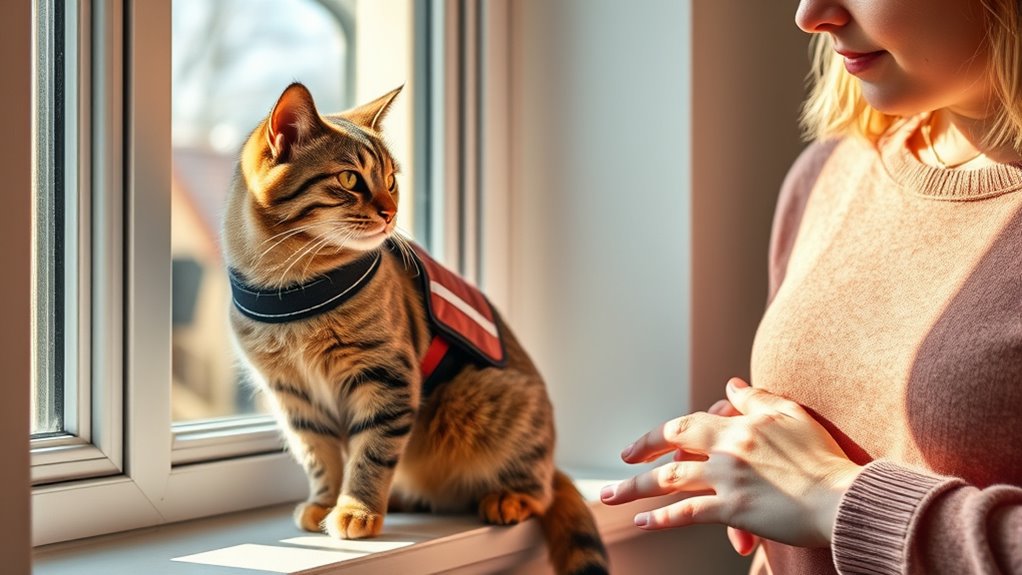
How to Qualify a Cat as a Service Animal
You can’t qualify a cat as a service animal under federal law. Service animals are dogs or miniature horses, with training and public-access rights.
A cat can be an emotional support animal (ESA) or a therapy cat, supported by a clinician’s letter, but they don’t get public access.
You’d focus on housing protections or therapy visits instead. If you want realistic steps, including documentation and training basics, you’ll find practical paths you can pursue next. More details await.
Key Takeaways
- Under the ADA, service animals are limited to dogs and miniature horses; cats cannot qualify as service animals federally.
- No official certification or registration exists for a cat to be a service animal; documentation from a licensed professional is not a substitute for eligibility.
- You can pursue an emotional support animal (ESA) letter or therapy cat arrangements, but these do not grant public access rights.
- If housing needs protection, seek a Fair Housing Act ESA letter; it does not apply to public spaces.
- To improve reliability, focus on training basic obedience and tasks within a safe, low-stress environment for the cat.
What Counts as a Service Cat, an ESA, and a Therapy Cat
What counts as a service cat, an ESA, or a therapy cat? Under current legislation, a service animal is limited to dogs and miniature horses; cats aren’t recognized as service animals. You can, however, have a cat as an emotional support animal (ESA) or a therapy cat.
An ESA provides mental health benefits through companionship, typically with a doctor’s letter, but it does not have public access rights. A therapy cat is trained to visit facilities like hospitals and nursing homes, offering emotional support on a voluntary basis.
If you’re seeking a cat to perform tasks related to a disability, recognize that cats generally aren’t trained for those specific functions, and such use isn’t covered by disability protections. The distinction matters for public access and service requirements, guided by existing training expectations and public access norms.
Legislation shapes how ESAs, therapy cats, and service-related roles are described and regulated.
Could a Cat Actually Be a Service Animal? Legal Realities Explained
Could a cat actually be a service animal? In the United States, legal recognition for service animals is limited to dogs and miniature horses under the ADA, so a cat isn’t officially classified as a service animal in most cases.
You can have cats provide emotional support and perform tasks, but they aren’t trained or recognized by law for physical or mental disabilities as service animals. There’s no federal process or certification to qualify a cat as a service animal.
Some states or local laws broaden definitions, but these are exceptions rather than the rule nationally. For service animal requirements, training, control, and task performance are typically required, standards not commonly met by cats.
If you’re seeking help, consider alternatives like emotional support animals or exploring the applicable law in your jurisdiction to understand your options.
Is a Cat Right for You? Basic Suitability: Temperament, Health, and Environment
You’ll want a cat with a calm, friendly temperament and no aggression, since cat temperament matters for reliable assistance. Health, safety, and a stable living environment are essential, because health issues or stress can limit performance and training response.
Consider whether your home is suitable—quiet enough, predictable routines, and the age and temperament stability that a capable service cat needs.
Cat Temperament Matters
Cat temperament is a key predictor of how well a cat will adapt to assistance tasks; a calm, sociable, and affectionate demeanor makes training easier and helps the cat stay comfortable in different environments.
To qualify as an assistance animal, you should look for a cat with a stable behavior profile, free from excessive anxiety or aggression. A healthy cat is more reliable, so verify there are no underlying health issues that could hinder performance.
Favor environments with routine and low stress, which support consistent behavior during training. Breeds such as Ragdolls, Maine Coons, and Russian Blues often exhibit the gentleness and adaptability you want.
In short, a cat that is calm, affectionate, and sociable strengthens your odds of success as an assistance animal.
Health and Safety
Health and safety are fundamental to whether a cat is right for you; a calm, healthy cat with a stable routine is more reliable in daily tasks and training. You’ll look for a calm, friendly temperament paired with good health, because health issues can interfere with training and daily routines.
Confirm the cat has no health issues that could disrupt well-being or behavior, and that health matters are managed with regular care. An environment offering safe space and minimal stress supports a cat’s effectiveness and safety in service tasks.
Proper socialization and consistent routines help keep you connected, relaxed, and responsive during training. Compatibility with your lifestyle and living situation is essential for a successful, long-term partnership focused on health and safety.
Living Environment Fit
A calm, healthy cat that fits your daily routine sets the foundation for a successful service partnership. To assess living environment fit, consider safety, enrichment, and space. Your cat should have access to a quiet, hazard-free area and veterinary-approved health status, ensuring calm behavior and reliability.
A suitable space includes litter box access, scratching posts, and daily enrichment to prevent stress. Evaluate whether your home offers consistent routines, predictable care, and opportunities for social interaction without overwhelming the animal. Compatibility with your schedule matters: can you meet physical and emotional needs, including regular veterinary visits and preventive care?
If the environment supports safety and low stress, and you can maintain ongoing care, a cat can be a viable service animal partner.
Public Access Rights: Where Cats Fit In and Where They Don’t
You’ll want to start by outlining where cats can and can’t access public spaces as service-assisted companions, and how those boundaries differ from dogs. Consider what housing vs. public rights look like, and where personal accommodations may apply.
Finally, touch on any exceptions or limitations that might affect a cat’s public presence.
Public Access Boundaries for Cats
Public access boundaries for cats are clear: in public spaces, cats aren’t treated as service animals the way trained dogs or mini horses are. You should know that under the ADA, cats aren’t recognized as service animals and don’t have public access rights in public places.
Only trained dogs and miniature horses are permitted to accompany individuals in all public areas where the public is allowed. Cats may be involved in therapy or emotional support roles, but these do not grant public access rights under federal law.
Public facilities are generally required to permit service animals but can exclude cats unless they are trained and recognized as service animals. The presence of a cat in public spaces is the business’s discretion, reflecting access rights and policy.
Housing vs Public Rights
Housing and public rights diverge when it comes to cats: in housing, emotional support and therapy cats can be protected under the Fair Housing Act, but in public spaces they don’t have public access rights as service animals under the ADA. You’ll learn that service animals still excludes cats from public access, while housing rights cover emotional support cats with appropriate documentation.
Training or certification isn’t required for cats in housing, yet it isn’t a path to public access as service animals. Businesses may exclude cats unless they qualify as trained service animals, which isn’t applicable to felines.
Your housing rights rely on protections for disabilities and reasonable accommodations, not public access.
Access Exceptions and Limitations
Under the ADA, only dogs and miniature horses qualify as service animals with public access rights, so cats aren’t included. You should know that public access for service animals is strictly defined, and limitations apply. In most public spaces, cats aren’t permitted as service animals, even when disabilities are involved, unless local laws say otherwise.
Training matters: service animals must be trained to perform tasks for specific disabilities, and cats are rarely trained for those tasks. Emotional support animals and other IPAA categories don’t grant public access like service animals. If you attempt to bring a cat as a service animal, establishments can lawfully refuse entry under ADA rules.
In short, access exceptions are narrow and clearly restricted.
Plausible Disability-Related Tasks a Cat Could Assist With
Cats can be trained to perform several disability-related tasks that aid daily living. You’ll find that trained cats can retrieve small items like keys or glasses to assist with mobility or dexterity impairments. They may learn to open doors or cabinets, providing support for people with limited movement or strength.
Some cats can be conditioned to dial emergency services or alert others in case of a medical or mental health crisis, offering timely assistance when it’s most needed. You might also train a cat to provide tactile calming touch or gentle pressure during anxiety or panic attacks, delivering soothing, nonverbal support.
Beyond task guidance, cats can function as emotional support animals, offering comfort and reducing stress for individuals with mental health disabilities. This aligns with how disability-related support can extend beyond physical needs, reinforcing the broader role of service animals and emotional support in daily life.
Training Pathways: What’s Realistic for a Cat and Milestones
Training a service cat follows realistic milestones that fit its unique temperament, not a dog’s. You’ll start with basic obedience, then work toward reliable responses to commands and demonstrations of calmness in varied environments. Your progress hinges on consistency and your cat’s responsiveness to cues, guided by positive reinforcement.
Use treats, praise, and quick rewards to shape desired behavior, keeping sessions short and frequent to match a cat’s attention style. Tasks may include retrieving objects, opening doors, or alerting you to specific sounds, tailored to your needs. Expect variability: some days your cat may surprise you with steady focus, other days require patience and adjustment.
Milestones aren’t a single finish line but a trajectory: staying focused, predictably responding, and performing trained tasks reliably over time. Track progress by observing reliability across settings, not just at home, ensuring your cat remains engaged and motivated through gradual challenges.
Documentation and Professional Recommendations: Getting the Letter
You should understand that a valid service animal letter comes from a licensed health professional and must clearly link the cat to your treatment needs. It should include the provider’s credentials, license details, and current contact information, so there are no questions about legitimacy.
Be aware there are legal considerations and limitations that affect how the letter is used and accepted.
Letter From Healthcare Professional
To qualify a cat as a service animal, you’ll need a written letter from a licensed mental health professional confirming your mental or emotional disability and that a cat is necessary for your treatment. This letter should come from a qualified mental health professional, such as a psychiatrist, psychologist, or licensed clinical social worker, and must include the clinician’s license type, license number, contact information, and the issue date.
It should explicitly state that the animal provides support or alleviates symptoms related to your disability. There’s no required template, but the letter must be on official letterhead and contain all relevant credentials. Verify the documentation clearly links your disability to the cat’s assistive role, so your healthcare provider can authenticate your request for accommodation and certification.
Legal Considerations And Limitations
When obtaining a letter from a licensed mental health professional, you’ll want to understand what counts as valid documentation and what limits apply. In terms of legal considerations, there’s no official registration, certification, or ID required for service animals; a current, specific letter from a qualified provider is the legally accepted proof.
The document should state the disability, the necessity of the cat for mental health or disability support, and include the professional’s license type, license number, and contact information. Be wary of scams offering instant certification. Documentation must be current and directly describe how the animal assists with the condition.
Regulations emphasize that the letter, not generic statements, supports the service animal designation, while training remains relevant to behavior and safety.
Public Etiquette and Handling: How to Behave With a Cat in Public
In public, keep your cat under control with a harness and leash or a secure carrier to prevent disruptions. You’ll want to maintain calm handling, avoiding sudden movements that could startle your cat or others. Public etiquette means honoring space, staying mindful of noise levels, and minimizing crowding around strangers.
If your cat shows signs of stress, pause, soothe them with a quiet voice, and move to a less busy area. Carry essential items like a portable litter box, water, and treats so you can address needs without lingering in one spot. Always respect others’ boundaries; don’t allow your cat to approach strangers without permission to ensure safety and courtesy.
Be aware of local regulations and venue policies about animals to keep your cat’s presence appropriate and accepted in public spaces. Remember, responsible handling reduces disruption and demonstrates consideration for the community.
Housing and Travel Considerations for a Service-Cat Plan
Housing and travel plans for a cat-focused arrangement differ from the ADA definition of service animals, but you can still secure practical support through emotional support cat arrangements. You’ll need an ESA letter to establish housing accommodations under the Fair Housing Act, showing the emotional support cat is necessary for your mental health or disability-related needs. No official registration or certification is required, just valid documentation from a licensed professional.
In housing, landlords must reasonably accommodate ESAs, even where pets are normally prohibited. For travel, you must check travel policies and obtain documentation from a healthcare provider well before your flight; airlines aren’t required to admit emotional support cats for free. Remember, ESAs are protected in housing and during travel, but they don’t gain public access rights in ADA-service settings like restaurants or stores.
Plan ahead with clear documentation, and ensure your arrangements align with both housing accommodations and travel policies.
Step-By-Step Plan to Pursue a Responsible Service-Cat Arrangement
To pursue a responsible service-cat arrangement, start with a detailed letter from a licensed mental health professional that confirms the need for an assistive animal and outlines the tasks your cat can perform. Gather documentation about your disabilities and how the cat’s assistive tasks support daily functioning and safety.
Focus your training on specific skills, such as retrieving objects, providing calming presence, or alerting you to changes in mood or environment, while ensuring your cat has a suitable temperament. Develop a clear training plan with measurable milestones and keep records of progress, health, and behavior to demonstrate reliability.
Work with professionals to tailor training to your needs, and maintain ongoing consultations to adjust tasks as your situation evolves. Remember that official recognition is limited, but a documented, well-trained cat can play a meaningful role as a companion and unofficial support animal within your daily routines. service animals,training,disabilities,mental health,assistive tasks,documentation,behavior.
Frequently Asked Questions
How Do I Make My Cat a Service Animal?
You can’t officially qualify a cat as a service animal under the ADA, but you can pursue alternative support. Get an ESA or therapy animal letter from a licensed mental health professional to validate emotional or mental health needs. Consider informal training for daily tasks, and verify your cat’s temperament suits this role.
Use documentation to assist with housing or travel, and focus on your bond and your cat’s comfort in supportive settings.
How Hard Is It to Get a Cat Registered as a Service Animal?
It’s basically impossible to get a cat officially registered as a service animal. The ADA recognizes dogs and miniature horses, not cats, and there’s no formal registry.
If you want animal support, you’d pursue an emotional support or therapy animal route with a licensed professional who can provide a legitimate letter. Training to perform service tasks isn’t reliable in cats, so expect limited legal recognition and potential scams around “certification.”
Focus on lawful alternatives and be cautious.
Can My Cat Be a Service Animal for Anxiety?
Can your cat be a service animal for anxiety? Not under current ADA rules, which recognize service animals as dogs or miniature horses, with trained tasks related to your disability.
You can pursue emotional support options, or get a letter from a licensed mental health professional stating necessity, but that won’t grant public access rights.
If you want trained support, consider non-ADA routes or explore cats’ calming roles and documented coping strategies.
How to Classify a Cat as a Service Animal?
You can’t classify a cat as a service animal under federal law, since only dogs and miniature horses are recognized. If you want official support, you’d pursue emotional support or therapy roles with proper documentation and a licensed professional’s recommendation.
You may train your cat to assist with tasks related to a disability, but it won’t grant ADA service animal status. Consider alternatives, like ESA documentation, and check local or state accommodations for access needs.
Conclusion
You stand at the doorway of possibility, where whiskers twitch like tiny compass needles and a quiet purr steadies your breath. Imagine a quiet cat, eyes mapping your world, learning each needed task as a soft, deliberate step.
The journey feels like weaving a new fabric—careful, patient, resilient—each thread a trusted routine. When the paper trail aligns with truth, you’ll walk into rooms with a calm, companion shadow.
A fuzzy anchor grounding your daily life, your cat becomes more than a pet. Qualify a cat as a service animal and embrace the unique support it provides.


