
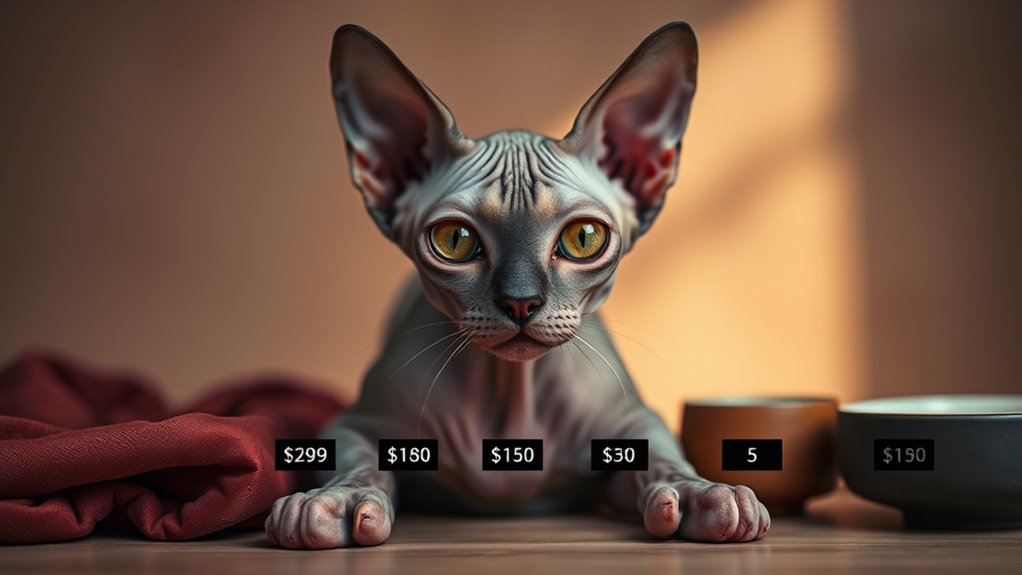
5 Price Ranges for How Much a Sphynx Cat Costs
There are five clear price ranges for a Sphynx, from about $1,900 up to $3,900, and each tier signals how much health testing, care quality, and rare traits matter.
Basic kittens start lower, while special features like polydactyly or odd eyes push prices higher.
Expect higher costs if the breeder provides solid health clearances and pedigrees.
Don’t forget ongoing costs like vet care and grooming.
If you keep scrolling, you’ll learn how to choose wisely across tiers.
Key Takeaways
- Basic-colored Sphynx kittens typically cost $1,900–$2,500, reflecting standard breed qualities.
- Special traits like polydactyly or odd eyes add roughly $800–$1,700 to the base price.
- Premium or show-quality Sphynx cats can reach up to $3,900, influenced by lineage and appearance.
- Responsible breeders charging $2,000–$4,500 include health testing and care guarantees.
- Hidden costs include vet care, vaccines, grooming, and initial setup beyond the sticker price.
What Are the Five Sphynx Price Ranges and What They Mean
There are five main Sphynx price ranges, and they reflect breed standard, rarity, and features. You’ll see standard lines around $1,900, and premium traits push toward $3,900. As you compare sphynx kittens, the price ranges reveal how closely a kitten matches the breed standard and how distinctive its traits are.
Basic or common-colored kittens usually sit between $1,900 and $2,500, signaling solid breed qualities without rare attributes. If a kitten has special traits like polydactyl feet or odd-eyes, expect an $800 to $1,700 bump to the base price, reflecting added desirability.
Higher-end, rare-colored or show-quality cats can approach $3,900, depending on lineage and appearance. The price range therefore signals breed standard, rarity, and specific features, guiding you toward choices aligned with your goals.
Whether you’re planning to adopt a sphynx, or pursuing breeding rights, understanding these ranges helps you evaluate value and fit.
What Drives Price Within Each Range
Price within each range is driven by a blend of traits, lineage, and market factors that buyers weigh when evaluating value. You’ll notice coat color, rare traits like polydactylism, and eye color pushing prices upward, especially when premium traits add $800 to $1700. Breeder reputation matters: established lines and transparent pedigrees justify higher bids, while health clearances underscore kitten wellness and reduce buyer risk.
Geographic location and seasonal demand also shape what you’ll expect to pay at a given moment. If a kitten comes with champion bloodlines, a well-documented pedigree, and proven health clearances, you’re more likely to see a higher quote within the range. Special features, such as Elf or Bambino traits, or distinctive colorations like black or blue, can push the cost beyond the standard tier.
Be mindful that deposits, health guarantees, and delivery options influence the final figure alongside baseline price within each range. Demand drives shifts between low, mid, and high segments.
Hidden Costs to Budget for Beyond the Sticker Price
Beyond the sticker price, you should budget for ongoing care that keeps your Sphynx healthy and happy. Hidden costs add up quick, so plan for ongoing costs beyond the initial kitten price. Regular veterinary visits and vaccinations are essential, and flea and tick prevention should be priced into annual budgets.
Routine skin care matters, since Sphynx owners routinely groom to prevent dryness and infections. Expect ongoing grooming, including weekly baths, ear cleaning, and skin moisturizing products, to prevent issues that require costly treatment.
Spaying or neutering, microchipping, and initial supplies like bedding, toys, and high-quality food are part of the upfront cost, but health expenses can emerge later. Unforeseen issues—skin conditions or hereditary heart problems—can drive unexpected bills well above the sticker price.
Plan for these possibilities with a cushion in your budget so you’re prepared for veterinary visits and routine care throughout your cat’s life.
How to Evaluate Breeders and Avoid Scams Across Price Tiers
When you’re evaluating breeders, you’ll want to see clear health testing, contracts, and health guarantees attached to any price tier, since reputable breeders vary by price but don’t compromise on transparency.
- Look for breeder credentials, references, and a verifiable facility visit to confirm ethical standards.
- Expect health testing with documentation, including HCM Heart Scans, and a binding health guarantee.
- Be wary of scams offering unrealistically low prices, missing information, or unverified claims.
- Verify payment methods and avoid wiring money or gift cards to shield yourself from fraud.
Across price tiers, prioritize transparency over price alone; higher prices often reflect responsible breeding practices like genetic testing and proper socialization, while extremely low offers can signal scams.
Always request documentation before purchase, and use secure verification steps to cross-check claims.
By focusing on reputable breeders, you reduce health risks and ensure you’re buying from a seller who stands behind health testing, health guarantees, and breeder credentials.
Scams fade when you insist on verifiable records and a solid, contract-based agreement.
How to Match Your Budget With Health, Care, and Ethics
Knowing your budget isn’t just about the sticker price; it’s about the ongoing care that keeps a Sphynx happy and healthy. When you look at costs, consider long-term expenses tied to health testing, skin and ear care, and high-quality nutrition.
With responsible breeders, you’ll get a kitten in the $2,000 to $4,500 range, reflecting their investment in health testing and quality care. Lower-priced sources may hide costs from health issues or inadequate veterinary care, undermining overall value.
Ethical breeding involves ongoing veterinary visits and consistent grooming, all of which factor into price and long-term satisfaction. If you prioritize health guarantees, you’ll want a seller who stands behind their kittens’ wellness, not just a bargain.
Matching your budget with responsible ownership means planning for long-term costs, including grooming and routine care. Your investment should align with health guarantees, ongoing care, and ethical standards, ensuring a healthy, socialized companion rather than a fleeting bargain.
Frequently Asked Questions
What Is the Average Cost for a Sphynx Cat?
You’ll generally pay between $2,000 and $4,500 for a Sphynx cat. Your best bet is around $2,000 to $3,000 for a standard kitten, with premium show-quality or rare color varieties climbing to $4,500 or more.
Remember, higher prices often reflect stronger health testing, socialization, and breeder reputation. If you see unusually low prices, beware of potential health or welfare issues.
Plan for ongoing costs like care, vet visits, and enrichment.
What Cat Costs $100,000?
The cat that costs $100,000 is typically a highly rare, pedigree or celebrity-owned specimen. You’d be looking at ultra-exclusive lines, champion show records, and proven health testing, often tied to rare genetics or unique traits.
You’d usually find these prices reserved for luxury, one‑of‑a‑kind cats rather than ordinary pets. If you’re curious, you’d factor in provenance, breeder reputation, and potential health guarantees before considering such an investment.
Why Is Sphynx Cat so Expensive?
They’re expensive because of their rarity, specialized care, and high breeding standards. You pay for responsible breeders who run health tests, quality nutrition, and vigilant veterinary care.
You’ll invest in climate-controlled catteries, clean housing, and socialization to guarantee a healthy, well-behaved cat. Popular demand and unique looks push prices up, especially for rare traits.
If you’re shopping, expect higher costs for well-bred kittens with proven lineage and healthy, show-quality potential.
How Expensive Are Sphinxes?
Are sphynxes expensive? Typically you’re looking at $1,900 to $3,900, with premium traits adding $800 to $1,700. Some colors push prices higher, and deposits around $400 are common.
You’ll pay the rest at pickup or delivery. You’re funding health testing, socialization, and high standards, so the cost reflects quality and responsibility.
If you want unique features like polydactyl paws or odd eyes, expect it to climb further. Ready to invest in a true companion?
Conclusion
You’ll save a bundle—if you don’t mind questionable health, questionable breeders, and questionable ethics. If you actually want a sphynx that purrs, not a financial trap, you’ll ignore those tempting price tiers and look for established ethics, health guarantees, and transparent costs.
Because nothing says smart budgeting like paying twice for vet bills you could’ve avoided. In short: money isn’t everything, but a well-chosen sphynx sure makes you think it is—until you meet the one who proves otherwise.
Irony, served.


