Are Hairless Cats Hypoallergenic?
Are hairless cats hypoallergenic? Not really. Fel d 1 comes from their saliva and skin oils, not just fur, so shedding hair or not doesn’t remove the main allergen source.
Hairless breeds still produce Fel d 1, and surface contamination from saliva can linger on furniture and clothing.
You’ll reduce exposure with regular cleaning, HEPA filtration, and grooming routines. If you want practical steps and what to expect, you’ll find more details ahead.
Key Takeaways
- Hairless cats are not hypoallergenic; Fel d 1 comes from saliva and skin oils, not fur, so allergen exposure remains.
- Allergen levels are similar across hairless and coated breeds due to saliva/oil origins.
- Surface contamination (furniture, fabrics, counters) persists from saliva and oils, not just shedding fur.
- Cleaning, HEPA-filtered vacuuming, and allergen-free zones reduce exposure but don’t eliminate it.
- Diets (e.g., Pro Plan LiveClear) and environmental controls can help, but no breed is truly hypoallergenic.
Where Do Cat Allergens Come From?
Cat allergens mainly come from a protein called Fel d 1, which is produced in a cat’s saliva, sebaceous glands, and skin oils. You’ll find Fel d 1 where cats groom themselves, since licking transfers the protein to fur and skin, spreading allergens throughout your environment.
Allergen sources include shed fur, dander, and skin cells, which carry Fel d 1 into the air and onto surfaces. When you inhale or touch these allergen particles, allergic reactions can occur. The amount of Fel d 1 isn’t equal across cats or breeds, but every cat generates some level of the protein, so exposure remains.
Knowing these sources helps you assess risk and cleaning needs in homes with felines. By understanding how Fel d 1 travels—from saliva and skin oils to fur and dust—you can better plan managing strategies, especially around ventilation, washing, and filtration.
Do Hairless Cats Reduce Allergen Exposure?
You’ll still be exposed to allergens from saliva and skin oils, even if fur is reduced. The allergen sources remain, so simply having a hairless cat doesn’t eliminate exposure.
Surface contamination risk stays, since regular cleaning and bathing only lower but don’t remove allergen production.
Allergen Sources Remain
Even with hairless cats, the main allergen still comes from Fel d 1 produced in their saliva and skin oils, not from fur. You’ll still encounter allergen sources beyond shedding fur, since Fel d 1 transfers via grooming and skin oils. Without fur, allergens may settle on surfaces, potentially upping exposure.
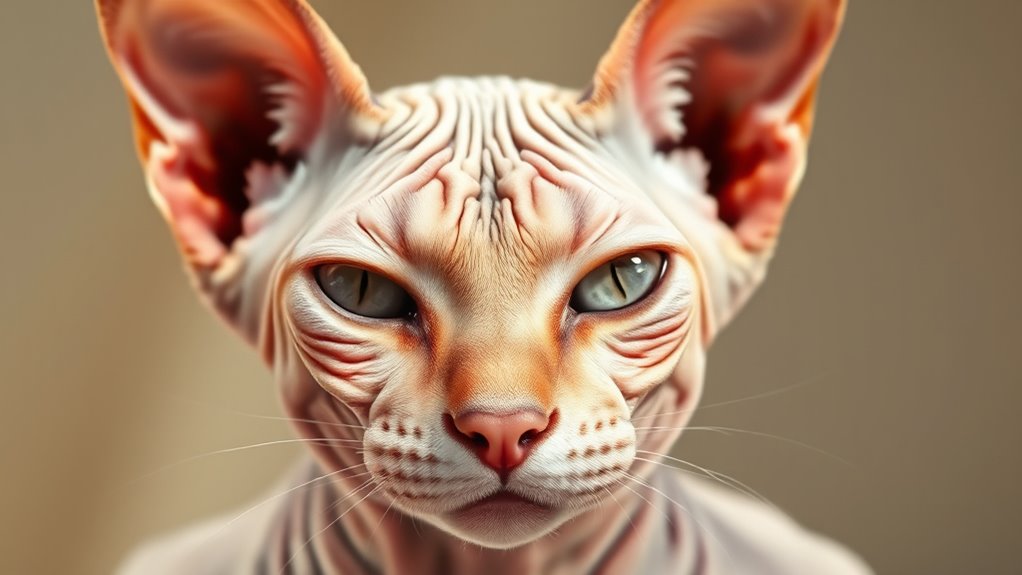
Hairless breeds, like Sphynx, don’t eliminate allergen production, but some allergy symptoms may be milder for certain people. To manage allergen levels, you’ll still need regular cleaning, bathing, and environmental controls. Remember: allergen levels hinge on Fel d 1 distribution, not fur presence.
Focus on reducing skin oil carriers and improving surfaces to lower exposure.
| Surface | Fel d 1 risk | Mitigation |
|---|---|---|
| Furniture | Moderate | Frequent cleaning |
| Bedding | High | Wash weekly |
| Electronics | Low | Wipe weekly |
| Clothing | Moderate | HEPA vacuuming |
Fur Reduction Limits
Despite fewer shedding fur, hairless cats don’t cut allergen exposure. You’ll still encounter allergens due to saliva and skin oils, not just fur loss. In this fur reduction limits topic, the key reality is clear: coating and skin chemistry matter as much as shedding.
1) Hairless cats still produce Fel d 1 at similar levels to coated cats, so hypoallergenic isn’t guaranteed.
2) Dander and dander-bearing oils remain on skin and surfaces, concentrating allergens even without much fur.
3) Reducing shedding lowers visible fur but doesn’t eliminate allergen transmission through contact with coat, skin, or saliva.
4) To minimize exposure, manage cleaning, air quality, and ongoing coat care, recognizing Fel d 1 travels beyond shedding.
You’re weighing hypoallergenic claims against the persistent reality of allergens.
Surface Contamination Risk
Hairless cats do cut some surface exposure, since their reduced fur means fewer places for allergens to be trapped, but they don’t eliminate it: Fel d 1 still comes from saliva and skin oils and can contaminate furniture, countertops, and fabrics. You’ll still encounter dander and allergens on surfaces, especially because these proteins concentrate where there’s contact and oils.
Without fur to trap particles, surface contamination can feel more concentrated, making regular cleaning important. Wipe down tabletops, counters, and fabrics to reduce allergen buildup and limit exposure. Routine dusting, vacuuming with HEPA, and washing textiles help.
If your symptoms persist, you may notice fewer allergy symptoms with consistent surface cleaning, though exposure through saliva and skin oils remains a consideration for sensitivity.
Do Hairless Breeds Produce the Same Fel D 1 Levels?
You’ll find that Fel D 1 levels are similar across hairless and coated breeds, so shedding fur isn’t the whole story. The allergen mainly comes from saliva and skin oils, not the fur itself.
In short, hairlessness doesn’t remove the Fel D 1 you’d be exposed to; the source is the cat’s own secretions.
Fel D 1 Levels Similar
Do hairless cat breeds really produce the same Fel D 1 levels as coated ones? You’ll find that Fel D 1 levels are similar in both groups, kept steady in saliva and skin oils. The lack of fur doesn’t cut allergen production; it mainly limits shedding spread.
As a result, allergen exposure remains comparable, and allergenic reactions can occur from the same Fel D 1 sources present in hairless cats as in coated breeds. Understanding this helps you assess hypoallergenic claims more accurately.
- Fel d 1 is found in saliva and skin oils, not just fur
- Hairless cats still shed allergen-containing oils
- Allergen levels remain consistent across coat types
- Hypoallergenic labels don’t guarantee absence of reactions
Allergen Source Clarified
Allergen sources aren’t limited to fur. You’ll find Fel d 1 in saliva and skin oils just as much in hairless cats as in coated breeds, so your reaction isn’t governed by coat alone. The amount of Fel d 1 in saliva and skin oils doesn’t differ markedly between hairless and fur-covered cats, meaning the allergen source is similar across types.
Saliva and skin secretions remain the primary Fel d 1 reservoirs, not shedding fur. Hairless breeds may shed less dander, but they don’t eliminate Fel d 1 exposure, so they aren’t truly hypoallergenic. Individual responses vary, so some allergy sufferers might notice fewer symptoms, yet comparable Fel d 1 levels keep the allergen source fundamentally the same in both groups: hairless cats and coated breeds.
Managing Allergies With Hairless or Hypoallergenic Cats
Hairless cats aren’t truly hypoallergenic, since they still produce Fel d 1 in saliva and skin oils. You can manage allergies with a practical approach that acknowledges residual risk while leveraging reduced fur and dander.
Hairless cats aren’t hypoallergenic; they still shed Fel d 1 in saliva and oils.
1) Start with allergen reduction routines: regular bathing and careful grooming help lower Fel d 1 on skin and in the environment, complementing a cleaner home.
2) Create cleaner air: use HEPA purifiers and frequent cleaning to minimize airborne dander and allergens reaching your nose and lungs.
3) Control the space: designate pet-free zones, wash textiles regularly, and vacuum with a high-efficiency filter to limit exposure.
4) Personal strategies: track your allergy symptoms, consider allergy management options with your clinician, and realize individual responses vary—some people tolerate hairless cats better, others don’t.
What Hypoallergenic Labels Really Mean for Allergy Risk
Hypoallergenic labels aren’t guarantees of allergy safety. When you see a breed label promising fewer allergens, know that it isn’t a warning-free guarantee. These labels usually reflect lower allergen levels or less dander, but they don’t eliminate Fel d 1 exposure.
You still can encounter allergy symptoms because Fel d 1 is produced by skin oils and saliva, not just fur. Hairless cats may shed less fur, yet their Fel d 1 production isn’t necessarily lower, so the risk remains. The takeaway is that breed labels can guide choices but don’t ensure zero risk.
If you’re allergic, you’ll need more than a name on a tag. Plan for ongoing management that targets allergen reduction beyond the breed. Regular grooming, cleaning, and minimizing allergen spread matter as much as any label.
In short, hypoallergenic doesn’t equal allergy-proof.
Diets, Vaccines, and Other Non-Breed Options for Allergy Relief
Dietary tweaks, vaccines still in development, and practical non-breed strategies can all help lessen cat allergy symptoms. You’ll likely notice the biggest impact from allergen-reducing diets, like Purina’s Pro Plan LiveClear, which can lower cat allergens in hair and dander by up to 47% in three weeks. Ongoing research on a vaccine for cats may further cut allergen production, but it isn’t public yet.
In the meantime, combine dietary changes with regular grooming and environmental control for allergy relief.
1) allergen-reducing diets paired with consistent brushing and bathing
2) regular grooming routines to minimize cat allergens on fur and skin
3) HEPA filtration and good ventilation to cut airborne particles
4) environmental strategies like allergen-free zones and frequent cleaning
These non-breed options support symptom reduction, making hypoallergenic options feel more achievable while you monitor future vaccine developments and diet trials.
Practical Steps to Take Before Adopting a Hairless Cat
Before bringing a hairless cat home, map out a practical plan to minimize allergens from day one. You’ll focus on allergy management by combining regular bathing with targeted cleaning routines. Regular bathing helps reduce allergen levels in saliva and skin oils, so schedule sessions and use gentle products.
Create allergen reduction strategies around the living space—use HEPA filters, vacuum often, and wash fabrics regularly to cut cat dander in the air. Establish allergen-free zones, especially in bedrooms, to lower exposure for overnight comfort.
When handling and grooming, take precautions to minimize surface spread of allergens, including washing hands and clothing afterward. Consider products and routines recommended by a veterinarian to support ongoing pet allergies management.
With these steps, you’ll improve comfort for yourself while evaluating a hypoallergenic cat’s fit. This proactive approach supports fans of hairless cats seeking practical, measurable allergen control.
Frequently Asked Questions
What Cats Are Worst for Allergies?
The worst cats for allergies are those with dense coats, heavy shedding, and frequent grooming, like many long-haired breeds. You’ll likely react more to Siberians or Persians due to shedding and dander. Non-neutered males can boost Fel d 1 levels, worsening symptoms.
High-shedding, multi-layer coats spread more allergens, so breeds with thick fur are tougher on you. Regular grooming helps, but these cats remain more problematic for allergy sufferers. Consider low-shedding or hairless options if possible.
Are Hairless Cats High Maintenance?
Yes, hairless cats are high maintenance. You’ll bathe them regularly to reduce oils, manage skin dryness, and protect their exposed skin. You’ll need frequent moisturizing and careful skin care, plus consistent cleaning of their environment to cut down on allergens.
Grooming takes more time and effort than shedding breeds, and you’ll deal with more frequent health checks for skin and overall comfort. It’s a hands-on commitment rather than a low-maintenance choice.
Conclusion
If you’re chasing a gentler purr, imagine a sunlit room where whiskers glow and dust motes drift like tiny snowflakes—yet the air feels lighter. Hairless cats might cut some allergens, but they don’t erase them all, and Fel D 1 still lingers in fabric, skin, and breath.
Before adopting, weigh your nerves, routines, and meds. With mindful care, you may find a softer closeness, a truer companionship, even if the journey is a little more deliberate.
In conclusion, hairless cats might reduce allergen exposure but are not completely hypoallergenic. Understanding Fel D 1’s persistence is key to managing allergies effectively.