Can Cats Eat Beef Jerky Safely?
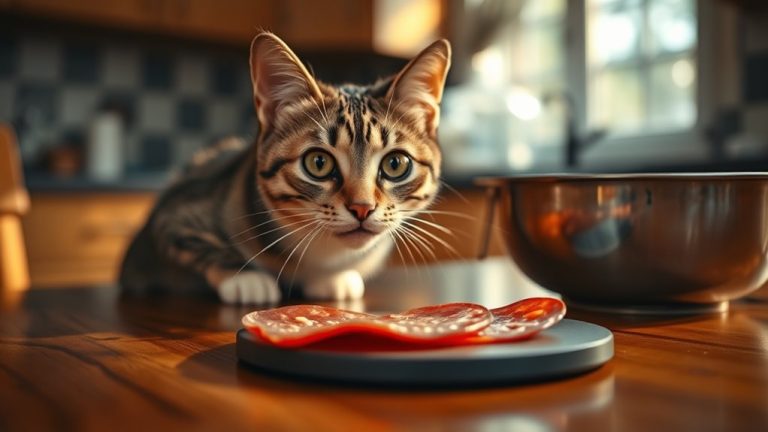
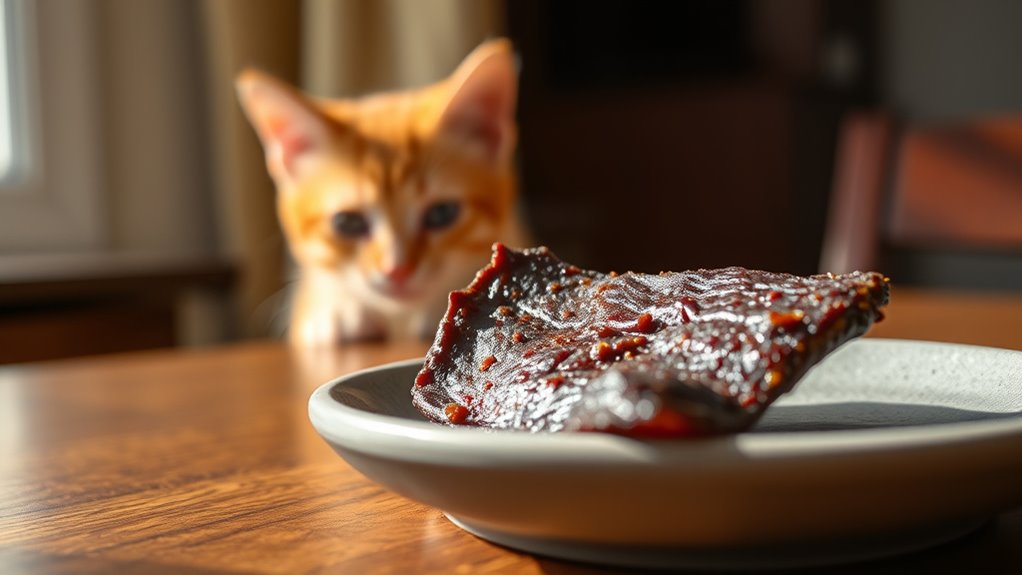
Beef jerky isn’t safe for cats. It’s very high in salt, which can dehydrate them and stress the kidneys. Many jerky products contain onion or garlic powders and other spices that are toxic to felines.
The tough, dehydrated texture also poses choking and airway risks, especially if pieces are large. If your cat accidentally eats some, watch for vomiting or dehydration and call your vet if symptoms persist.
Curious to learn safer alternatives and prevention tips?
Key Takeaways
- Beef jerky is generally unsafe for cats due to high sodium and potential toxic seasonings (onion/garlic, spices).
- Dehydrated, tough texture increases choking, coughing, or airway obstruction risks for cats.
- Additives, sugar, or artificial flavors can irritate a cat’s stomach or cause allergic reactions.
- If a cat eats jerky, monitor for vomiting, diarrhea, dehydration, or breathing difficulties and seek vet care if needed.
- Safer alternatives include cat-specific treats or plain, unseasoned, small pieces of cooked meat; store treats securely and supervise snacking.
Should You Feed Beef Jerky to a Cat? The Verdict
In short, you shouldn’t feed beef jerky to a cat. The verdict is clear: beef jerky isn’t a safe treat for cats. Its high salt content and potential seasonings can cause toxic reactions, gastrointestinal upset, and dehydration.
The tough, dehydrated texture creates a choking hazard and makes chewing difficult, increasing the risk of aspiration or airway trouble. Many commercial jerky products contain garlic, onion, or other spices that are harmful to cats, even in small amounts.
Even occasional, plain unseasoned beef jerky isn’t recommended, since it’s still unsafe as a regular treat and can upset your cat’s stomach. If you’re after a crunchy snack or a training reward, opt for safe treats specifically formulated for felines.
Even plain beef jerky can upset a cat’s stomach, so choose feline-safe treats instead.
Your veterinarian can suggest appropriate options that satisfy texture and taste without compromising health. In short, prioritize safe treats and avoid beef jerky for cats.
What Makes Beef Jerky Risky for Cats
Beef jerky isn’t a safe treat for your cat because its high salt content can quickly lead to dehydration and electrolyte imbalances. You also have to watch for toxic seasonings like onion or garlic powder, which can cause serious health problems.
Plus, the chewy, tough texture and any added sugars or spices raise choking, stomach irritation, and other risk factors you’d want to avoid.
High Salt Risks
High salt content is a major concern with beef jerky for cats, because many jerky products use salt as a preservative and flavor booster, pushing sodium well beyond what a cat should ingest. You should know high salt in jerky can trigger dehydration, electrolyte imbalance, and even salt poisoning in sensitive cats.
When sodium runs high, your cat’s kidneys work harder, increasing kidney strain and raising health risks over time. Even small portions add to the daily salt content, contributing to dehydration and elevated blood pressure.
Since cats have limited ability to process excessive salt, habitual consumption can lead to lasting issues. To protect your cat, avoid jerky treats and opt for cat-friendly snacks with low or no added salt. Prioritize fresh water and balanced nutrition.
Toxic Seasonings Alert
Toxic seasonings are a real red flag in beef jerky for cats, because many products include onion or garlic powder that can cause anemia and other serious issues. You should know that garlic, onion powder, and other spices in jerky can irritate or injure feline systems, and artificial flavors may carry harmful chemicals.
Salt and chili powder or cayenne pepper add dehydration risk and GI upset, while other seasonings heighten allergy potential. This is why you must avoid giving jerky to your cat and read labels carefully. If you suspect exposure, monitor for vomiting, diarrhea, or lethargy and contact a vet promptly.
Choking Hazard Factors
Choking is a real risk with beef jerky for cats, thanks to its dehydrated, tough texture that makes proper chewing hard. You should know that choking hazard can arise from small pieces that easily lodge in the throat, causing gagging or airway obstruction. The chewy consistency demands strong chewing, but many cats lack that ability, increasing swallowing risks and potential choking on large chunks.
Irregular or sharp-edged jerky pieces may damage mouth tissue or throat, compounding danger. To prevent trouble, avoid giving jerky pieces, especially large chunks, and watch for signs of difficulty breathing after any bite. If you ever see coughing, gagging, or persistent swallowing, seek veterinary help promptly.
Sodium, Seasonings, and Additives to Watch For
Many beef jerky brands pack in a lot of sodium, and that can lead to dehydration and electrolyte issues in cats. You should know that high sodium content is a common risk when you consider jerky as a treat. Look closely at labels to spot additives that could upset digestion or trigger reactions.
Seasonings like onion powder and garlic powder are toxic to cats and can cause anemia, so steer away from products containing those ingredients. Artificial flavorings and preservatives may irritate your cat’s digestive system or provoke adverse responses, even in small amounts. Spices such as cayenne pepper or chili powder can upset a cat’s stomach, potentially causing vomiting or diarrhea.
Always check ingredient lists for harmful additives before offering beef jerky. If you’re unsure, it’s safer to choose pet-approved treats or plain, cooked meat without seasonings. Your goal is to minimize dehydration risk and avoid hidden dangers in every bite.
If Your Cat Eats Beef Jerky, What to Do Next
If your cat eats beef jerky, start by watching for digestive upset like vomiting or diarrhea and note any changes in appetite. Check for dehydration signs, such as dry gums or reduced skin turgor, and offer fresh water to encourage intake.
If you see persistent symptoms or worry about your cat’s condition, contact your veterinarian promptly for guidance.
Monitor For Digestive Upset
If your cat has eaten beef jerky, start by watching for signs like vomiting, diarrhea, or excessive drooling over the next 24 to 48 hours. You’ll want to monitor any digestive upset and behavior changes, noting the onset and progression of symptoms to share with your vet if needed.
- Look for vomiting, diarrhea, or lethargy as early warning signs of gastrointestinal distress.
- Track ingestion amount and the timing of symptoms to gauge severity and potential dehydration risk.
- Record appetite shifts and activity levels to help determine if veterinary care is necessary.
- Seek veterinary care promptly if symptoms persist, worsen, or include breathing difficulty or severe lethargy.
Watch For Dehydration Signs
Dehydration can sneak up after a cat eats beef jerky, so keep an eye out for dry mouth, sunken eyes, lethargy, and reduced skin elasticity. You should actively watch for signs of dehydration by checking your cat’s hydration status and mucous membranes, then track water intake and water loss over the day.
Encourage water consumption with fresh water and wet food options to boost hydration. If you notice any persistent dehydration symptoms, such as vomiting, unresponsiveness, or a drop in energy, intervene quickly and reassess hydration levels.
Maintain steady water intake by offering multiple bowls and monitoring hydration, since subtle changes can signal increasing dehydration. Remember to adjust wet food portions to support adequate hydration status.
When To Seek Vet Care
If your cat shows vomiting, diarrhea, or lethargy after eating beef jerky, contact your veterinarian promptly. Even if initial signs are mild, you should seek vet care because deterioration can occur. Ingesting large amounts or jerky with toxic seasonings increases risk of poisoning, so act quickly if symptoms escalate.
Monitor symptoms closely for delayed signs over 24-48 hours, as dehydration or loss of appetite may appear later. Always consult a veterinarian for personalized advice if you’re unsure about your cat’s health after consuming beef jerky.
- Monitor symptoms and seek care if vomiting or diarrhea worsens.
- Look for signs of poisoning such as tremors, seizures, or breathing difficulty.
- Report large amounts or high-salt products to your vet.
- Follow vet guidance for treat symptoms and ongoing observation.
Cat-Safe Alternatives to Beef Jerky
Cat-safe beef jerky alternatives for cats focus on simple, protein-packed options with minimal or no added ingredients. You’ll find cat-safe alternatives that fit feline dietary needs, offering healthy protein options without risky additives. Start with homemade dehydrated meat: single-ingredient treats using unseasoned, cooked lean poultry or fish, sliced thin and dried.
These are seasoning-free and low-salt, reducing exposure to artificial flavorings. If you prefer ready-made options, check for regular canned tuna or salmon in water in small portions, or commercial cat treats specifically formulated for cats. Look for products designed for feline dietary needs that avoid harmful ingredients.
Avoid human jerky with onion, garlic, or artificial flavorings, and favor single-ingredient treats when possible. By choosing safe, minimal-ingredient options, you provide satisfying snacks that align with your cat’s health priorities and support steady protein intake without unnecessary additives.
How to Prevent Jerky Encounters and Keep Your Cat Safe
To keep your cat safe, store beef jerky and other human snacks out of reach in high or secure cabinets, and supervise mealtimes to prevent accidental ingestion.
To keep your cat safe, store beef jerky out of reach in secure cabinets and supervise meals.
You can reduce food hazards by creating clear boundaries and teaching everyone in the home about safe food practices.
1) Store beef jerky and all human snacks in locked or hard-to-reach cabinets to prevent jerky encounters.
2) Supervise cats during meals and snack time, keeping food storage areas clean and free of wrappers.
3) Educate visitors and household members about the risks of feeding or leaving jerky accessible to cats.
4) Use child-proof containers or dedicated bins for treats to avoid choking hazards and accidental ingestion.
Frequently Asked Questions
What Happens if My Cat Eats Beef Jerky?
If your cat eats beef jerky, it might cause upset stomach, vomiting, or diarrhea, especially if eaten in small amounts. In larger bites, you could see dehydration, sodium poisoning, or a GI blockage. Watch for excessive thirst, lethargy, or loss of appetite.
If the jerky contains onions, garlic, or too much salt, risks rise. Seek immediate veterinary care if you notice distress, persistent symptoms, or a concerning amount was ingested.
What Is the One Meat to Never Feed a Cat?
The one meat to never feed a cat is raw fish. The one meat to never feed a cat is raw fish. You should avoid raw fish, you should avoid raw fish because it can cause parasites and infections.
You should also steer clear of raw poultry, raw pork, and processed meats, you should avoid them due to parasites, bacteria, salts, and additives.
You can offer plain, thoroughly cooked meats instead, in moderation.
What Are the Symptoms of Jerky Poisoning in Cats?
Jerky poisoning in cats can cause vomiting, diarrhea, and a reduced appetite. You might notice excessive thirst and dehydration from high salt. Lethargy, tremors, or uncoordinated movements can signal sodium or toxin exposure.
In severe cases, seizures or trouble breathing may occur. If any of these symptoms appear after jerky ingestion, you should seek prompt veterinary care to prevent serious complications and guarantee your cat receives appropriate treatment quickly.
Why Do Cats Love Beef Jerky?
They love beef jerky because it smells tasty, tastes meaty, and has a chewy, prey-like texture. You’re drawn in by the strong aroma and the protein-rich bite, which matches their carnivorous instincts. The familiar meat flavor triggers curiosity, hunting instincts, and reward-based chewing.
You might also be attracted by the novelty and softness of a dried treat. But you should be careful: jerky isn’t a safe, regular cat snack.
Conclusion
Beef jerky isn’t a safe snack for your cat, and you should treat it like a rare treat they don’t need. Most brands pack 12–16% sodium per serving, plus seasonings that can harm little tummies.
If your cat nibbles a piece, monitor for vomiting or drooling, and call your vet if symptoms appear.
Fun fact: cats are obligate carnivores, so they don’t crave jerky the way we do—protein from ordinary cat foods is enough to keep them satisfied. Stay vigilant.