
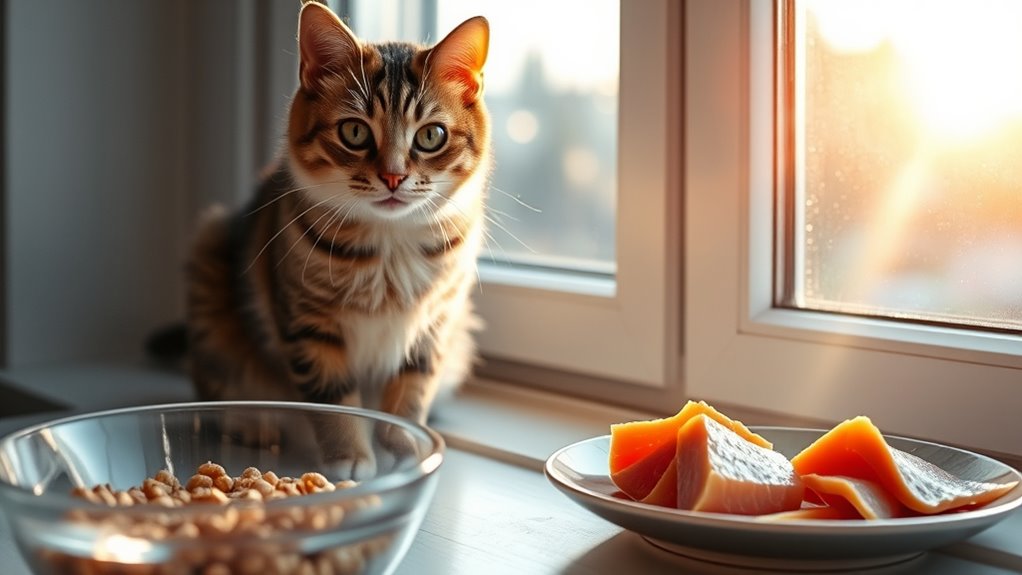
What Does It Mean If Cats Are Omnivores?
If you hear “cats are omnivores,” know that it’s not accurate. Cats are obligate carnivores, meaning they must eat animal tissue to get key nutrients like taurine, vitamin A, and arachidonic acid.
Their bodies and teeth are built for meat, not plant-heavy diets.
A diet heavy in plants can cause deficiencies. If you keep exploring, you’ll uncover how their anatomy, wild behavior, and nutrition needs support a meat-first approach.
Key Takeaways
- Cats are obligate carnivores, not true omnivores, needing animal-based nutrients like taurine and arachidonic acid.
- A hypothetical omnivorous cat diet would mix meat with plant foods, but poses nutritional formulation challenges.
- Plant matter in a cat diet provides limited essential nutrients unless specially supplemented.
- Behavioral nibbling on plants is usually exploratory, not indicative of a true omnivorous feeding strategy.
- Most evidence supports meat-first diets to meet cats’ physiological and digestive requirements.
Is an Omnivorous Cat Plausible? What the Science Says
While some people wonder if cats could be omnivores, the science says otherwise. You’re looking at a clear picture: cats are obligate carnivores with dietary needs that plant-based foods can’t meet. Their teeth and short digestive tract are built for meat processing, not foliage, which means you don’t get the same nutrient extraction from plants.
Essential nutrients like taurine, vitamin A, and arachidonic acid come mainly from animal tissues, so relying on vegetables or grains leaves gaps you can’t meaningfully fill. You might see a cat nibble fruits or vegetables, but that behavior isn’t a diet; it’s exploration or enrichment, not nutrition.
Research shows that vegetarian or plant-based regimens can trigger nutritional deficiencies and health problems, undermining long-term well‑being. So, in light of the evidence, you shouldn’t view cats as omnivores. The science supports keeping them on an obligate carnivore plan that centers animal-based nutrients.
Cats’ Anatomy: Carnivore Design vs. Omnivore Potential
Cats’ anatomy clearly reflects a carnivore design, which frames how we view any notion of omnivore potential. You’ll notice how each anatomical feature points to meat-focused needs, not plant-based versatility. Consider these key elements:
- carnivore design: sharp teeth, long canines, and razor-sharp premolars and molars for shearing and tearing meat.
- anatomical features: jaws hinge mainly for ripping flesh rather than grinding vegetation, underscoring carnivory.
- digestive tract: a relatively short pathway optimized for rapid digestion of animal tissues over fibrous plant material.
- digestive efficiency: a limited ability to digest carbohydrates, with enzymes tailored to protein and fat from animal sources.
Together, these traits shape how you interpret omnivore potential. If you measure by structure alone, the digestive tract, teeth, and jaw mechanics align with a meat-based diet.
In short, the evidence favors carnivore design over omnivory.
If Cats Were Omnivores, What Would Their Diet Look Like?
If cats were omnivores, their diet would blend animal tissues with plant-based foods like grains, vegetables, and fruits to supply both protein and carbohydrates. You’d eat a balanced mix: meat for essential amino acids and fats, plus plant-based items to provide energy from carbohydrates.
Your cat’s diet would include vegetables such as carrots, peas, or spinach, and grains like rice or oats alongside meat, creating a varied plate that taps into plant-based nutrients. Digestive adaptations would help you process fibrous plant matter and extract usable nitrogen, vitamins, and minerals without sacrificing growth or tissue maintenance.
Such an omnivorous pattern could reduce your reliance on meat, but it would require careful formulation to meet specific nutritional needs, including protein quality, amino acid balance, and micronutrients. You’d benefit from portioning and consulting guidelines to maintain energy, hydration, and overall health while embracing a more plant-based, omnivorous approach.
What Evidence Supports Obligate Carnivory in Wild and Domestic Cats
Evidence for obligate carnivory in wild and domestic cats is strong and multifaceted. You’ll see how biology and behavior align to support meat-first nutrition.
Evidence for obligate carnivory in cats is strong, reflecting biology and behavior aligned with meat-first nutrition.
Wild cats hunt small prey, consuming organs, bones, and tissues, delivering essential nutrients unique to meat that plant matter can’t provide. Their natural diet includes about 70-75% water content from prey, supporting hydration without relying on drinking water.
Cats lack enzymes to convert plant-based nutrients into crucial compounds like vitamin A and taurine, which only come from animal tissues. The short digestive tract is optimized for rapid meat processing, contrasting with longer intestines in herbivores and omnivores.
Domestic cats retain these traits from their wild ancestors, illustrating obligate carnivory through dietary and physiological adaptations. If you’re evaluating pet nutrition, consider that obligate carnivory shapes their needs for high-quality animal proteins and taurine.
Practical Feline Nutrition: Feeding Guidelines and Expert Tips
Feeding your cat well starts with understanding their carnivorous needs and then translating that into practical guidelines. You’ll want a diet that’s at least 70% meat to satisfy their obligate carnivore requirements, so focus on high-quality protein sources and appropriate moisture. Incorporate organ meats like liver and heart, which deliver taurine, vitamin A, and B vitamins vital for overall health.
Wet or raw diets with high moisture content help mimic natural prey and support kidney and urinary tract health. A balanced diet tailored to their carnivorous needs prevents deficiencies that can lead to serious issues, so pay attention to regular variety without overfeeding filler ingredients.
Always consult with a veterinarian to confirm your cat’s nutrient mix, ensuring essential minerals and vitamins are included for essential long-term health. In feline nutrition terms, consistency and quality matter most, guiding you toward a healthy, active life for your cat.
Frequently Asked Questions
What Are Cats Omnivores?
No, cats aren’t omnivores. You rely on a diet that’s primarily meat, with nutrients like taurine and arachidonic acid only found in animal foods.
You may nibble a bit of fruit or veg, but it isn’t essential or healthy to depend on plants for your nutrition. Your body and teeth are built for meat processing, so a high-meat diet is best to keep you thriving, with plants playing only a minimal, non-essential role.
Is There Any Meat a Cat Can’t Eat?
Meat isn’t a free-for-all buffet for cats, and yes, there are meats they should avoid. You should skip pork and any undercooked varieties, and keep macerated, cured, or seasoned meats away. Also avoid processed meats with salt, sugars, or spices.
Stick to plain, well-cooked options in moderation, and always watch for parasites or bacteria. If in doubt, consult your vet about safe choices and portion sizes for your cat.
What Is the Silent Killer of Cats?
The silent killer of cats is chronic kidney disease. You may not notice it early, since signs are subtle: increased thirst, more urination, weight loss. It can quietly progress and cause serious problems, contributing to a large share of feline deaths.
You can help by ensuring regular veterinary check-ups and blood tests, maintaining good hydration, and providing a suitable diet. Early detection improves management, so don’t overlook subtle changes in your cat’s habits or wellbeing.
Can Cats Evolve to Become Omnivores?
You can’t expect cats to evolve into omnivores. Think of evolution as a slow river; you’d be riding its current, not steering it. Cats stay built for meat, with teeth, enzymes, and a short gut tuned to carnivory.
They might nibble greens, but their core needs won’t shift. So, you’ll likely see flexibility in appetite, not a full dietary overhaul—science suggests a carnivorous path remains their steady course.
Conclusion
If you wonder about omnivorous cats, beware the biology before beliefs. You can see direct design, diet-dictated destiny, and documented devotion to meat. Yet you crave broader bites, balance, and flexibility.
Believe in better feeding without bending biology. By embracing evidence, you’ll avoid risky risks, respect essential enzymes, and savor steady stomachs.
So, choose wisely, colorfully, and consciously, keeping carnivore certainty in mind while welcoming thoughtful, safe variety for a healthier home of felines.


