
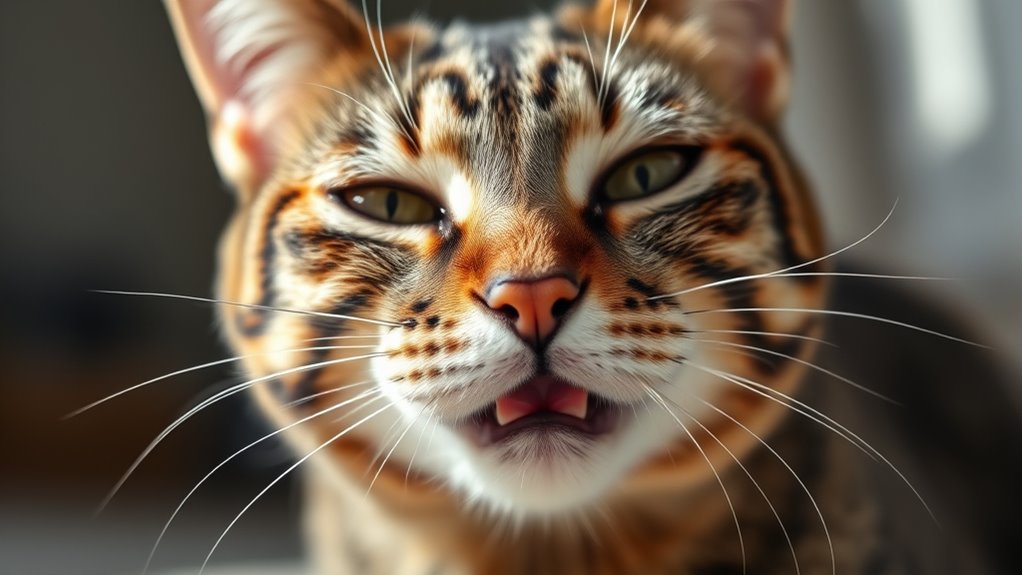
Do Cats Burp?
Yes, cats do burp, but it’s usually soft or nearly silent and happens only sometimes after meals. You might notice a gentle belch when air sneaks in as they eat or drink quickly.
Most burps are normal and fine, though frequent or loud belching can signal trouble like digestive or respiratory issues. If you see other symptoms or persistent burping, it’s a good idea to check with your vet.
There’s more you can learn by keeping an eye on patterns.
Key Takeaways
- Cats do burp, but far less often than humans or dogs; most burps are soft or nearly silent.
- Burping in cats usually comes from swallowing air while eating or drinking quickly.
- Normal burps are rare and mild; frequent or loud burps can indicate digestive or respiratory issues.
- Causes include fast eating, hairballs, acid reflux, dietary changes, or infections; persistent cases warrant veterinary care.
- Home tips: slow feeders, smaller meals, and monitored diet to reduce gulping; seek vet if burping is recurrent or همراه with other symptoms.
Do Cats Burp? Understanding Eructation in Cats
While cats do burp, it’s a relatively infrequent event compared with humans or dogs. You’ll notice a typical cat burp is soft or nearly silent, often a gentle gurgle or mild belch. Burping happens when excess gas builds in the stomach and needs an outlet, a process called eructation.
You may link it to swallowing air during eating or drinking, especially if you gulp or hurry. In many cases, normal burp reflects small air release and isn’t alarming. Yet you should plan for a mindful view if you observe frequent burping, louder sounds, or repeated episodes, since that can point to underlying issues with gas production or digestion.
Your cat’s nose-focused breathing reduces air swallowed, making burping less common. When it does occur, it’s usually a simple belching event tied to air in the stomach, not a cause for immediate concern.
Normal Burping vs. Concerning Burping: Key Distinctions
Normal burping in cats is rare and usually soft or quiet, often happening after a meal or a gulp of water. In this section, you’ll learn to distinguish normal burping from concerning burping by paying attention to frequency, volume, and accompanying signs. A single, mild burp after eating can be harmless, but frequent burps or loud burps may signal issues in your cat’s digestive system or cat’s respiratory health.
If burps come with gagging, vomiting, or difficulty breathing, that’s a red flag for potential cat’s gastrointestinal issues and requires veterinary evaluation. Remember, occasional burps without other symptoms are generally harmless, yet persistent or painful burping deserves professional guidance. Use this quick guide to monitor patterns in your pet and discuss findings with your veterinarian rather than guessing.
The goal is to protect your cat’s comfort and overall health.
| Normal burping | Concerning burping | Action needed |
|---|---|---|
| Most common after meals | Frequent or loud burps | Vet visit advised |
| Usually soft | Accompanied by gagging or vomiting | Monitor symptoms |
| No distress observed | Possible respiratory involvement | Seek urgent care if breathing difficulty |
Common Causes of Burping in Cats
Burping in cats can stem from several common causes. You might notice cats burp when they swallow excess air during eating or drinking, especially if they eat too quickly. Burping in cats can also arise from gastrointestinal issues like acid reflux, hairballs, or inflammation that disturb digestion and gas flow.
Respiratory problems, such as nasal congestion or mouth breathing, can contribute to swallowing air and create burps. Diet changes or food sensitivities can upset the gut, leading to gas buildup and more frequent burping. Infections or parasitic infestations, like roundworms, irritate the digestive tract and promote gas, increasing burps.
If you observe persistent or frequent burping, assess eating habits, check for signs of gastrointestinal distress, and consider a vet visit to rule out underlying issues. Keeping meals calmer and slower can reduce swallowing excess air and related burping, while monitoring for other symptoms guides next steps.
Managing Burping in Cats at Home
If your cat burps occasionally, you can reduce it at home by adjusting feeding and water habits. You’ll focus on practical steps that lower air swallowing and gas in cats, improving cat digestive health and overall small animal care.
- Use slow-feed bowls or puzzle feeders to promote slow eating and minimize air swallowed during meals.
- Feed smaller, more frequent meals to prevent rapid eating and reduce air ingestion.
- Offer water from a fountain or ensure slow drinking to avoid gulping air.
- Monitor feeding patterns and diet changes; avoid abrupt shifts that disturb digestion and trigger more burping.
When to See a Vet About Burping Cats
There are times when burping in cats signals something more serious, so you should consider a veterinary check if it’s frequent, persistent, or appears with other symptoms. You should seek veterinary care if you notice frequent burps alongside vomiting, diarrhea, lethargy, or weight loss, as these point to possible gastrointestinal issues.
A sudden onset of loud or painful burping, especially with breathing difficulties or gagging, warrants urgent veterinary attention. If your cat exhibits open-mouth breathing or other signs of respiratory distress, don’t delay—see a vet promptly.
Monitoring changes in burping frequency or behavior helps determine when a veterinary consultation is necessary to protect your pet’s health. In practice, track episodes in relation to meals, swallowing, or stress, and report any patterns to the clinician.
Early evaluation supports your goal of maintaining a healthy digestive system and overall pet health through appropriate veterinary care.
Frequently Asked Questions
Do Cats Burp or Fart?
Yes, cats do burp and fart. You’ll likely notice burps as soft or nearly silent releases from the stomach, and farting as gas passing through the rectum. You might see it happen after eating, swallowing air, or hairballs.
If you’re hearing frequent, loud, or painful sounds, or if your cat shows signs of discomfort, appetite loss, or vomiting, check with a vet, as it could signal digestive issues.
What Is the Silent Killer of Cats?
The silent killer of cats is hypertrophic cardiomyopathy. You might not notice it at first, since many cats stay asymptomatic for years. It’s the most common feline heart disorder and can strike suddenly, causing blood clots, congestive failure, or arrhythmias.
Regular vet checkups, including echocardiograms, help catch it early. If you notice rapid breathing, lethargy, or collapse, seek help quickly, because early detection improves management and outcomes.
Do Cats Hiccup or Burp?
Yes, cats can hiccup and burp. You’ll usually hear soft, brief burps from swallowed air, often after fast eating or gulping air.
Hiccups hit as rhythmic chest spasms and are typically more noticeable than burps. Both can stem from rapid feeding or GI irritation.
If burping is frequent or hiccups persist, or you notice other symptoms, you should check with your vet to rule out underlying health issues. Keep an eye on your cat’s eating pace and comfort.
Why Does My Cat Look Like He’s Burping?
Your cat looks like he’s burping because he’s releasing trapped gas or swallowing air, which can create a soft gulping sound. It might also be hiccuping or coughing, especially if there are diaphragm spasms or respiratory irritation.
Watch for accompanying signs like distress, repeated episodes, vomiting, or changes in appetite. If it happens often or loudly, has other symptoms, or lasts longer, consult your vet to rule out GI or respiratory issues.
Conclusion
So, yes, cats can burp, though it’s less common and usually less dramatic than in people. Most burps are harmless, often tied to swallowing air while eating or drinking.
An interesting stat: chronic burping in cats, while rare, can signal underlying GI issues or dietary intolerances that warrant a vet check.
If you notice frequent, loud, or foul-smelling burps, especially with vomiting or weight loss, schedule a vet visit promptly. Small changes in meal timing or texture might help.


