
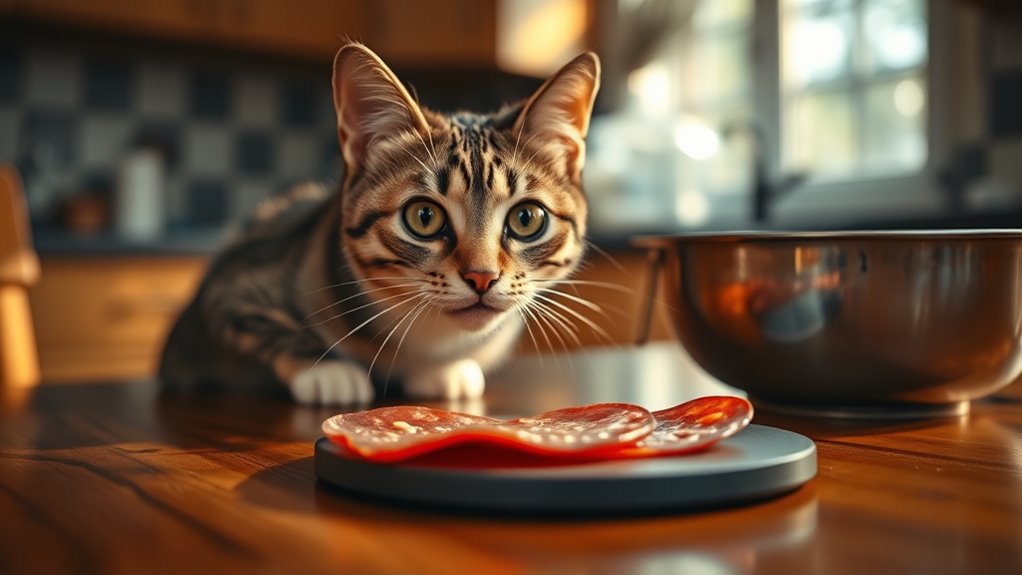
Can Cats Eat Pepperoni Safely?
Pepperoni isn’t safe for your cat. It’s high in salt, fat, and preservatives, plus additives like garlic and onion that can cause anemia and GI upset.
Feeding it can trigger dehydration, pancreatitis, and kidney stress.
If your cat eats pepperoni, monitor for vomiting, diarrhea, or lethargy and seek vet care if symptoms persist.
Offer plain, cooked meat instead and stick to cat-safe treats.
If you want practical tips, you’ll find them after this quick warning.
Key Takeaways
- Pepperoni is not safe for cats due to high sodium, fats, and preservatives like nitrates.
- Garlic and onion compounds in pepperoni can cause anemia and digestive issues in cats.
- High-fat content may trigger pancreatitis or obesity in felines.
- Symptoms of adverse effects include vomiting, diarrhea, lethargy, and abdominal pain.
- Safer alternatives are plain cooked meat or cat-specific treats; seek a vet if ingestion occurs.
Is Pepperoni Safe for Cats? Quick Answer
Pepperoni isn’t safe for cats. You’re asking if this meat snack fits into your cat’s world, and the quick answer is no. Pepperoni contains high sodium and preservatives like nitrates, which can stress your cat’s system.
Pepperoni isn’t safe for cats; high sodium and additives can stress a feline system.
You’ll also find spices such as garlic and onion, which are toxic to felines and can cause anemia or other health issues. The fat content in pepperoni can trigger gastrointestinal upset or pancreatitis, especially if fed in even small amounts.
From a health perspective, its processed nature and ingredients make it an unsafe food choice for cats. If you’re evaluating treats, consider options with minimal additives and no known risks.
Your cat relies on you to limit exposure to dangerous food, not broaden it with questionable snacks. In short, pepperoni poses toxicity risks and isn’t a recommended food for cats or their overall health.
Why Pepperoni Isn’t Safe for Cats
Pepperoni’s high sodium content can lead to salt poisoning and other health issues in cats. The presence of garlic and onion compounds (allium toxins) risks anemia and GI distress.
Added fats and additives further raise the chances of pancreatitis and allergic or digestive problems.
High Sodium Risks
High sodium intake isn’t safe for cats, and pepperoni pushes their limits quickly. You should know that a single slice can push a small cat toward sodium toxicity, stressing kidneys and raising blood pressure. Even small amounts contribute to sodium overload, which undermines cat health risks across body systems.
Chronic high sodium can lead to dehydration, kidney damage, and cardiovascular problems, especially since cats have limited ability to process salt.
- Recognize sodium toxicity signs early to prevent severe outcomes.
- Avoid processed meats entirely to curb high sodium exposure.
- Choose safer treats that support kidney function and overall health.
Allium Toxicity Errors
Are you aware that garlic and onion derivatives in pepperoni can quietly harm your cat? Allium toxicity is a real risk when pepperoni contains garlic and onion powders as flavorings or preservatives. Even small amounts can damage red blood cells, causing hemolytic anemia and gastrointestinal upset.
The toxic compounds interfere with your cat’s oxygen transport system, potentially leading to weakness, lethargy, and rapid breathing. These effects can be delayed, with symptoms appearing days after ingestion, so watch for signs beyond the immediate meal.
Pepperoni’s Allium poisoning risk is significant, making veterinary intervention critical if ingestion occurs. Prioritize safer treats, and avoid relying on pepperoni as a dietary option to prevent needless suffering.
Health Risks Pepperoni Poses to Cats
You should know that pepperoni poses several health hazards for cats, from high sodium and fat to toxic garlic and onion and added preservatives. These factors raise risks of salt poisoning, pancreatitis, anemia, GI distress, obesity, and long-term disease.
Understanding these processed-meat risks helps you decide whether pepperoni belongs in a cat’s diet at all.
Pepperoni Health Hazards
Pepperoni poses several health hazards for cats. You should know that the sodium content, preservatives, and high-fat content raise real concerns for feline health. The spices, especially garlic and onion, threaten your cat with anemia and digestive disturbances, while nitrates and nitrites add to toxicity and health risks.
Regular pepperoni exposure can strain kidneys and elevate blood pressure, impacting overall feline health.
- High-fat content can trigger pancreatitis and obesity, complicating digestion and metabolism.
- Preservatives and spices contribute to toxicity, gastrointestinal problems, and long-term health risks.
- Sodium content increases the potential for salt poisoning and cardiovascular stress in cats.
In short, pepperoni is not a safe snack for your cat, and health considerations should guide your choices.
Cats and Processed Meats
Processed meats like pepperoni pose several health risks for cats, so it’s best to steer clear. When you consider your feline diet, you weigh sodium, fat content, and overall toxicity. Pepperoni’s high sodium can trigger salt poisoning, while nitrates and nitrites raise health risks and toxicity concerns.
Spices like garlic and onion, common in pepperoni, are highly toxic to cats and can cause anemia and GI upset. The substantial fat content may lead to pancreatitis and digestive distress, especially with regular consumption.
Beyond immediate symptoms, consistent intake of processed meats raises obesity, diabetes, and cardiovascular problems. If you want to reduce potential dangers, choose lean proteins and monitor treats, keeping processed meats out of your cat’s routine.
Signs Pepperoni Affects Your Cat to Watch For
Keep an eye out for signs your cat may have eaten pepperoni, since the symptoms can appear within a day or two and range from mild to serious. You’re looking for clues that point to how pepperoni affects your cat, especially in the GI and behavior domains. Early indicators often include vomiting or diarrhea, sometimes paired with lethargy or loss of appetite.
Behavioral changes—irritability, hiding, or signs of discomfort—can follow ingestion. Abdominal pain is possible, and you might notice reduced interest in food or restlessness as the day progresses. In more severe cases, salt poisoning or nitrate toxicity may manifest with tremors, rapid breathing, or other acute signs that require fast vet contact.
Persistent symptoms, dehydration, or constipation signal a veterinary evaluation is needed.
- Vomiting, diarrhea, or abdominal pain as immediate GI responses.
- Behavioral changes and persistent symptoms indicating underlying health issues.
- Salt poisoning or nitrate toxicity as urgent red flags.
What to Do Right After Your Cat Eats Pepperoni
If your cat has just eaten pepperoni, start by monitoring for signs of distress during the next 24 to 48 hours, such as vomiting, diarrhea, or lethargy. You should observe closely for any changes in behavior or appetite and note when symptoms occur.
Offer small sips of fresh water to help prevent dehydration and support flushing out any potential toxins. Do not induce vomiting unless a veterinarian instructs you to, since improper attempts can worsen the situation.
If you notice persistent vomiting, difficulty defecating, or unusual behavior, contact a veterinarian promptly. Keeping a record of the ingestion is essential; write down the amount and type of pepperoni your cat consumed to aid diagnosis and treatment.
Stay vigilant for subtle signs of distress that might indicate exposure to toxicity. Remember, early veterinary guidance reduces risk and helps you manage symptoms effectively.
Safe Treats and Alternatives for Cats
Safe treats and alternatives for cats let you reward good behavior without risking their health. You can choose options that align with feline needs, minimizing potential risks while keeping meals balanced. Focus on cat treats that meet nutritional standards, and opt for small pieces of plain cooked meat or specially formulated products.
Avoid human foods like pepperoni, spicy or salty items, and anything with excessive preservatives. Freeze-dried or dehydrated meat treats made for cats offer convenient, tasty options that fit your cat’s diet. Remember your cat is an obligate carnivore, so treats should complement, not replace, a complete cat diet.
Always consider your cat’s nutritional needs and consult your veterinarian before introducing new treats.
1) Choose treats that meet nutritional standards and avoid добавления risky ingredients.
2) Prefer small pieces of cooked plain meat over seasoned options.
3) Use cat-specific products to minimize potential risks while pleasing your cat.
Should I See a Vet About Pepperoni and My Cat?
If your cat ingests pepperoni, especially varieties with garlic, onion, or high salt, it’s wise to call your vet promptly. You should seek advice immediately if you notice symptoms like vomiting, diarrhea, lethargy, or breathing difficulty after ingestion, since these could signal toxicity or GI upset.
Even small amounts of processed meats with additives can be harmful, making professional guidance essential. A vet can assess your cat’s health, determine the risk of toxicity, and decide whether supportive treatment, monitoring, or diagnostics are needed.
Don’t wait to see if symptoms worsen; early evaluation helps prevent complications and improves outcomes. In many cases, ingestion requires only observation and dietary management, but some cats may need medications or tests to address underlying issues.
Regular veterinary input is key to keeping your cat safe from harmful human foods and breaking the cycle of health issues related to accidental ingestion.
Frequently Asked Questions
Can Cats Eat a Little Bit of Pepperoni?
Can cats eat a little bit of pepperoni? Not recommended. You should avoid giving any pepperoni, because even small amounts carry risks like high sodium and fat, GI upset, or pancreatitis.
Garlic and onion in pepperoni can be toxic, and nitrates add further health concerns. If your cat accidentally nibbled a morsel, monitor for vomiting or diarrhea and contact your vet if symptoms appear.
For safety, stick to cat-appropriate treats.
What Is the One Meat to Never Feed a Cat?
The one meat to never feed a cat is processed meats like pepperoni. You should avoid these due to high sodium, preservatives, and toxic seasonings. Garlic and onion in pepperoni can cause anemia and GI upset, while nitrates and nitrites raise cancer and nitrate-poisoning risks.
The fat and salt can trigger pancreatitis and obesity. Stick to a species-appropriate, nutritionally complete diet instead, keeping cats away from any processed meats completely.
Can I Give a Stray Cat Pepperoni?
Yes, you shouldn’t give a stray cat pepperoni. Think of it like feeding a fire with gasoline—dangerous and unpredictable. Pepperoni is salty, fatty, and seasoned with garlic, which can upset a cat’s stomach or cause serious health issues.
If you’re helping a stray, offer proper feline food or safe treats instead. If it eats pepperoni, watch for distress and seek veterinary care promptly if symptoms appear.
Is Pepperoni a Healthy Treat for Cats?
No, pepperoni isn’t a healthy treat for cats. You shouldn’t feed it regularly due to high sodium, fats, and spicy seasonings like garlic and onion that can cause illness. Pepperoni offers no real nutrition for cats, and processed meats can provoke digestive upset or pancreatitis.
If you want a safe treat, pick small, plain, cooked options like plain chicken or cat-friendly treats. Always consult your vet before adding new foods.
Conclusion
You want your cat safe, you want peace of mind, you want to avoid pepperoni’s pitfalls. You can choose caution, you can choose restraint, you can choose healthier treats.
You’ll say no to spicy fats, no to salt overload, no to unpredictable ingredients. You’ll pick safer snacks, you’ll monitor carefully, you’ll seek veterinary guidance when in doubt.
You’ll protect your cat’s health, you’ll protect your bond, you’ll protect happier, healthier days together. You’ll choose safety, you’ll choose love.


