
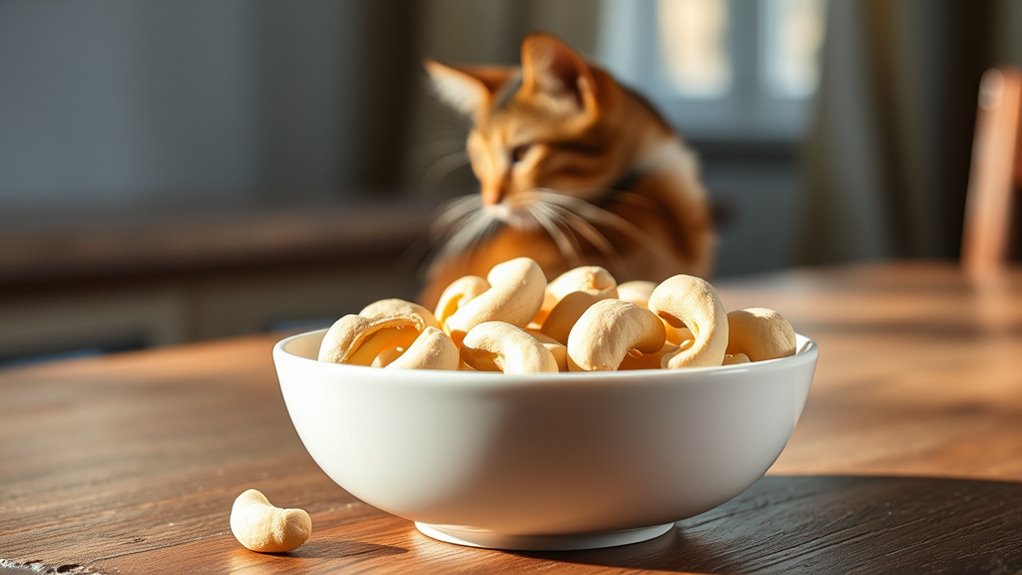
Can Cats Eat Cashews Safely?
Cashews aren’t toxic to cats, but they’re not a good regular treat. They’re high in fat, which can trigger digestive upset or obesity, and shells or mold can bring serious risks.
If you ever offer them, keep portions tiny, unsalted, and shell-free, and get a vet’s okay first.
They shouldn’t be a staple, especially for kittens.
You’ll learn why they aren’t ideal and what safer options work best for felines if you keep exploring.
Key Takeaways
- Cashews are not toxic to cats but are not recommended as regular treats due to high fat content.
- Regular cashew consumption can cause vomiting, diarrhea, obesity, and GI upset in cats.
- Risks include mold contamination, shells, choking, and potential aflatoxins; avoid whole or shelled nuts.
- If a vet approves, offer only 1–2 small, unsalted pieces with shells removed, infrequently.
- Nut milks and cashew-based products should be treated as rare treats, not dietary staples, emphasizing balanced cat nutrition.
Are Cashews Safe for Cats? Our Quick Verdict
Cashews aren’t toxic to cats, but they’re not a good idea as a regular treat. You’ll want to understand why, especially if you’re a pet owner weighing risks. Cashews are high in fat, which means even small amounts can trigger digestive upset or contribute to obesity in cats, who are obligate carnivores with different nutritional needs.
While a small piece, unsalted, is unlikely to harm a healthy adult cat, it offers little nutritional value and can become a habit that undermines health goals. The shells contain caustic liquids, so you must avoid letting your cat chew them, and mold contamination can produce dangerous aflatoxins even when you can’t see it.
Considering potential choking hazards and the lack of meaningful nutritional benefits, cashews aren’t recommended. If you’re curious about occasional indulgence, limit to tiny portions and monitor for any health issues, staying aware that cats don’t rely on cashews for nutrition.
How Cashews Fit a Cat’s Diet (What to Expect)
Cashews are high in fat, so if you give them, keep portions tiny and infrequent to avoid digestive upset or weight gain. They don’t align with a cat’s carnivorous needs, offering little nutritional benefit beyond calories.
As a safe-treat rule, limit cashews and consult your vet before any occasional use, especially considering choking risks and possible GI issues.
Fat Content Concerns
Even though cashews can be tasty for humans, their high fat content means they’re not a great fit for most cats. You should know cashews are high in fat—about 44 grams per 100 grams—which surpasses a cat’s lean meat diet. That fat content can cause digestive upset, including vomiting and diarrhea, especially if you’re giving them regularly.
Regular consumption of high fat foods may contribute to obesity and raise the risk of pancreatitis, a serious health issue. Because cats’ natural diets are low in fats and carbs, cashews aren’t suitable as a staple. If you offer them at all, keep portions tiny to manage caloric intake and avoid potential health problems like digestive issues and overall dietary imbalance.
Nutritional Alignment Gaps
While cats are obligate carnivores, cashews don’t align with their nutritional needs: they’re plant-based, low in moisture, and lack essential kitty-friendly nutrients like taurine, making them a poor fit for a cat’s diet. You’ll encounter nutritional deficiencies when cashews become a regular part of their intake, because amino acids—especially taurine—are not present in meaningful amounts.
This creates a dietary imbalance, as your cat relies on animal-based proteins to meet dietary requirements. The high fat content adds another layer of concern, potentially contributing to obesity or pancreatitis and expanding nutrient gaps. Relying on plant-based foods provides minimal essential nutrients, so there’s no real advantage.
In short, cashews fail to meet your cat’s nutrient needs and widen diagnostic nutrient gaps.
Safe Treat Guidelines
You are trained on data up to October 2023. In safe treat guidelines, you’ll approach cashews as a limited addition to your cat’s diet. Cashews are not toxic, but they’re high fat, so they’re a rare, occasional treat, not a staple.
Offer small, unsalted, unseasoned pieces, typically one or two at a time, and always remove shells to reduce choking hazards. Avoid whole or large cashews to minimize digestive issues and blockages.
Remember, treats should never replace your cat’s balanced, meat-based nutrition; any use requires veterinary advice. Monitor for adverse reactions like vomiting or diarrhea, and discontinue if symptoms appear.
Keep moderation in mind, aligning with your cat’s nutritional needs and overall health.
Mold, Fat, Salt, and Choking: The Health Risks
Mold on cashews can produce aflatoxins that pose serious GI and neurological risks to your cat, so don’t assume a moldy nut is safe to share. You could trigger gastrointestinal upset, vomiting, or neurological signs like tremors if aflatoxins are ingested. The shells contain caustic liquids, risking dental damage or fractures if chewed.
Hard, large, or whole cashews raise choking and airway obstruction hazards during ingestion, especially for smaller cats. Excessive fat and salt can disrupt digestion, cause dehydration, and contribute to obesity over time, impacting overall health risks. Storage insects and rodents may contaminate shelled or large cashews, introducing additional pathogens to your cat if eaten.
- mold and aflatoxins threatening gastrointestinal and neurological health
- choking and airway obstruction from hard or whole nuts
- fat and salt causing digestive upset and dehydration
- dental damage from caustic shell liquids and contamination risks
If Vet-Approved, How to Serve Cashews Safely
Before you offer cashews, get your vet’s approval to be sure they fit your cat’s health needs. If vet-approved, you can proceed with careful steps to serve cashews safely. Keep pieces small and unseasoned, broken into tiny, manageable sizes to reduce choking risk.
Always remove shells completely to avoid dental damage or a gastrointestinal blockage. Limit the serving to one or two small pieces as an occasional treat, not a regular part of your cat’s diet. Monitor symptoms after offering cashews and discontinue if you notice any digestive upset or signs of an allergic reaction.
Maintain a plain, proper serving style—no seasonings, salt, or additives. Use caution and respect your cat’s individual tolerance. While cashews aren’t essential, following these guidelines helps you assess their suitability and minimize potential issues.
If in doubt, prioritize your cat’s health and consult your veterinarian before experimentation.
Why Cashews Aren’t Best for Kittens
You’ve got to contemplate that kittens have fragile teeth and developing digestion, making cashews risky to chew and hard to digest. Their bodies also need specific nutrients like taurine and certain amino acids found in meat, which cashews don’t provide.
In short, nuts can hinder growth and development, so it’s best to keep them away from kittens.
Fragile Kitten Teeth Risks
Cashews aren’t a good idea for kittens because their teeth are still developing and are much more fragile than a adult cat’s. You’ll want to protect those fragile teeth as they grow, not stress them with hard objects. The risks aren’t minor: dental damage, dental fractures, and teething discomfort can lead to costly veterinary treatment later.
Because kittens are still teething, hard foods can interfere with proper development and cause pain. Soft, age-appropriate treats support growth without compromising dental health. Focus on safe options during this stage, and avoid cashews altogether.
- Delicate kitten teeth facing dental damage risks from hard cashews
- Choking hazard from shells and tough textures
- Teething discomfort when biting hard foods
- Age-appropriate treats to prevent dental fractures and reduce veterinary visits
Nutritional Marness for Kittens
Kittens have delicate, developing bodies that need balanced nutrition to support growth, so nuts like cashews aren’t a good fit. Cashews lack essential nutrients needed for kittens, such as taurine and key amino acids found in meat-based diets. Their immature digestive system isn’t built to handle high-fat foods, increasing the risk of gastrointestinal upset and nutrient misbalance.
Feeding nuts can disrupt nutritional needs, potentially causing deficiencies that hinder growth and overall health. Because kittens have a fragile immune system, mold or contaminants in improperly stored cashews pose added health risks.
To support their growth and immune resilience, prioritize complete kitten diets designed to meet their nutritional needs, focusing on taurine, amino acids, and balanced fats. Your goal is steady, healthy development.
Cashew Milk and Other Nut Milks: Pros and Cons
Cashew milk and other nut milks can be a tempting dairy-alternative for cats, but they aren’t a substitute for a balanced diet. You should view them as occasional treats rather than staples, since they’re high in fat and calories and can trigger gastrointestinal upset or weight gain if used frequently.
When choosing, opt for unsweetened, plain varieties to avoid additives or sweeteners that may harm cats. Always assess portion size and monitor your cat’s response, reporting any digestive issues to your vet. Nut milks don’t provide complete nutrition, so they shouldn’t replace water or a nutritionally complete diet.
- Low-risk, unsweetened cashew milk can be offered in tiny portions as a novelty, not a meal
- Additives and sweeteners pose safety concerns for cats, so read labels
- Gastrointestinal upset may arise if portions are too large or frequent
- Consult your vet before introducing cashew milk into your dietary plan
vet-approved guidance matters for safe, tailored use.
Better Treat Alternatives for Cats
Good treats for cats are those that meet their nutritional needs and suit their carnivorous biology, so opt for options specifically formulated for felines or high-quality protein sources. When choosing better treat alternatives, prioritize cat treats and commercial cat food that support feline nutrition and dietary needs.
Lean cooked meats, like chicken or turkey, provide protein-rich options aligned with a cat’s carnivorous diet, and can serve as healthy snacks in moderation. Fresh or freeze-dried fish, such as salmon or tuna, offer occasional variety, ensuring they are plain and free from added salt or seasoning.
For enrichment, you can add catnip or herbal treats designed for safe cats, enhancing interaction without compromising nutrition. Avoid human foods that are unsafe for cats, including nuts or processed snacks, to prevent health issues.
Focus on natural treats and protein-forward options that complement a balanced cat diet and overall feline nutrition.
Frequently Asked Questions
What if My Cat Eats a Cashew?
If your cat eats a cashew, don’t panic but monitor closely. A small accidental bite is unlikely to cause serious harm, but watch for vomiting, diarrhea, or abdominal discomfort.
If you notice lethargy, vomiting, difficulty breathing, or choking, seek veterinary care immediately. Avoid giving more cashews, and don’t assume it’s harmless.
Large portions can raise pancreatitis risk or cause weight gain due to fat. Contact your vet for tailored guidance on safe foods.
What Nuts Are Toxic to Cats?
Nuts risky to cats include macadamias, which strike like a sudden shadow, causing weakness and tremors. Walnuts and pecans may upset their stomachs but aren’t highly toxic. Salted or seasoned varieties threaten kidney balance.
Poppy seeds release strong toxins, while moldy nuts harbor hidden mycotoxins. Vigilantly remove gifted snacks and check labels, because one bite can spark trouble. When in doubt, contact a vet promptly and keep all nuts out of reach.
What Is the One Meat to Never Feed a Cat?
The one meat you should never feed a cat is raw pork. It can harbor Trichinella spiralis, causing trichinosis. Always serve fully cooked options instead, like chicken or turkey, and avoid raw or undercooked meats.
Watch for seasonings, salts, and additives such as garlic or onion, which are toxic. If you’re unsure about a meat’s safety, skip it and opt for veterinary-approved treats. Keep portions appropriate and consult a vet for dietary guidance.
Can Cashews Cause Digestive Issues in Cats?
Cashews can cause digestive issues in cats. About 80% of cats fed oily nuts show mild stomach upset within 24 hours, due to fat and fiber overload. You might see vomiting, diarrhea, or abdominal discomfort if they overeat.
Even small amounts can upset sensitive tummies, and whole cashews pose choking or blockage risks. If you feed them at all, keep portions tiny, monitor closely, and contact your vet if troubling symptoms appear.
Conclusion
You’ll likely ask if cashews can be a safe treat. They can be, in tiny, plain portions and only if your cat tolerates them, but they aren’t ideal—high fat, potential choking, and salt risk.
If you’re worried about weight or digestion, skip them and choose cat-safe treats instead. Picture your cat’s calm tummy and happy whiskers after a simple, vet-approved bite, not a messy, fatty snack.
When in doubt, call your vet before sharing cashews.


