
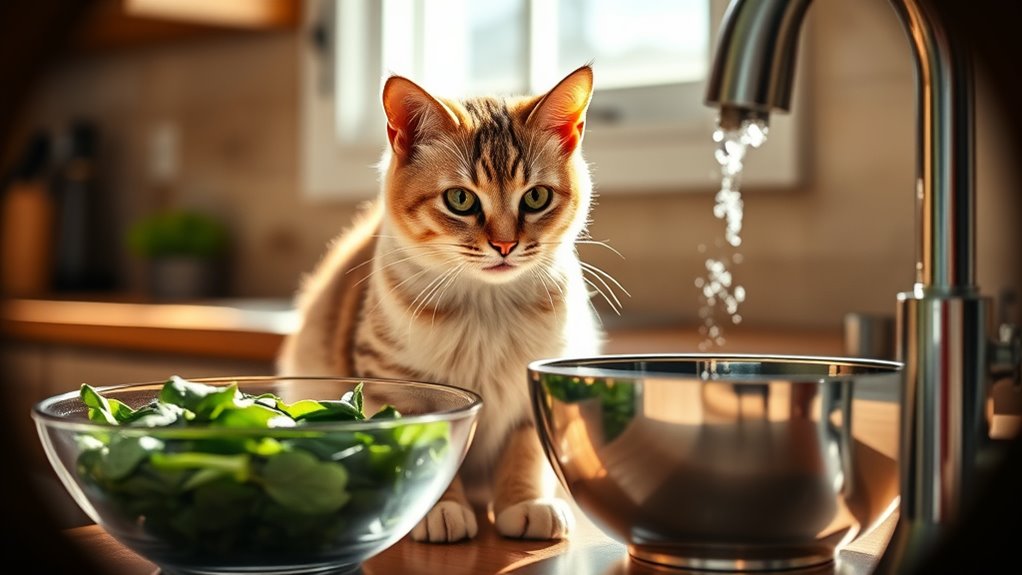
Can Cats Have Spinach and How to Safely Introduce It to Their Diet
Yes, your cat can have a tiny, cooked spinach treat occasionally, but it’s not a staple. Feed small portions and keep it meat-based, since spinach is a supplement, not a diet mainstay.
Wash thoroughly, steam or boil without salt or seasonings, and chop into small pieces. Start with a pinch, watch for vomiting or diarrhea, and avoid if your cat has kidney or urinary concerns.
If you want more tips, you’ll find practical steps and safety notes ahead.
Key Takeaways
- Cats can have spinach in small, cooked amounts as an occasional supplement, not a staple of their diet.
- Thoroughly wash spinach and lightly steam or boil without salt or seasonings before serving.
- Serve tiny portions: about 1 teaspoon for small cats or 1 tablespoon for larger cats.
- Introduce gradually and monitor for vomiting, diarrhea, or discomfort; discontinue if adverse signs appear.
- Spinach is optional and should not replace a balanced, meat-based diet; consult a vet if urinary/kidney issues exist.
Can Cats Eat Spinach? The Quick Verdict
Can cats eat spinach? Yes, but only in small, cooked amounts and as an occasional treat, not a staple part of a diet. You’ll find spinach offers nutrients like vitamins A, C, and K, plus minerals such as iron and magnesium. For most cats, these nutrients can be introduced safely in tiny portions, helping with variety without replacing proper cat foods.
However, the calcium oxalate in spinach can pose health risks, particularly if urinary or kidney issues are present, so it should be used with caution. If you’re considering spinach, start with a very small amount and monitor your cat for any adverse reactions. Always keep portions modest and avoid relying on spinach for health benefits.
Before adding any new human foods, consult a veterinarian to confirm it’s appropriate for your cat’s health and individual needs, and ensure spinach remains a rare, not routine, part of their diet.
Spinach in a Cat’s Diet: Benefits, Risks, and Why It’s Optional
Spinach adds optional vitamins and minerals to your cat’s diet, but it isn’t a must-have since high-quality cat foods cover core nutrition. In moderation, it can offer small benefits, yet oxalates may affect calcium absorption and urinary health in some cats.
Consider it as a rare supplement, and always consult your veterinarian before introducing spinach, especially if your cat has health concerns.
Spinach Benefits Overview
While spinach can offer small amounts of vitamins A, C, and K, plus minerals like iron and calcium, it’s not required in a cat’s diet. You’ll find spinach benefits in how antioxidants and fiber support digestion and immune function when given sparingly. In practical terms, spinach is a dietary supplement, not a staple, and high-quality commercial foods typically meet a cat’s essential vitamin and mineral needs without it.
The leafy greens contribute minerals and vitamins, but calcium oxalate raises concerns for urinary health and kidney issues in sensitive cats. If you choose to offer spinach, keep portions tiny and infrequent. Remember, spinach should supplement—not replace—nutrient-rich meals, aligning with a cat’s overall diet plan and individual health.
Optional Dietary Role
Although spinach isn’t a necessity for a cat, it can serve as a small, optional addition rather than a staple. In this optional dietary role, you’ll view spinach as a safe, occasional supplement rather than a core feeding element.
Your cat’s diet should be driven by meat, aligned with the obligate carnivore needs, and supported by high-quality cat food to meet complete nutrition. Spinach may offer health benefits like vitamins and minerals, but these are non-essential and can be outweighed by risks from calcium oxalates, especially if urinary issues exist.
To introduce spinach safely, keep portions tiny and infrequent, and monitor for any adverse reactions. Use spinach as a treat, not a habit, and prioritize a balanced diet over reliance on this supplement.
Spinach and Kidney or Urinary Issues: What to Know
Spinach can affect kidney and urinary health in cats, especially those with existing issues, so you’ll want to assess risk and signs of trouble. Be aware that oxalate can form crystals or stones and that chronic consumption may hinder calcium absorption, potentially worsening urinary problems.
Always consult your veterinarian before offering spinach to cats with kidney or urinary concerns.
Spinach and Kidney Health
If your cat has kidney disease or a history of urinary crystals, spinach should be avoided because its high oxalate content can worsen these conditions. You’ll want to prioritize kidney health by steering clear of foods that disrupt calcium absorption and raise urinary risk. Spinach contains oxalates that can contribute to renal and bladder crystals, potentially aggravating urinary issues in susceptible cats.
In pre-existing conditions, regular spinach consumption may increase the chance of urinary stones or bladder crystals, complicating management. Always discuss any new foods with your veterinarian to tailor a safe vegetables plan. If you and your vet approve spinach, offer only small, infrequent amounts and monitor for signs of kidney problems.
When in doubt, choose safer vegetables to protect kidney health.
Urinary Issue Triggers
Even a small amount of spinach can trigger discomfort or worsen symptoms in cats with urinary tract sensitivities, so many pets with kidney or bladder issues should avoid it. Spinach contains calcium oxalate crystals that can contribute to urinary stones, so urinary issues often worsen if you introduce it.
For bladder stones or calcium oxalate concerns, this leafy veggie can raise the risk of oxalate crystals forming in the urinary tract. If your cat has kidney problems, regular spinach may exacerbate urinary health problems and irritate urinary tract symptoms.
In those with urinary tract sensitivity, even tiny portions can provoke discomfort or urinary symptoms. Always consult a veterinarian before offering spinach to protect urinary tract health and avoid urinary tract triggers.
Safe Feeding Guidelines
For cats with kidney or urinary issues, it’s important to approach spinach carefully. You should prioritize safe feeding practices and consult a veterinarian before offering spinach to any cat with known urinary or kidney problems. Spinach contains oxalates that can interfere with calcium absorption and potentially worsen kidney or bladder conditions, so limit or avoid it if advised.
When considering spinach, use small amounts and infrequent servings as a precaution, and monitor your cat for any changes in urinary health. Rely on dietary guidelines from your vet, and treat spinach as a rare, healthy-treat option only if cleared. Always seek veterinary guidance for individualized recommendations and ongoing kidney health management.
| Spinach intake | Urinary risk | Action |
|---|---|---|
| Small amounts | Low risk if cleared | Monitor |
| Infrequent servings | Potential concern | Confirm with vet |
| With meals | Safer absorption | Follow guidelines |
| Avoid if kidney issues | High risk | Do not feed |
| Recheck periodically | Urinary health | Vet follow-up |
How to Prepare Spinach for Cats Safely and Serving Sizes
When preparing spinach for your cat, start with a thorough wash to remove pesticides and contaminants, then cook it lightly by steaming or boiling without salt or seasonings to keep it easy to digest.
Spinach should be prepared in small portions to avoid overloading your cat. Use chopped pieces, either cooked or raw, depending on your cat’s tolerance. Aim for safe serving sizes that fit your cat’s meal schedule.
Never add garlic, onions, or other harmful ingredients during the prep. Introduce spinach gradually as an occasional treat and observe digestion.
Keep portions small and monitor for any adverse reactions, including changes in stool or appetite. If you notice distress, discontinue use and consult your veterinarian.
Spinach vs. Other Veggies: When to Choose Greens for Cats
Choosing greens for your cat depends on balancing nutritional benefits with potential risks; spinach can fit as an occasional treat, but other greens—like parsley or cat grass—often win on safety due to lower oxalates and broader appeal.
When you compare leafy greens, spinach offers vitamins A, C, and K, but its higher oxalate level raises concerns for urinary health in some cats. If you’re selecting vegetables, opt for greens with lower oxalates and simpler profiles, so your cat’s dietary choices stay straightforward.
Prepared properly matters: wash thoroughly, remove stems if tough, and avoid seasonings that could upset digestion. Cat grasses and parsley are popular due to their natural appeal and lower oxalate content, making them dependable options for occasional supplementation.
Use spinach sparingly, prioritizing other greens for routine snacking while keeping an eye on any urinary symptoms. For overall health, diversify greens thoughtfully and monitor your cat’s response to each vegetable.
A Simple Step-by-Step Plan to Introduce Spinach to Your Cat
Spinach can be a safe, occasional addition to your cat’s diet, but starting slowly helps you gauge tolerance. Here’s a simple, step-by-step plan to introduce spinach safely.
- Wash fresh spinach thoroughly to remove pesticides and contaminants.
- Lightly steam or cook the leaves without salt, spices, or seasonings.
- Chop into small pieces to make cooking and feeding easier.
- Offer a small portion, such as one teaspoon for small cats or one tablespoon for larger cats.
- Observe your cat for signs of discomfort after feeding and adjust accordingly.
Tips to follow: use spinach as a supplement, not a staple, and keep portions small. If you notice vomiting, diarrhea, or skin reactions, stop feeding and reassess.
Always consider your cat’s health history and consult your veterinarian before regularly adding spinach to the diet, especially if health issues exist. This careful approach helps you safely introduce spinach while protecting your cat’s health.
FAQs About Cats Eating Spinach
If you’re wondering whether spinach is right for your cat, the answer is: it can be safe in small, occasional amounts when prepared properly. In this FAQs section, you’ll get quick guidance on how to introduce spinach to your cat’s diet without risking health issues. Spinach delivers nutrients like vitamins A, C, K, and iron, which can support health when fed occasionally and in moderation.
Because of oxalates, it may affect urinary health or contribute to kidney stones in susceptible cats, so moderation is essential. Both raw and cooked spinach are acceptable, but steaming without seasoning is recommended for easier digestion. Always observe your cat for signs of discomfort after eating spinach and stop if you notice any adverse reactions.
Before introducing spinach or any new human food, consult your vet to ensure it fits your cat’s needs. This approach keeps your cat’s diet safe and balanced.
Frequently Asked Questions
How Do I Prepare Spinach for My Cat?
Yes, you can prepare spinach for your cat. Wash it well, then steam or boil until tender without salt or seasonings. Let it cool completely, chop into small pieces, and serve plain.
Avoid raw spinach, which can be harder to digest or pose choking risks. Start with a tiny amount and observe for any tummy upset, then offer sparingly as an occasional treat, not a main dietary component.
Always consult your vet if unsure.
Are There Any Risks of Feeding Spinach to Cats?
Yes, there are risks. Spinach contains calcium oxalate, which can form urinary crystals or stones, especially with overfeeding or kidney/UT issues. Raw spinach has higher oxalate levels than cooked, and large amounts can hinder calcium absorption, causing imbalances.
Some cats may get vomiting or diarrhea from spinach. If you introduce it, do so sparingly, monitor for digestive upset or urinary problems, and consult a vet for any pre-existing conditions.
How Much Spinach Can I Give My Cat?
Give him a small amount—a teaspoon for a small cat or a tablespoon for a larger cat. Remember, moderation is key, so don’t go over a few bites. Too much spinach can upset digestion or contribute to urinary issues from oxalates.
Adjust the amount to your cat’s size and health, and consult your vet if you’re unsure. It’s not the main course, just a little treat, so tread carefully. Use it sparingly, stay cautious.
What Are the Signs of Spinach Poisoning in Cats?
Spinach poisoning in cats can show up as vomiting, diarrhea, abdominal discomfort, decreased appetite, lethargy, and difficulty urinating. Large amounts may cause urinary crystals or bladder stones, leading to obstructive issues.
If you notice any of these signs, seek immediate veterinary care. Chronic, long-term intake can risk kidney damage from oxalate buildup. Stay vigilant and avoid regular, heavy spinach feeding; contact your vet for guidance on safe alternatives.
Conclusion
You can cautiously offer spinach, but it’s optional and not a staple in your cat’s diet. Start with tiny amounts, watch for any digestive upset, and choose plain, cooked greens.
Spinach isn’t necessary for hydration, so don’t rely on it as a water source. If your cat has kidney or urinary concerns, consult your vet first.
Think of spinach as a garnish for interest, not a meal—delightful to taste, like a teaser before the main course.


