
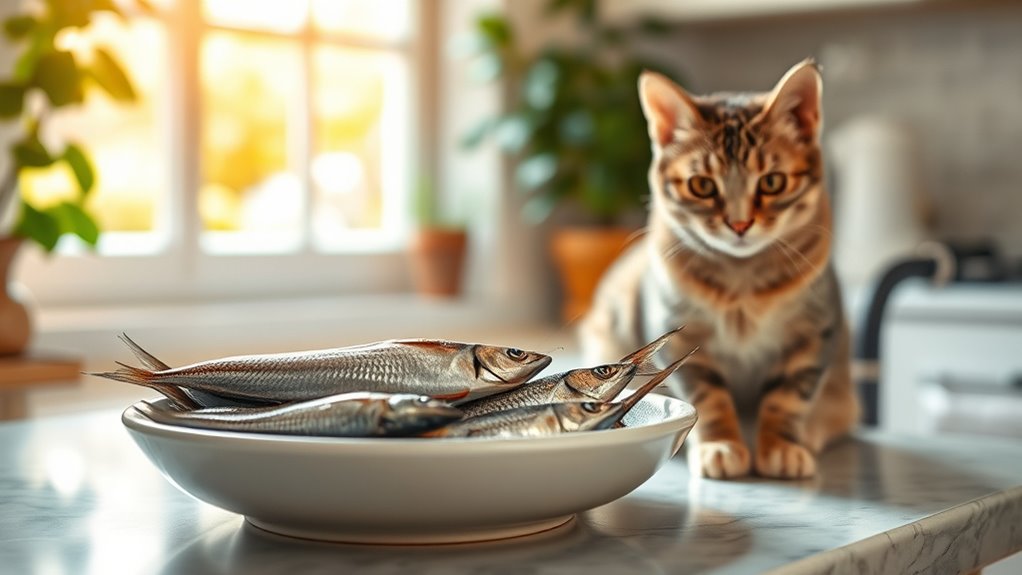
Can Cats Have Sardines?
Yes, you can give your cat sardines in moderation, as long as you choose plain, water-packed options and remove bones.
Feed them cooked or canned without oil, salt, sauces, or seasonings, and rinse the can to cut sodium.
Offer about one small sardine or a tablespoon of fish once or twice a week, not daily, to avoid mercury buildup.
They’re a tasty, nutrient-rich treat, but they shouldn’t replace a balanced diet.
More tips await if you keep reading.
Key Takeaways
- Sardines are generally safe for cats in moderation when prepared properly (cooked, boneless, plain, and served in water without salt or seasonings).
- They are nutrient-rich, offering omega-3 fatty acids, high-quality protein, and taurine, which support skin, coat, heart, and joints.
- Best practice is to feed once or twice weekly, avoiding daily meals to limit salt, mercury, and choking risks.
- Always remove bones, rinse canned sardines to reduce sodium, and avoid oil-packed or seasoned varieties.
- Use sardines as a supplement to, not a substitute for, a balanced cat diet, and consult a vet for personalized guidance.
Are Sardines Safe for Cats? The Quick Answer
Yes, sardines can be safe for cats in moderation. You can offer sardines in small, controlled portions and prepare them properly to keep your kitty healthy. Fresh or canned sardines in water without added salt or seasonings are the best options for you to choose.
When you feed, remove bones and ensure the fish is cooked to reduce choking hazards and digestive issues. Opt for canned fish packed in water rather than oil or sauces, which helps control fat and sodium intake. If you go with fresh, cook it thoroughly and avoid any seasoning that could upset your cat’s stomach.
Feed sardines occasionally—about once or twice a week—to help prevent mercury buildup and excess sodium. As you introduce sardines, monitor for adverse reactions like vomiting or diarrhea, and adjust portions accordingly. This approach keeps sardines a safe, occasional treat within your cat’s broader health plan.
Nutritional Benefits of Sardines for Cats
Sardines can be a nutritious addition to your cat’s diet, thanks to their rich omega-3 fatty acids, high-quality protein, and essential minerals. You’ll get omega-3 fatty acids that support skin, coat, and joint health, helping you notice a shinier coat and smoother movement. The vitamin D content aids calcium absorption, promoting stronger bones and teeth.
With about 25 grams of complete protein per 100 grams, sardines help maintain your cat’s lean muscle mass and overall significance. Taurine is present, contributing to heart health, proper vision, and reproductive function. Minerals, including calcium around 382 mg per 100 grams and phosphorus, support skeletal integrity and metabolic processes.
In short, sardines deliver notable nutritional benefits for a balanced diet, when offered in appropriate portions. Pair them with other foods to maintain variety, and avoid overfeeding to prevent excess calories. Always consider your cat’s individual needs and any dietary restrictions.
How to Choose Sardines for Cats
To pick the right sardines for your cat, start with options packed in water rather than oil to cut extra fat and sodium, and look for those without added salt or seasonings. You’ll want sardines packed in water or boneless sardines to reduce choking risks, and you should avoid bones when possible. Choose products labeled without added salt and without flavor boosters, sauces, or preservatives.
If you can, select fresh sardines or opt for frozen varieties to minimize processing toward high-sodium canned options. When shopping, check labels for ingredients and keep it simple: minimal ingredients, no sauces or tomato sauces. Prefer canned sardines in water when you can’t access fresh or frozen, but still aim for sardines packed in water rather than oil and with no added salt.
Always read ingredients to ensure you’re avoiding unnecessary additives that could upset your cat’s digestion. Your goal is safe, straightforward options that support your cat’s health.
Preparing Sardines: Safe Handling and Safety Tips
When you prep sardines for your cat, follow safe handling steps to minimize risk and keep nutrients intact. Be mindful of oil and salt risks by rinsing canned sardines and avoiding added seasonings, oils, or sauces.
Always choose boneless, fresh or water-packed sardines and remove bones to prevent choking or internal injuries.
Safe Handling Steps
Safe handling starts with prep that minimizes risk: cook the sardines thoroughly to kill any bacteria or parasites, remove all bones to avoid choking or injuries, and rinse the can to reduce extra salt.
You’ll start by cooking the sardines until opaque and flaky, then check for any remaining bones and remove them, ensuring a smooth texture for your cat. After cooking, rinse the fish to lower sodium content and avoid overly salty portions.
Keep portions small—about one small sardine per adult cat—as an occasional treat. Serve plain, without oils, seasonings, or sauces, to maintain safety.
Practice safe handling by storing leftovers promptly in a covered container and discarding any spoiled fish. This approach supports responsible, mindful feeding within safe handling guidelines.
Oil and Salt Risks
Oil and salt pose real risks, so you’ll want to drain oil thoroughly and rinse away excess salt to keep sardines safe for your cat. When you prep sardines, drained fish helps cut calories and fat, and rinsing lowers sodium content.
Avoid raw additions; additives in oil or salt can upset digestion. Serve plain or cooked sardines with no extra oils or seasonings to minimize health risks.
| Source | Action | Result |
|---|---|---|
| Oil-packed | Drain | Reduces fat and calories |
| Rinsing | Do it | Lowers sodium content |
| Additives | Avoid | Prevents digestive upset |
| Salts | Limit | Safer sodium exposure |
| Safety | Verify | Keeps cat’s gut happy |
Bone-Free Preparation
Bone-free preparation matters most: always remove bones from sardines before feeding your cat, so you can prevent choking or internal injuries. When you choose boneless sardines or carefully pick out bones, you improve safe feeding. Thorough preparation safety means inspecting each fish and removing bones with tweezers or fingers, leaving only soft flesh.
If you cook sardines, bones soften, but it’s still safest to serve boneless to avoid risk. For canned sardines, rinse them to wash away excess salt and small bone fragments, reducing hazards. Always verify there are no sharp remnants, and drain before serving.
How Much Sardines Can a Cat Eat Safely?
You can keep your cat happy and healthy by limiting sardine servings to about one small sardine or 1 tablespoon of canned sardines in water per week. To guarantee the portion size stays safe for cats, follow the recommended guideline and avoid regular daily feeding.
Remember that feeding sardines more than once or twice weekly can raise mercury content in your pet’s system and introduce excess salt. Treat sardines as an occasional treat, not a daily staple, to reduce health risks and maintain balanced nutrition.
Remember sardines are an occasional treat, not a daily staple.
Always remove bones and rinse canned sardines in water before serving, which helps minimize choking hazards and sodium exposure. By monitoring feeding frequency and portion size, you prevent unnecessary strain on kidneys and cardiovascular health while still offering a flavorful variety.
If you’re unsure about your cat’s tolerance, start with the smallest portion and observe for any digestive upset or changes in behavior. When used thoughtfully, sardines can be a safe addition to a cat’s diet.
Risks to Watch: Salt, Mercury, and Bone Hazards
You’ll want to watch salt, mercury, and bone hazards when feeding sardines to your cat. Even occasional servings can raise salt and heavy metal concerns, while bones can pose choking or internal injury risks.
Rinsing and limiting portions help reduce these dangers and keep sardines a safer treat.
Salt Levels Concern
Even though sardines can be a tasty treat for cats, the salt content is a real concern: canned sardines often pack about 340 mg of sodium per can, which can be harmful if fed in excess. You should monitor sodium content to protect your cat’s health. By rinsing sardines, you can achieve a sodium reduction that makes this treat safer to offer occasionally.
Remember that high salt levels can contribute to dehydration and kidney issues over time, so moderation is key. Choose options labeled boneless and water-packed when possible, and limit servings to small portions. Pair with fresh water, and avoid routinely feeding salty fish to prevent long-term electrolyte imbalances and other salt-related risks.
Mercury and Safety Hazards
Mercury and other safety hazards are important to watch when offering sardines to your cat. You should know that canned sardines often carry high salt levels, which can trigger hypertension and kidney issues if you overfeed. Sardines can accumulate mercury from the ocean, posing a toxicity risk with frequent or large portions.
Heavier metals are present in trace amounts, so long-term overconsumption may raise concerns about safety. Bones in sardines, if ingested, can cause choking or internal injuries; choosing boneless options helps reduce this risk. Rinsing sardines before serving can cut sodium, further lowering salt-related hazards.
Always balance portions, monitor your cat’s reactions, and consider safer alternatives if you notice signs of distress.
Sardines vs Other Fish: Which Is Best for Cats?
When choosing between sardines and other fish for your cat, sardines often come out on top for safety and nutrition. You’ll notice they’re smaller and lower in mercury, making them a safer choice than larger fish. Their omega-3 fatty acids support a healthy skin and coat, which helps with overall cat health.
Compared with mackerel, sardines generally have fewer toxins when sourced properly, reducing exposure risk. The nutrient profile is strong, offering essential vitamins and minerals without overwhelming contaminant levels. While salmon and mackerel are also nutritious, sardines’ balance of safety, affordability, and convenience makes them a practical option for occasional treats or rotation.
Compared with mackerel, sardines bring fewer toxins and a robust nutrient profile, making them a practical, safe option for occasional treats.
- Safer choice due to size and lower contaminant levels
- Higher omega-3 fatty acids per serving
- Readily available in water-packed cans
- Budget-friendly and easy to portion
How Often Should Cats Eat Sardines Without Replacing Meals?
You can give sardines to your cat as an occasional treat, not a replacement for their regular meals. To keep health on track, use moderation and aim for small portions, like one small sardine or a tablespoon of canned fish. This helps your cat receive omega-3 fatty acids and nutritional benefits without overexposure to salt or mercury.
Incorporate sardines into a balanced diet by offering them no more than once or twice a week. Daily or large quantities can cause issues, such as kidney strain or nutritional imbalances, so reserve sardines for occasional treats rather than regular meals. Always serve sardines within a varied, balanced program that supports your cat’s overall wellbeing.
Common Myths About Sardines for Cats Debunked
Many of the myths about sardines for cats can lead to unnecessary worry or inappropriate feeding. You’ll find that facts matter more than fear when evaluating sardines for cats. In moderation, rinsed and boneless sardines in water are generally safe, not in oil, and never a full diet substitute.
Moderation, rinsed sardines in water are safe as a treat, not a substitute.
The idea that sardines always bring a fishy odor is overstated; proper portioning and hygiene help keep smells manageable. Remember, sardines should be a treat or supplement, not a replacement for complete meals. Mercury levels are often assumed high, but small, infrequent servings pose minimal risk.
Salt content is a concern, yet rinsing markedly lowers sodium to safer levels for most cats.
- sardines for cats can be safe feeding when prepared properly
- treat or supplement, not a complete diet
- fishy odor can be managed with portions and hygiene
- monitor mercury levels and sodium through mindful serving sizes
Final Thoughts: Integrating Sardines Into a Balanced Cat Diet
While sardines can enrich a cat’s diet as a small, occasional treat, they should fit into a balanced eating plan rather than replace complete meals. You’ll want to view sardines as a supplement to high-quality commercial cat food, not a primary source of nutrition. The health benefits come from omega-3s and protein, but these must be weighed against risks like mercury and sodium when overused.
Aim for moderation—about once or twice weekly—with sardines served in water, boneless, and plain (no seasonings or oils). Proper preparation matters: cook if needed, remove bones, and avoid added fats. Use sardines to enhance variety and palatability without disrupting overall nutrition.
Regular veterinary consultation helps tailor the approach to your cat’s age, weight, and health conditions, ensuring sardines fit within a balanced diet. Final thoughts: keep portions small, monitor response, and prioritize consistent, complete nutrition for long-term well-being.
Frequently Asked Questions
What Canned Fish Can Cats Eat?
Canned fish your cat can eat includes sardines, salmon, mackerel, and tuna, as long as it’s packed in water and free of added salt, oil, or seasonings. Remove bones and offer small portions to prevent choking. Avoid fish in tomato sauce, oil, or with preservatives.
Use canned fish only as an occasional treat that complements a complete cat food diet, not as a primary protein source. Remember balance, portion control, and fresh water daily.
How to Prepare Sardines for a Cat?
Yes, you should cook sardines thoroughly, debone, rinse, and offer only a tiny plain portion. You’ll love this “easy” routine: heat, remove bones, wipe away salt, then serve a small sardine or tablespoon of chopped sardines once or twice a week.
Keep it salt-free, oil-free, and always plain. No sauces, no seasonings. Irony aside, your cat gets a safe treat that’s small, simple, and occasional.
What Canned Sardines Are Best for Cats?
The best canned sardines for cats are in water, boneless, with no added salt or preservatives. Look for trusted brands that test for contaminants and choose ones labeled as low-sodium.
If they’re packed in oil, rinse well before serving to cut fat and sodium. Serve at room temperature and only occasionally as a treat or supplement to a balanced diet, ensuring bones are removed or are truly boneless.
Moderation is key.
What Is the One Meat to Never Feed a Cat?
The one meat to never feed a cat is raw liver. It can cause vitamin A toxicity and digestive issues, especially in excess.
Cooked or raw liver in excess can lead to hypervitaminosis A, damaging bones and causing pain. Liver from some animals may carry parasites or bacteria if not prepared properly.
Pork liver has higher fat and should be avoided or fed sparingly. Always consult your veterinarian before adding any new meat to your cat’s diet.
Conclusion
If you’re thinking about sardines for your cat, they can be a tasty, occasional treat and a good source of omega-3s, calcium, and protein. Just choose low-sodium, packed-in-water options, avoid added spices, bones, or oil, and feed in moderation.
Don’t replace meals with fish, watch for mercury in long-term use, and stick to a vet-recommended portion. Think of sardines as a sprinkle, not a staple—like a tiny, ancient commodity, say, a penny saved in a tin.


