
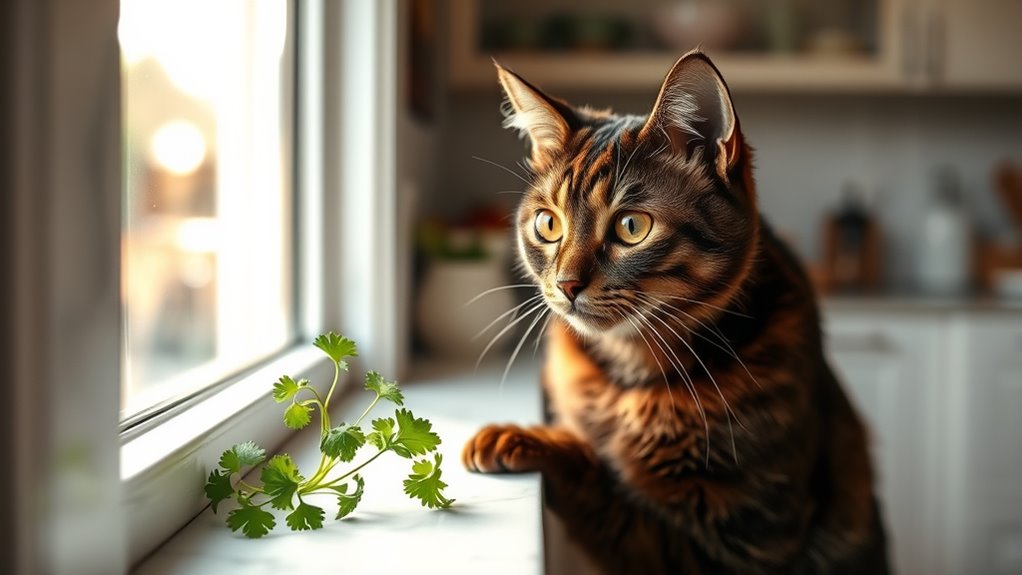
How Cats Can Safely Eat Cilantro
Cilantro can be a safe, occasional treat for your cat in small amounts, but it shouldn’t replace a meat-based diet. Start with a fresh, rinsed leaf or two and mix a tiny, finely chopped piece into familiar food.
Monitor for vomiting, diarrhea, itching, or swelling. A typical safe amount is about 1–2 teaspoons per day, not more. If adverse signs show up, discontinue and call your vet.
You’ll find practical tips and doses as you explore further.
Key Takeaways
- Cilantro is generally safe for cats in moderation and should not replace a balanced, meat-based diet.
- Use cilantro as an occasional treat or garnish, not a meal replacement.
- Safe serving: 1–2 teaspoons of chopped cilantro per day, starting with tiny amounts.
- Introduce by offering a fresh, rinsed piece finely chopped and mixed into familiar food.
- Watch for adverse reactions (vomiting, diarrhea, itching) and consult a vet if they occur.
Is Cilantro Safe for Cats? Quick Yes/No Verdict
You are trained on data up to October 2023. Is cilantro safe for cats? Quick yes/no: generally yes, in moderation. You’ll be mindful that large quantities can trigger digestive issues like vomiting or diarrhea, so portion control matters.
The herb should never replace a balanced, meat-based diet, since feline nutrition leans heavily on animal protein. Before offering cilantro, introduce it gradually and monitor for any allergic reactions, such as itching, swelling, or digestive upset beyond mild nausea.
If you notice anything concerning, pause and consult a veterinarian. The goal is to keep cilantro as a safe, occasional addition rather than a staple treat. When used cautiously, cilantro can be a small, flavorful herb that your cat tolerates.
Always consider your cat’s overall health and any existing conditions, and err on the side of safety with veterinary guidance.
When Cilantro Makes Sense for Your Cat (Use Cases)
Cilantro makes sense for your cat as an occasional, interest-driven addition when they tolerate it well. You may offer cilantro as a small, fresh treat that fits into a pup-friendly, balanced routine. In the right circumstances, it can support digestive health and provide antioxidants that blend into a healthy feline diet.
Use cilantro as a dietary supplement only in small amounts, observing how your cat responds before adding it more regularly. This approach works best when you incorporate cilantro into homemade cat food or as a garnish, adding flavor and extra nutrients without overwhelming their system. Start with tiny portions and monitor for any adverse reactions, spacing introductions to avoid digestive upset.
If you notice positive interest and no negative effects, you can consider gradual inclusion as a tastelike variety. For ongoing use, consult your veterinarian to ensure cilantro aligns with your cat’s overall health plan and dietary needs. cilantro, safe for cats, dietary supplement, small amounts, digestive health, feline diet, veterinarian consultation.
How Much Cilantro Can Your Cat Have? Safe Dosage Details
A small amount goes a long way: for most cats, 1–2 teaspoons of chopped cilantro per day is safe if given occasionally, and a leaf or two can be enough to deliver potential benefits without upsetting digestion. In this safe dosage, you’ll typically see cats eat cilantro without issues, but you should start slow and observe.
The amount matters: too much can trigger adverse reactions like vomiting or diarrhea, especially if your cat has a sensitive stomach. Keep servings modest and monitor how your cat responds over a day or two before deciding on a routine.
If you notice any signs of distress, cut back or stop offering cilantro and consult your veterinarian for personalized guidance. Remember, cilantro should supplement a balanced diet, not replace meals.
When you introduce it, track its impact on health, and adjust consumption accordingly to stay within a safe range.
Step-by-Step: How to Introduce Cilantro to Your Cat Safely
Starting from safe, small portions in the previous section, you’ll want to ease cilantro into your cat’s routine gradually.
Here’s a practical step-by-step to introduce cilantro safely into your cat’s diet.
1) Start with a fresh piece, rinse thoroughly, and offer to observe interest and tolerance.
2) If your cat accepts it, cut a tiny, fine piece and mix it into a familiar meal, watching for any digestive signals.
3) Increase the amount only after a positive, uneventful response, maintaining a gradual pace and avoiding sudden changes.
4) If you notice vomiting, diarrhea, or reluctance, discontinue and consult your veterinarian to confirm cilantro fits your cat’s health needs and to tailor a safe plan.
Cilantro for Cats: Benefits vs. Risks You Should Know
Cilantro can offer small antioxidant and vitamin boosts for cats when used sparingly, but it’s not a guaranteed benefit for every animal. You should weigh potential digestive upset and the fact that some cats tolerate it poorly against the possible perks.
Moderation and a vet’s guidance are key to balancing cilantro’s benefits with its risks.
Cilantro Benefits For Cats
Cilantro can offer small nutritional perks for cats when given in moderation, including vitamins A, C, and K and antioxidants like lutein that may support immune health and reduce oxidative stress.
- Cilantro provides vitamins A, C, and K in tiny amounts that supplement overall cats’ nutrition.
- Antioxidants help support immune health and combat oxidative stress without adding unnecessary calories.
- Moderate portions align with cats’ dietary needs and avoid digestive upset.
- Cilantro is an occasional treat, not an essential dietary component for cats.
Cilantro Risks For Cats
While cilantro can be safe in small amounts, there are real risks to watch for when feeding it to your cat. In this Cilantro Risks For Cats section, you’ll learn what to monitor. Excessive cilantro can trigger gastrointestinal issues like vomiting and diarrhea, so portion control matters.
Large quantities may provoke allergic reactions or sensitivities in some cats. Remember, cilantro should not replace a balanced, meat-based diet, and some cats might experience digestive discomfort if they ingest cilantro too frequently.
Consider your cat’s dietary concerns and overall health before offering it. Always seek veterinarian consultation before introducing cilantro to ensure safe serving sizes and identify potential health risks specific to your pet. Use cilantro sparingly and observe any changes in behavior or stools.
Picking, Preparing, and Serving Cilantro for Cats
To pick cilantro for your cat, start with fresh, organic bunches that have vibrant green leaves and no wilting or yellowing. You’ll prepare it by rinsing under cold running water to remove dirt, pesticides, and potential contaminants before serving. Remove thick stems or woody parts, offering only the tender leaves and smaller stems to your cat.
Choose fresh cilantro, rinse well, trim thick stems, and offer tender leaves in moderation.
Chop cilantro into small, manageable pieces to prevent choking and make it easier for your cat to nibble. Serve cilantro in moderation, either as a small garnish on food or a tiny, plain leaf as a treat, ensuring it is plain without added seasonings.
- Choose fresh cilantro with vibrant leaves, free of wilting
- Rinse thoroughly to remove contaminants
- Trim to manageable pieces, discarding thick stems
- Present in moderation, plain and unseasoned for serving
When to Call the Vet About Cilantro Use
If your cat shows signs of vomiting, diarrhea, or an allergic reaction after eating cilantro, call your veterinarian right away. You’ll want vet advice promptly if you notice adverse reactions, or if you’re unsure about safety after accidental ingestion.
Seek guidance if your cat consumes large quantities of cilantro, or if you observe unusual behavior, lethargy, or difficulty breathing following ingestion. Your vet can provide a diagnosis and clarify whether cilantro is appropriate for your pet’s health, especially if your cat has preexisting conditions or is on medications.
If digestive upset persists, schedule a veterinary appointment for evaluation rather than guessing at home. Reach out for professional advice before introducing cilantro again, to confirm it won’t interact with medications or worsen a condition.
In short, rely on your vet for safety, diagnosis, and ongoing health guidance related to cilantro use.
Frequently Asked Questions
What Happens if My Cat Eats Cilantro?
If your cat eats cilantro, you’ll likely see no harm from a small amount, and they might even benefit a little nutritionally. But if they eat a lot, they could get vomiting or diarrhea, and allergies are possible too.
Watch for signs of discomfort or skin issues, and don’t overdo it. If symptoms persist or you’re unsure, call your vet for guidance and to rule out any serious reaction.
Can Cats Lick Cilantro?
Yes, cats can lick cilantro. In small amounts, it’s usually safe and can be a mild curiosity for them. Just rinse the cilantro first to remove pesticides, and supervise to avoid overeating, which might cause upset stomach.
If you notice vomiting, diarrhea, or decreased appetite after licking cilantro, stop giving it and check with your vet. Keep portions light and occasional, as a snack rather than a regular treat.
What Is the Most Toxic Plant to a Cat?
The most toxic plant to a cat is the lily. You’ll feel the contrast: beauty in your home, danger in your cat’s kidneys. Even a small nibble can trigger severe kidney failure, demanding urgent vet care.
While other plants pose risks, lilies stand out for their seriousness. Keep lilies away, and verify any plant’s safety before your cat explores it.
If exposure happens, seek immediate veterinary advice and monitor for symptoms like vomiting or lethargy.
Can Cats Have Cilantro Stems?
Yes, cats can have cilantro stems in small, chopped amounts. You should rinse the stems thoroughly to remove any pesticides or dirt, and offer them in moderation because the stems are fibrous yet generally digestible.
Some cats prefer the texture, so try a little at a time and watch for any adverse reactions. Avoid thick or woody stems that could cause choking or discomfort, and always supervise until you’re sure they tolerate cilantro well.
Conclusion
Cilantro isn’t a magic wand, but it can be a hint of green in your cat’s day. You’ll want to tread softly, like a cat stalking through tall grass—small amounts, watched for reactions.
If your feline friend wags a tail or nudges for more, it’s a green-light nudge; if they balk or sneeze, retreat gracefully. When in doubt, chat with your vet.
Safety first keeps the purrs rolling and the cilantro stays a tasty, tiny adventure.


