How to Tell if a Cat Is in Heat
You’ll know a cat is in heat by noticeable behavioral changes like loud vocalizing, increased affection, and a raised rear with the tail to the side.
She may rub against objects, seek attention, and pace or try to escape outdoors.
Physical signs are subtle—vaginal swelling and faint scent—but she might spray or mark.
The cycle lasts about a week and can recur every few weeks during breeding season.
Curious for more specifics? There’s plenty to explore below.
Key Takeaways
- Look for increased vocalization and persistent calling, often loud yowling or meowing.
- Notice heightened affection: rubbing against objects, people, and other animals, and seeking attention.
- Observe mating behaviors: lifted hindquarters, arched back, tail to the side, and assuming a mating posture.
- Watch for restlessness and attempts to escape outdoors or reduced interest in food.
- Check for subtle physical cues: raised rear end and a faint scent, with minimal visible changes.
What Does Heat Mean for a Cat?
When a cat is in heat, she’s sexually receptive and fertile, meaning she can become pregnant. You’re about to learn what heat means for a cat and how it shows up. The heat cycle marks her readiness to mate, indicating reproductive maturity.
During this time, you’ll notice heat cycle patterns and behavior changes that signal her body is prepared for reproduction. She’s fertile during these windows, so you’ll see increased vocalization and more attention-seeking behavior as she tries to attract a mate. Physical signs can include vocal yowling, arching her back, and raising her rear end, which are common cues owners use to recognize heat.
Bleeding is rare, so don’t expect obvious menstrual-type flow. The cycle typically lasts 1 to 2 weeks and recurs every 3 weeks in breeding season, meaning you’ll manage intermittent focus on mating readiness. Understanding this helps you respond appropriately and monitor her comfort during heat.
Key Behavioral Signs of a Cat in Heat
A cat in heat typically shows several clear behavioral signs that you can notice quickly. In this stage, you’ll see heightened affection, with your cat rubbing against objects, people, and other animals more often. Expect vocalization to be loud and persistent, a characteristic heat cycle cue that can resemble calling or yowling.
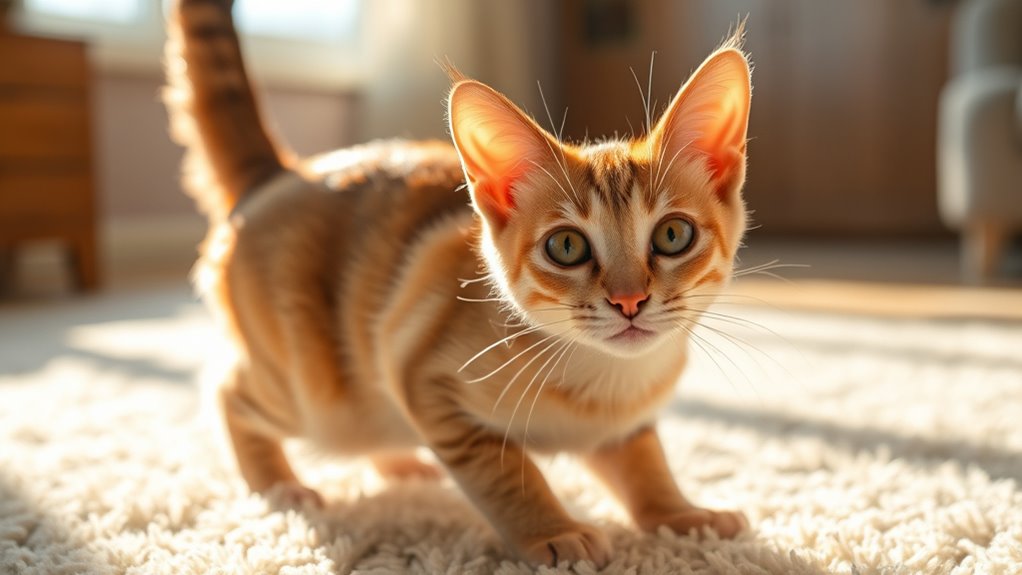
You may also observe a mating posture, where she lifts her hindquarters, arches her back, and moves her tail to the side. Marking with urine and increased urination are common ways she signals fertility and tries to attract a mate. Restlessness is another clue: she might pace, try to escape outdoors, and show less interest in food.
These behavioral signs help you recognize the heat cycle without needing medical testing. If you’re considering remedies or timing for spay, track these patterns to plan accordingly and discuss options with your veterinarian.
Physical Signs and Fertility Cues in Female Cats
Physical signs of a cat in heat are usually subtle, with most cues coming from behavior rather than obvious physical changes. In this section, you’ll notice that minority physical cues accompany fertility cues. A female cat in heat may show vaginal swelling and a faint scent, though bleeding is uncommon.
You’ll see a raised rear end, tail held to the side, and frequent rubbing against objects—clear indicators beyond routine grooming. External changes remain minimal, so rely on behavior as your primary guide. Some cats urinate more often or spray to mark territory, which can function as a physical cue of heat.
How Long Does a Cat’s Heat Cycle Last?
A cat’s heat cycle typically lasts about a week, though timing can vary. During the heat cycle, you’ll notice behavioral changes more than obvious physical signs, and those shifts can differ by breed and individual temperament.
On average, you might see cycles recur every 2 to 3 weeks during the breeding season, so if you’re tracking patterns, expect repeating episodes rather than a single event. The duration isn’t fixed; it depends on your cat’s environment and unique biology, so some cycles may run shorter or longer than the stated range.
You’ll likely observe increased vocalization, restlessness, and demonstrations of affection, alongside subtle physical cues. Spayed cats don’t experience this recurring period, which helps you plan long-term care and occupancy needs.
Remember that every cat is different, so your observations should align with this general framework while noting your own pet’s specific tempo. If concerns arise, consult a veterinarian for personalized guidance.
Does Bleeding Occur During Heat?
Most cats don’t bleed during heat, so blood isn’t a reliable sign of being in heat. You’ll likely notice behavioral changes first, not bleeding, as cats show attraction, vocalization, and restlessness during this time.
Bleeding is rare in feline heat cycles and, when it occurs, signals health issues rather than heat itself. If you observe any vaginal bleeding, think pregnancy or a bigger problem such as pyometra or other reproductive issues that need veterinary care.
In contrast to dogs, where bleeding during estrus is common, cats typically reveal their state through behavior rather than discharge. Bloody discharge is an emergency in cats and warrants immediate vet consultation to rule out serious conditions.
Trust your observations of temperament and activity, and don’t dismiss unusual bleeding as normal. When in doubt, contact your veterinarian promptly to ensure your cat’s health isn’t at risk.
Proestrus, Estrus, and Interestrus: What’s the Difference?
Proestrus basics show rising estrogen with little to no outward behavior changes, usually lasting 1–2 days.
Estrus is the fertile window, 3–14 days, marked by vocalizing and affectionate rubbing as cats become receptive.
Interestrus sits between cycles when mating hasn’t occurred, so there are no heat behaviors until the next cycle begins.
Proestrus Basics
Proestrus is the short, prelude phase to a cat’s heat, marked by rising estrogen but few outward signs. During this brief window, you won’t see obvious changes, but hormonal shifts are underway to prepare for the upcoming cycle.
You may notice subtle cues, yet physical signs remain minimal. This is when proestrus begins to set the stage for behavioral changes that typically appear later in estrus, if mating hasn’t occurred.
For your pet health, understanding this phase helps you monitor any underlying issues and plan care accordingly. Proestrus lasts about 1–2 days, then your cat may move into estrus or cool into interestrus if mating hasn’t occurred.
Recognize that cycle timing can reset, especially if pregnancy or spaying isn’t involved.
Estrus vs Interestrus Differences
Estrus and interestrus are distinct phases in a cat’s reproductive cycle, each with its own timing and behavior. You’ll notice proestrus lasts 1-2 days with rising estrogen but no heat behavior. Then comes estrus, marked by vocalization, affectionate rubbing, and a raised tail, lasting 3-14 days and defining the heat period.
If she hasn’t mated, interestrus may pause heat behaviors, and the cycle can resume later. During interestrus, she isn’t receptive to mating, and there are no external physical signs differentiating the phases. In short, heat behavior appears during estrus and may vanish during interestrus, with timing varying from days to weeks.
Understanding this pattern helps you anticipate when she’s most likely receptive to mating, and when she isn’t.
Home Care: Keeping a Cat in Heat Safe and Stress-Free
During a cat’s heat, keeping her indoors is essential to prevent escapes and unwanted pregnancies, while creating a calm, quiet environment with toys and affection helps reduce stress. You’ll want a secure space, with windows and doors firmly closed, so she can’t slip out. Maintain a stable routine and avoid sudden changes that could heighten anxiety.
Use gentle handling and speak softly to minimize discomfort. Fill the environment with interactive toys and puzzle feeders to redirect energy and attention away from restlessness. A pheromone diffuser or spray, such as Feliway, can help create a soothing atmosphere and ease tension.
Regular play sessions paired with short, calm cuddles can boost her sense of safety without overstimulation. Keep lighting moderate and provide cozy retreats she can retreat to when overwhelmed. With consistent, compassionate care, you’ll reduce stress and support her through this temporary phase.
Spaying During or After Heat: Safety and Timing
Spaying timing matters, so you’ll want to talk with your vet about whether to spay during heat or after. During heat, blood flow to the reproductive organs increases, which can raise bleeding risk and make the procedure a bit more challenging.
Your vet can weigh safety and outcomes to decide the best timing for your cat.
Spaying Timing Considerations
Spaying during heat is possible but carries higher surgical risks, so many vets recommend delaying until after the heat cycle ends. When you consider spaying timing, you weigh benefits against health risks like increased bleeding due to heightened blood flow to reproductive organs. Waiting until after heat lets uterine tissues return to normal, reducing intraoperative bleeding and supporting a safer procedure.
However, spaying during heat can be necessary in certain situations, so your veterinarian may proceed if they deem it safest for your cat’s overall health. Be mindful that anesthesia risks may be higher and recovery could take longer if you spay during or immediately after heat. Always consult your veterinarian to tailor timing to your cat’s health and reproductive cycle.
Heat Cycle Safety During Spay
If your cat is in heat, it’s still possible to proceed with a spay, but you’ll want to weigh safety and timing carefully. Spaying during heat is generally safe, but you may see increased bleeding and swelling, so precise surgical technique matters. Many veterinarians advise waiting until the heat cycle ends to reduce risks of excessive bleeding and complications.
Doing the procedure during heat doesn’t harm the cat and can be necessary, though it may be slightly more challenging. Timing the spay after heat minimizes blood flow to reproductive tissues, improving intraoperative conditions and outcomes. Always consult your veterinarian to determine the best timing based on your cat’s heat cycle and overall health, balancing heat cycle safety and long‑term benefits.
When to Seek Veterinary Help for a Cat in Heat
If your cat seems stressed or uncomfortable during her heat, you should seek veterinary help if certain signs don’t improve within a typical cycle. You’ll want veterinary care if distress manifests as excessive vocalization or signs of pain that linger beyond the usual duration.
If the heat cycle lasts longer than two to three weeks, contact a vet, since that could indicate an abnormality requiring evaluation. Schedule a veterinary appointment if you notice vaginal discharge, bleeding, vomiting, or a drop in appetite during her heat, as these symptoms may signal complications.
Consult a veterinarian if behavioral changes appear extreme or if your cat seems markedly uncomfortable, since persistent distress warrants professional assessment. Reach out to your vet for guidance before attempting any medical interventions or spaying during her heat cycle. Timely veterinary care helps ensure your cat’s safety and appropriate management of the heat period.
Heat Cycles and Daily Life: Tips for Routines and Planning
Heat cycles can be easier to handle when you plan around them, since consistency helps keep stress down for a cat in heat. You’ll notice behavioral signs like increased vocalization, rubbing, and seeking attention daily during each cycle, especially from spring to fall if she’s not spayed. To support routine management, keep a steady schedule and avoid sudden changes that can intensify her behaviors.
Indoor enrichment matters—offer toys, puzzles, and regular playtimes to distract from the urge to vocalize or escape. Schedule veterinary visits or spaying planning around her cycles to minimize disruptions during recurring seasons. Set predictable feeding, litter, and downtime windows so she knows what to expect.
While heat cycles recur every 2–3 weeks when in season, maintaining consistency reduces anxiety and helps you respond more calmly to her behavioral signs. With thoughtful planning, daily life stays smoother for both of you.
Frequently Asked Questions
What Are the First Signs of a Cat in Heat?
The first signs of a cat in heat include louder vocalizations—yowling or calling—lasting several days. You’ll notice she rubs against objects, people, and other animals more often, and she may adopt a mating posture with her rear end raised and hips arched.
She’ll likely become more affectionate, purring and seeking extra attention. Some cats start spraying urine to mark territory, while others engage in heightened grooming and restlessness between heat cycles.
How Long Does a Cat Stay in Heat?
A coincidence of timing lands you here: yes, a cat stays in heat about 3 to 14 days per cycle, though it can feel longer if she’s playful or restless.
If she isn’t bred or spayed, she may repeat every 2 to 3 weeks during the season. Overall, the season lasts months, from spring to fall, with multiple cycles possible until pregnancy or neutering ends them.
Watch her behavior and consult a vet for guidance.
How Can I Get My Cat Out of Heat?
To get your cat out of heat, you can’t stop it on your own, but you can ease the process. Provide a calm, quiet space, extra attention, and pheromone diffusers to reduce stress. Keep her indoors and away from unneutered males.
Consider spaying as the most effective long-term solution, and consult your vet for timing and options. Avoid stressing her with loud activity or rough handling, and make sure she’s comfortable and safe during this time.
What Does a Cat Look Like When It’s in Heat?
A cat in heat looks more alert and expressive: she lifts her hindquarters, tucks her tail to the side, and arches her back. You’ll notice increased vocalizing, like louder meows or yowls, and she’ll press against you or objects, seeking attention.
She might roll, rub, or rub against furniture, and may spray or mark territory. She could become clingy one moment and restless the next, clearly signaling she’s ready to mate.
Conclusion
You’ll know a cat’s in heat by the way she roams, cries, and assumes the breeding posture, even if you’ve never heard such sounds before. Think of a fitness class, where every routine is louder and longer—that’s her cycle in action.
When my neighbor’s shy tabby suddenly yowled all night, we traced it to estrus, learned to enforce calm, and scheduled a vet visit.
A calm home beats chaos; timing and care make this phase manageable.