
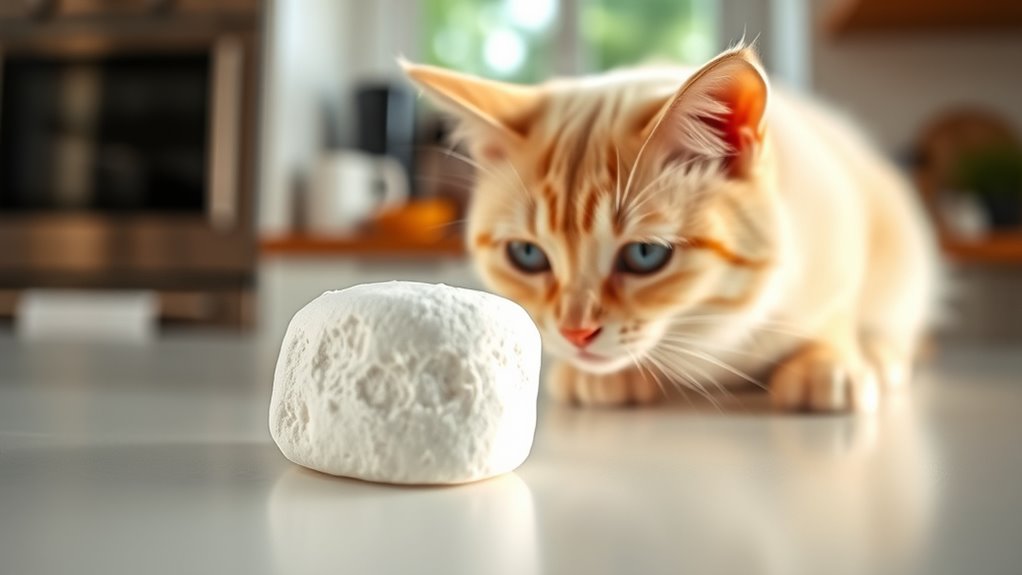
Can Cats Eat Marshmallows Safely?
You should never give marshmallows to your cat, because they offer no nutritional value and can trigger choking, vomiting, or diarrhea.
Cats don’t taste sweets like people do, but the soft, fluffy texture can still be a choking or gag risk if they chew or swallow pieces.
If your cat swallows marshmallows or you notice vomiting, diarrhea, or distress, call the vet.
Want safer enrichment tips and quick steps to prevent mishaps? You’ll find them just ahead.
Key Takeaways
- Marshmallows are unsafe for cats due to choking risk and potential digestive upset.
- They offer no nutritional benefit to felines and are high in sugar.
- Ingesting marshmallows can cause vomiting, diarrhea, or more severe issues if large amounts are eaten.
- If a cat nibbles a marshmallow, monitor for distress and contact a vet if symptoms worsen or persist.
- Best practice: avoid giving marshmallows; store sweets securely and provide cat-safe treats instead.
Can Cats Safely Eat Marshmallows? Quick Verdict
Marshmallows aren’t safe for cats. You’re asking for a quick verdict, so here it is: cats should not eat marshmallows. They pose choking hazards, and simple swallowing can lead to digestive upset.
You’ll find the problem isn’t the marshmallow’s weight so much as its texture and sugar content. Marshmallows contain high levels of sugar, offering no nutritional benefit to cats and contributing to gastrointestinal discomfort if ingested.
If a cat does manage to swallow a portion, vomiting and diarrhea can follow, which is exactly the digestive upset you want to avoid. Although marshmallows aren’t poisonous, their risks outweigh any perceived harmlessness.
Your safer playbook is clear: avoid marshmallows and choose approved feline treats instead. If you’re ever unsure about a snack, trust the rule of thumb: anything sugary treats your cat doesn’t need should stay off the menu.
Keep marshmallows out of reach to prevent accidental ingestion.
Why Do Cats Even Care About Marshmallows?
Cats don’t care about sweetness, but they do care about the curiosity it sparks. You’ll notice your cat may pause near a marshmallow not for flavor but for the pull of curiosity. This curiosity is driven by sensory curiosity—a desire to explore what the object can offer through smell, touch, and sight.
You might sense how the soft, fluffy texture invites interaction, almost like prey or a toy, triggering exploratory instincts. Their attention isn’t about tasting sugar; it’s about the chance to investigate scent and feel. You’ll see that unfamiliar items intrigue them when boredom or mental stimulation is present, nudging them toward investigation.
Health Risks and Warning Signs if Marshmallows Are Eaten
If your cat eats marshmallows, watch for signs of distress like vomiting, lethargy, or reduced appetite, and be ready to act quickly.
Quick first-aid steps include removing remaining food, offering water if tolerated, and contacting a vet if symptoms persist or worsen.
Seek veterinary advice immediately if you notice choking, abnormal behavior, or any signs that could signal a blockage or sugar-related issues.
Signs Of Distress After Ingestion
After a cat ingests marshmallows, watch for early signs of distress like vomiting, diarrhea, or general GI upset, since these symptoms can appear soon and indicate irritation or a problem in the digestive tract.
- Vomiting and gastrointestinal upset may follow ingestion, signaling irritation.
- Signs of distress include lethargy, loss of appetite, or excessive drooling shortly after ingestion.
- Be alert for persistent vomiting or inability to keep food or water down.
- If large amounts or packaging are involved, choking or blockage risks require veterinary attention.
If you notice any of these symptoms after eating marshmallows, prompt veterinary consultation is essential for proper treatment and to rule out complications.
Quick First-Aid And When To Seek Vet
When a cat eats marshmallows, act quickly if you notice vomiting, diarrhea, choking, or signs of breathing trouble, since these can indicate GI upset or airway issues. Most cases cause mild discomfort, but persistent vomiting or lethargy warrants veterinary attention promptly.
If you swallow plastic packaging or large marshmallows, watch for choking, difficulty breathing, or abdominal pain, and seek emergency care if symptoms occur. If symptoms like vomiting, excessive drooling, or abdominal distress develop, withhold food and water temporarily and contact your vet promptly.
Prompt veterinary consultation is essential if your cat shows distress after eating marshmallows, especially after ingesting a large quantity or packaging. In such scenarios, emergency care and veterinary attention help prevent complications and guide next steps.
If Your Cat Eats Marshmallows: Immediate Steps and When to Call a Vet
If your cat grabs a marshmallow, start by watching for signs of GI upset like vomiting, diarrhea, or lethargy. You’ll want to pause extra treats, offer small water sips, and avoid feeding until symptoms resolve; a short fast (about 8 hours) can help their stomach.
If symptoms persist or worsen, seek veterinary care promptly. Note signs of illness such as vomiting, drooling, or abdominal discomfort, and track any changes in appetite. Provide small water amounts and no additional treats while monitoring for improvement.
Call your veterinarian if vomiting continues, breathing becomes difficult, or you suspect large ingestion or packaging. Seek emergency care if you see drooling, severe abdominal pain, or collapse.
Remember to keep marshmallows out of reach to prevent cat ingestion and ensure quick veterinary access if needed. If concerns arise, don’t delay contact with veterinary care.
Safer Enrichment Alternatives for Cats
Safer enrichment for cats focuses on engaging their natural instincts with healthy, stimulating options that curb curiosity about unsafe foods like marshmallows. You’ll boost enrichment by using puzzle feeders and interactive toys that satisfy hunting drives while keeping sugar off the radar. Direct safe, high-protein treats like cooked chicken or feline snacks to redirect interest away from human sweets.
Create an environment that supports mental stimulation through varied textures, scents, and challenges, reinforcing environmental enrichment every day. Outdoor options, such as a secure catio, let you offer outdoor stimulation without risk, reducing urge to explore marshmallows. Catnip-filled toys and dried herbs further engage senses with minimal health risk, supporting consistent enrichment routines.
Regular play and safe outlets help prevent hazardous ingesting, forming a reliable pattern of safer enrichment for your cat.
Prevent Marshmallow Mishaps at Home
To prevent marshmallow mishaps at home, store sweets out of reach and in secure containers to deter snacking and choking hazards. Consider safe treat alternatives and simple enrichment ideas to redirect your cat’s interest away from human snacks. Keep consistent reminders for household members to avoid leaving marshmallows accessible and to reduce temptation.
Prevent Marshmallow Mishaps
To prevent marshmallow mishaps at home, keep these sugary treats out of reach and stored securely in sealed containers or cabinets, especially when kids are around. You’re aiming to minimize marshmallows access and prevent ingestion by curious cats, so use cat-proof storage and clear, tight seals. Focus on safe handling and educate everyone about choking risks and health hazards.
- Keep marshmallows in sealed, cat-proof containers
- Place containers high and away from pantry edge temptations
- Regularly audit snack areas for leftover pieces or packaging
- Communicate about safety and enclosure use to prevent ingestion
Safe Treat Alternatives
Safe treat alternatives can satisfy your cat’s curiosity without risking marshmallow ingestion. You can offer safe treat alternatives like cooked chicken, tuna, or commercial catnip toys to satisfy their appetite and interest. Keep human foods and sweets, including marshmallows, out of reach to prevent accidental access and choking hazards.
Use puzzle feeders and interactive toys to engage your cat’s senses and reduce interest in harboring unsafe items like marshmallows. Offering stimulating environments, such as cat trees or outdoor enclosures, helps redirect exploration away from hazardous foods. Regular supervision around household items and treats remains key, helping prevent accidental ingestion of marshmallows and other hazardous foods while reinforcing safe choices.
Enrichment To Deter Snacking
Enrichment can curb your cat’s impulse to snack on unsafe foods like marshmallows by engaging their natural curiosity. You can reduce curiosity-driven snacking with practical steps that build a stimulating environment. Regular play, puzzle feeders, and climbing opportunities keep instincts satisfied and danger at bay.
- Use puzzle feeders to turn foraging into a rewarding challenge.
- Offer interactive toys and short play sessions to redirect attention.
- Create a stimulating environment with vertical spaces, comfy perches, and scent trails.
- Introduce environmental enrichment like foraging puzzles and cat-safe trees to mimic hunting.
Frequently Asked Questions
What if a Cat Eats Marshmallows?
If your cat eats marshmallows, you should watch closely for trouble. A small amount might not be toxic, but sugar can upset the stomach and pose a choking or blockage risk. Look for vomiting, diarrhea, or distress, and don’t let them swallow large pieces.
If they show persistent signs, contact your vet right away. Keep marshmallows away in the future to prevent accidents, and offer safe treats instead.
Why Do Cats Like Marshmallow Flavor?
Marshmallow flavor isn’t real to cats—they can’t taste sweetness. You might notice them drawn to marshmallows for texture and scent, like a magnet, not flavor. You’re tasting sugar and novelty; your cat’s senses pick up the chewy feel and mild fragrance, which can invite investigation.
Are Marshmallows Safe for Pets?
No, marshmallows aren’t safe for pets. They aren’t toxic, but they can cause choking, digestive upset, and excess sugar-related problems like obesity. Artificial sweeteners or additives can be harmful, and most marshmallows offer little nutritional value for your animal.
If your pet sneaks one, monitor for signs of distress and contact your vet if symptoms appear. For treats, choose species-appropriate options instead and keep marshmallows far out of reach.
Do Marshmallows Have Nutritional Value for Cats?
No, they don’t have nutritional value for cats. You’re feeding empty calories from sugar and additives, with no essential proteins, fats, vitamins, or minerals your cat needs.
Since cats are obligate carnivores, marshmallows don’t support health and can contribute to obesity and other issues. If you’re considering treats, opt for meat-based or veterinarian-approved options.
Keep marshmallows away, monitor sugar intake, and prioritize balanced meals for your cat’s well-being.
Conclusion
You curious cat connoisseur, caution wins. Marshmallows may mesmerize, but mischief lurks: stomach upset, sugar spikes, and choking risks loom.
Mindful management means minimum marshmallow messes, mindful meals, and more safe snacks. If you munch, monitor mood, skip additives, and seek speedy statements from a vet if trouble brews.
Protect paws, plush paws, and practical playtime with puzzle feeders, interactive toys, and enriching activities. Consciously choose care, cap the craving, and celebrate confident, content, candy-free cuddles.


