
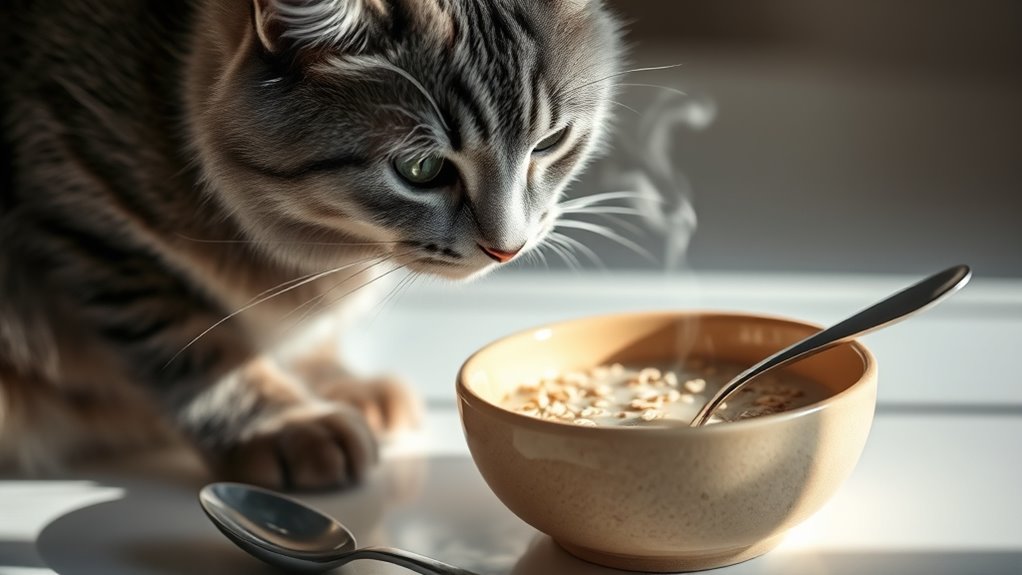
How Cats Can Safely Eat Oatmeal
Oatmeal can be a safe, occasional treat for your cat when it’s cooked plain and given in tiny amounts. Keep it as a minor supplement, not a staple, and avoid dairy, sugar, raisins, chocolate, or flavorings.
Serve plain oatmeal to a cooled, small portion—about a teaspoon to a tablespoon—and mix it into wet food or offer separately.
Monitor for upset, and don’t exceed once or twice weekly.
If you keep feeding, you’ll learn more about keeping it safe and balanced.
Key Takeaways
- Cook plain oatmeal in water and cool completely before serving to your cat.
- Offer only a small amount, roughly a teaspoon to a tablespoon, as an occasional treat.
- Do not add sugar, milk, cinnamon, raisins, chocolate, or other flavorings.
- Mix a small portion into wet food or serve alone to supplement a meat-based diet, not as a staple.
- Monitor for digestive upset and seek veterinary advice if vomiting, diarrhea, or loss of appetite occurs.
Is Oatmeal Safe for Cats? What It Can and Can’T Provide
Yes, oatmeal is generally safe for cats when cooked plainly, but it isn’t a nutrient powerhouse for them. You’ll see that, as a carnivore, your cat relies mostly on meat-based nutrients, not grains. Oatmeal can be eaten in small amounts as a rare treat, but it’s not a source of essential nutrients cats need.
Oatmeal is safe in tiny amounts for cats, but not a nutrient source.
The fiber and antioxidants it contains may help digestion slightly, but they aren’t necessary for a healthy cat, and they don’t replace meat-based nutrition. If you offer oat-based meals, keep portions small and infrequent to avoid nutritional imbalance or digestive upset.
Remember to serve plain, without sugar, cinnamon, raisins, chocolate, dairy, or other additives that could harm your cat. Use oatmeal to supplement, not substitute, a proper diet.
In short, it’s safe to eat in tiny doses, yet it won’t improve your cat’s health as a primary food source. Treats should remain occasional and controlled.
Preparing Oatmeal Safely for Cats: Step by Step
Now that you know oats are safe in small amounts, here’s a clear, step-by-step way to prepare oatmeal safely for your cat. Start with plain oatmeal cooked in water for 2-3 minutes, then cool completely. This guarantees you have cooked oatmeal, not a hot mess in a bowl.
Check that it’s at room temperature before serving to avoid burns or choking. Mix a small spoonful into your cat’s wet food or offer it alone in a tiny amount, about a teaspoon or tablespoon. Keep it plain—avoid toppings, sugars, milk, or cinnamon to prevent digestive upset.
Offer the small portion as an occasional treat, not a regular habit, and monitor digestion for any signs of discomfort. For safety, serve in tiny amount and ensure cooling continues until it’s safe to touch. Remember, plain oatmeal is safe for cats when given carefully and sparingly.
How Much Oatmeal Should I Give My Cat and How Often?
You should limit oatmeal to a small amount per feeding—about a teaspoon to a tablespoon—to prevent overfeeding. For most cats, treat oatmeal as an occasional addition, not a daily staple, and keep frequency to no more than once or twice a week.
To minimize digestive upset, mix small amounts of cooked oatmeal into wet cat food or serve plain, cooled, cooked oatmeal in a separate dish. Avoid serving every day to prevent nutritional balance issues and gastrointestinal problems.
Remember, oatmeal is a supplement, not a main meal, so use it sparingly and observe your cat’s response. If you notice vomiting, diarrhea, or discomfort, cut back or stop altogether and consult a veterinarian.
When you do offer it, monitor overall appetite, weight, and energy levels to ensure the oats aren’t affecting behavior or digestion. Use these guidelines to keep oatmeal a safe, occasional snack for your cats.
How to Add Oatmeal Without Compromising a Meat-Based Diet
To add oatmeal without compromising a meat-based diet, mix a small amount of plain, cooked oats into your cat’s wet food as an occasional supplement, making sure it doesn’t replace essential meat-based nutrients. Serve oatmeal in very small portions, about a teaspoon or less, to prevent disrupting your cat’s obligate carnivore diet.
Always prepare oatmeal with water and avoid adding milk, sugar, or flavorings to maintain a safe and plain option for your cat. Limit oatmeal to infrequent treats, ensuring it does not exceed 10% of your cat’s total daily caloric intake to avoid nutritional imbalance.
Consult your veterinarian before incorporating oatmeal into your cat’s diet to ensure it aligns with their specific health needs and dietary requirements. When used thoughtfully, plain oatmeal can offer small quantities that support hydration and variety without displacing essential amino acids or the overall nutritional benefits for your feline companion, healthy skin, and overall wellness.
This remains a small animal consideration. Occasional treat.
Oatmeal Risks, Signs to Watch, and When to Call a Vet
Oatmeal is generally safe for cats when cooked thoroughly and served plain in small amounts, but overfeeding can lead to stomach upset or diarrhea. You should watch for digestive upset after feeding and monitor for symptoms to monitor, such as vomiting or loss of appetite.
Oatmeal is safe in small, cooked portions but watch for digestive upset.
If symptoms arise, note early signs and seek veterinarian advice promptly to rule out gastrointestinal issues or allergic reactions. Signs of allergy may include scratching, skin inflammation, or weight changes, which require careful evaluation.
In case of ingestion of large quantities or distress, contact a veterinarian right away. Use feeding guidelines to determine a safe serving size and adjust based on your cat’s reaction.
Always introduce oatmeal gradually and observe closely, consulting your vet if unsure about safety. Below is a table summarizing key points.
| Potential issue | Related signs | Recommended action |
|---|---|---|
| Digestive upset | Vomiting, diarrhea | Stop feeding and contact vet |
| Allergic reactions | Scratching, skin changes | Seek veterinarian advice |
| Monitoring | Early signs, symptoms to monitor | Track and reassess |
| Safe serving size | Small amounts | Keep portions minimal |
Frequently Asked Questions
Is It Safe for Cats to Eat Oatmeal?
Yes, it’s generally safe in small, cooked amounts. You should mix it with water, not milk, to avoid lactose issues, and keep portions modest since cats are obligate carnivores. Don’t rely on oatmeal as a regular diet staple, and watch for any digestive upset after feeding.
If you’re ever unsure or notice adverse reactions, consult your veterinarian for tailored advice and safe portion guidelines.
How Much Oatmeal Can I Give My Cat?
One example: you give your cat a small teaspoon of cooked, cooled oatmeal once or twice a week.
You can start with this small amount and watch for any GI upset. If all stays well, you may stick to that teaspoon range per serving, not exceeding one tablespoon.
Mix with wet food or serve plain. Always monitor afterward for vomiting or diarrhea, and avoid overfeeding.
Are Quaker Oats Safe for Cats?
Yes, Quaker Oats are generally safe for your cat when cooked with water and served plain. Eat them in moderation as an occasional treat, and avoid added sugar, cinnamon, or milk.
Don’t rely on oats as a staple of your cat’s diet. Start with a small amount and watch for digestive upset. If you notice any adverse reactions, consult your veterinarian promptly to make certain it’s appropriate for your cat’s health.
Conclusion
You’ve learned the basics, but one question lingers: is this the moment your cat takes a turn for the better—or a stumble you didn’t expect?
Oatmeal can be a tiny, cautious addition, not a replacement for meat. Watch for tummy tugs, picky shifts, or unusual energy drops.
If you notice anything off, you’ll know the clock isn’t on your side. Stay curious, stay vigilant, and keep your vet in the loop—the safest path may be closer than you think.


