
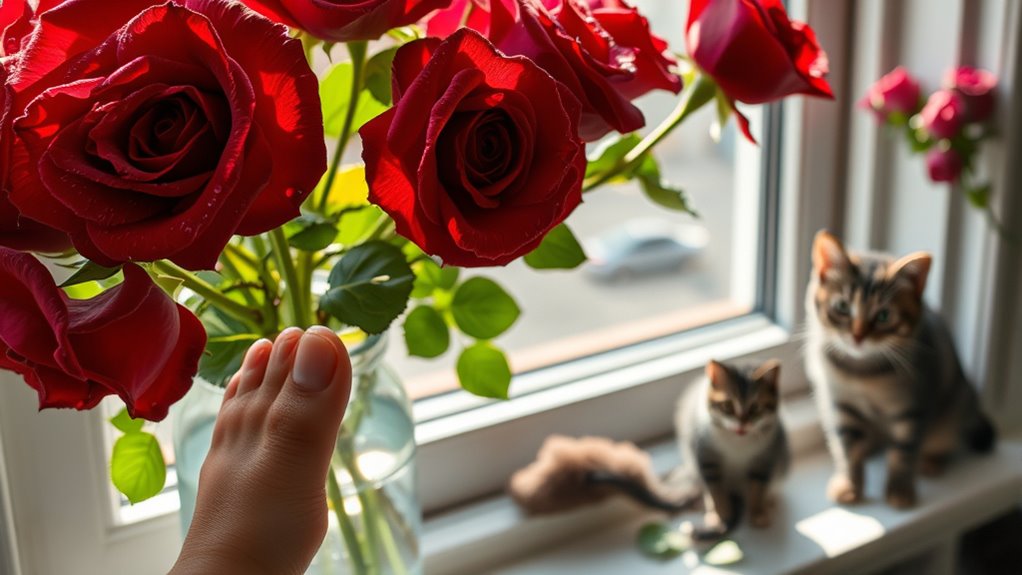
Are Roses Safe for Cats and How to Keep Them Safe Around Flowers
Roses aren’t toxic to cats, but they can still cause GI upset if your cat nibbles petals or leaves. Thorns can injure mouths, paws, or throats, posing additional risks.
Pesticides or floral preservatives on the blooms add extra hazards, so keep them out of reach and handle plants carefully. If ingestion or thorn injuries occur, monitor for vomiting, drooling, or swelling and seek veterinary help as needed.
There are safer display ideas and alternatives you’ll want to know about to keep your feline friend safe around flowers.
Key Takeaways
- Roses are generally non-toxic to cats, but ingestion can cause mild GI upset and thorns may injure the mouth or digestive tract.
- Check for chemical treatments (pesticides, fertilizers, floral preservatives) as they can be toxic if swallowed.
- Thorns pose a risk of punctures to mouth, paws, or skin; supervise cats around roses and remove damaged blooms.
- Handle and display roses safely: wash hands, keep chemicals away, avoid accessible vase water, and discard damaged flowers promptly.
- Use deterrents, barriers, and safe alternative flowers; supervise outdoor time and seek veterinary help for any ingestion or injury symptoms.
Are Roses Safe for Cats to Ingest?
Roses are generally non-toxic to cats, but eating them can still upset a stomach. You’re asking if ingestion is a risk, and the short answer is yes, it can cause mild GI issues. Ingested petals, leaves, or stems may lead to vomiting or diarrhea, especially if your cat eats a larger amount.
While roses aren’t classified as poisonous, the ingestion of plant material isn’t without consequence. You should monitor your cat’s behavior after any nibble, and contact your veterinarian if you notice persistent vomiting, diarrhea, or signs of distress. The plant’s thorns add another layer of risk, since chewing or swallowing them can injure the mouth, throat, or digestive tract.
Also consider chemical treatments on the roses, like pesticides or fertilizers, which can pose additional toxicity if ingested. If your cat is curious, provide safe alternatives to satisfy that urge to chew and reduce ingestion risks.
How Rose Thorns Can Injure Cats
Rose thorns pose several injury risks you should know about: they can puncture your cat’s mouth or paws, potentially causing mouth, eye, or skin injuries.
Swallowed or chewed thorns may lead to digestive blockages or internal damage.
Small wounds can get infected if you don’t clean them properly.
Thorn Injury Risks
Thorn injuries from roses can sneak up on you and your cat. When you handle roses, rose thorns can puncture skin, causing pain, bleeding, and potential infections if you don’t treat them promptly. You might worry about your cat chewing or swallowing thorns, risking injuries to the mouth, esophagus, or stomach.
Sharp thorns can lodge in paw pads, leading to discomfort, limping, or secondary infections. Ingested thorns may cause internal lacerations or perforations, which can become serious health issues quickly. Even tiny scratches can progress into abscesses or infections without veterinary care.
For your cat’s safety, minimize exposure to rose stems, inspect paws after outdoor time, and seek immediate care if you notice swelling, bleeding, or limping. Stay vigilant about plant hazards and practice careful handling.
Mouth and Digestive Hazards
Poking around rose stems can put your cat at risk, especially in the mouth and digestive tract. Rose thorns can puncture your cat’s mouth, causing pain and potential infection if chewed or bitten. Swallowing thorns may lead to internal damage or gastrointestinal blockages.
You might notice small cuts or lacerations that go unseen, increasing infection risk. When your cat explores or nibbles on thorny stems, paw or mouth injuries can occur, contributing to thorn injuries beyond the mouth. Ingested thorns may damage the digestive tract, triggering vomiting or other serious problems.
For cat safety, monitor behavior around roses, remove or guard plants, and seek prompt veterinary care if chewing, drooling, or distress occurs. Prioritize prevention to minimize internal damage and preserve overall wellbeing.
Paw Pad Safety Concerns
Even a brief brush with a thorn can leave a cat with a painful paw pad, and your cat may not show it right away. Paw pad safety hinges on recognizing thorn injuries, even if the wound isn’t obvious beneath fur. Rose thorns can puncture paw pads, causing pain, swelling, redness, or lameness if not removed promptly.
Your cat may scratch or bite at paws after injury, raising the risk of infection or splinter ingestion. Regularly inspecting plants for thorns helps prevent incidents, and prompt wound care matters: clean with a pet-safe antiseptic and monitor for signs of trouble. Be mindful that swelling or reduced mobility can hide beneath fur.
Prioritize plant safety to minimize paw pad injuries and support overall cat paw safety.
Are Pesticides and Flower Foods Dangerous to Cats?
Pesticide poisoning risks, flower food hazards, and safe handling tips are essential to understand when you’re keeping roses around cats. In many floral arrangements, pesticides or floral preservatives can be toxic if your cat licks or nibbles them, so you should act with caution.
Keep chemically treated flowers out of reach and handle any flowers and water carefully to reduce exposure. Seek veterinary help if you suspect poisoning.
Pesticide Poisoning Risks
Pesticides and flower foods can pose serious risks to cats, even in small amounts. You should know that ingestion of pesticides and flower foods often leads to vomiting, diarrhea, lethargy, and more severe signs. Pesticide poisoning can involve neurotoxin or insecticide components in outdoor garden products, so licking treated plants or contaminated water is dangerous.
Flower food solutions found with bouquets may be highly concentrated, causing poisoning even with tiny amounts. Common symptoms include drooling, tremors, seizures, and respiratory difficulties, which demand immediate veterinary attention. To minimize risk, keep all chemical treatments sealed and out of reach, avoid using pesticides in pet-accessible areas, and never let your cat ingest plant matter that could be treated.
Prioritize safety to protect your cat.
Flower Food Hazards
Flower foods and garden pesticides can be a real danger to cats, even in small amounts. You’d be wise to treat any vase or treated plant as potentially harmful, because ingestion can trigger poisoning. Flower food often contains fertilizers and preservatives that are highly toxic to cats, and pesticides used on outdoor roses can provoke vomiting, diarrhea, and lethargy.
Water contaminated with either can be an accidental ingestion route. Signs of toxicity may include drooling, tremors, seizures, and breathing difficulties, demanding immediate veterinary care. Keep pets away from treated areas and empty vase water promptly.
| Flower food | Pesticides |
|---|---|
| Toxicity risk | Poisoning risk |
| Ingestion can occur | Symptoms include vomiting, diarrhea |
| Water contamination possible | Breathing difficulties possible |
| Seek prompt vet help | Emergency care advised |
Safe Handling Tips
When handling roses that use pesticides or flower preservatives, you should treat every bloom and vase as potentially hazardous and take steps to minimize exposure for your cat. Safe handling tips start with washing your hands after any contact and keeping pesticides or flower food packets out of reach. These products are toxic to cats, so avoid leaving vases, water, or cut stems where your pet can drink or lick.
Never place treated flowers in water that your cat might sip, and wipe down surfaces after handling. If accidental ingestion occurs, contact a veterinarian immediately. Store all chemicals securely and discard damaged blooms promptly.
What to Do If Your Cat Eats Roses
If your cat eats roses, start by noticing any immediate signs like vomiting, diarrhea, or lethargy within the next 12–24 hours. In most cases, roses are non-toxic, but ingestion of petals, leaves, or stems can upset the stomach, causing vomiting or diarrhea and sometimes a decrease in appetite.
If you notice these symptoms, observe for persistence beyond a day and note any changes in behavior or feeding. Ingesting parts of a rose that carry pesticides or chemicals increases toxicity risk, so seek immediate veterinary attention if you suspect treated plant material.
For minor thorn-related issues, clean any small wounds with a pet-safe antiseptic, and monitor for bleeding or signs of discomfort. If symptoms persist, contact your veterinarian or Pet Poison Helpline promptly for guidance on whether your cat needs examination, diagnostic tests, or treatment. Early assessment improves outcomes for potential ingestion or thorn-related complications.
Safe Display Tips to Keep Cats Away From Roses
To keep cats away from roses, place the plants in hanging baskets or high shelves that are out of reach, and add a pet-safe deterrent spray with citrus or bitter flavors on stems and leaves. This simple setup reduces temptation and signals boundaries without stressing your cat.
Use physical barriers like decorative fencing or plant cages around the display to reinforce the zone you’ve created, so curious paws stay at a safe distance. Keep cat toys and alternative safe plants nearby to offer engaging options that divert attention from the roses.
Regular supervision around blooming plants helps you catch missteps early and prevent injury from thorns or fallen petals. Remember to remove any hazards promptly and maintain the deterrent as flowers change.
Pet-Safe Flowers That Make Good Alternatives
Roses aren’t your only option for cat-friendly florals; several blooms pair beauty with safety, so you can decorate confidently around curious feline friends. You’ll find pet-safe flowers that fit different styles: sunflowers, gerbera daisies, orchids, petunias, and asters. Sunflowers are non-toxic to cats and make sunny statements without risk.
Gerbera daisies offer bright color with a gentle profile, a safer alternative to more toxic varieties. Orchids, including Brazilian and Ghost Leafless varieties, add elegance while remaining cat-compatible. Petunias and asters round out the list with modest, non-toxic plant options you can cultivate indoors or outdoors.
Always verify each stem’s safety and avoid exotic or chemically treated plants to protect your cat’s well-being. When in doubt, choose items labeled non-toxic plant or responsive pet-safe flowers and keep arrangements out of reach from playful paws. Remember, the goal is beauty paired with safety.
How to Teach Your Cat to Avoid Garden Plants
Establish clear boundaries for your cat around garden plants, starting with positive reinforcement when they ignore the greenery. You’ll reward calm behavior with treats or praise, reinforcing that plants are off-limits. Set up physical barriers like fencing or plant cages to prevent access to sensitive or toxic areas, and use them consistently.
Teach your cat basic commands such as “leave it” to discourage approaching plants on cue, then practice during short outdoor sessions. Provide alternative scratching or climbing options indoors or in designated safe outdoor spaces to divert attention away from garden flora.
Regular supervision during outdoor visits helps you intervene immediately if your cat shows interest in plants, preventing bad habits from forming. Combine training with accessible distractions, rotating toys, and engaging activities to keep focus away from greenery. With steady supervision, your cats learn to respect plants and flowers while still enjoying outdoor time.
When to Seek Veterinary Help Immediately
If your cat ingests a large amount of rose parts—or shows distress after exposure—seek veterinary care immediately. You should treat any ingestion as a potential emergency, especially if petals, leaves, or stems were chewed or swallowed. Do not wait for symptoms to worsen; early professional assessment can prevent complications.
Emergency care is vital if your cat exhibits symptoms such as vomiting, diarrhea, excessive drooling, difficulty breathing, or lethargy after contact with roses. If you notice any of these signs, contact your veterinarian or an emergency pet poison helpline right away.
Also, if your cat chews or ingests thorns, promptly consult a veterinarian to assess possible internal injuries or infections. If you suspect ingestion of chemicals, pesticides, or floral preservatives from roses, reach out immediately to your veterinarian.
Frequently Asked Questions
Is It Safe for Cats to Be Around Roses?
Yes, roses are generally safe for cats, but there are caveats. You’ll want to avoid chemically treated roses, since pesticides can hurt them. Thorns can injure mouths or paws, and nibbling petals or leaves might upset their stomach.
Which Flowers Are Safer Than Roses for Cats?
Roses aren’t the safest bet; several flowers are safer for cats. Gerbera daisies, sunflowers, orchids, petunias, asters, and zinnias are generally non-toxic and pose minimal risk.
Avoid lilies, tulips, and azaleas, which are highly toxic. Always check trusted lists like the ASPCA before adding any bloom.
If you’re unsure about a plant, keep it out of reach, wash paws after outdoor time, and monitor for signs of trouble.
What Part of the Rose Is Toxic to Cats?
The rose plant isn’t generally toxic to cats, but its thorns can cause harm. The main danger is physical injury from the spines if your cat bites or swallows them, not the petals, leaves, or stems.
Also watch out for pesticides, preservatives, or chemicals on the plant, plus any vase water. If you handle roses, keep thorns away from your cat and clean up promptly to reduce risk. Consider safer alternatives or trimmed, thorn-free stems.
How to Keep Cats From Eating Roses?
To keep cats from eating roses, you guard them like a treasure. Elevate or hang arrangements, use pet-safe deterrents with citrus or a bitter spray, and offer safe plants or toys to redirect curiosity.
Store thorny stems in narrow, covered containers and supervise whenever roses are present, especially around treatments. Consistency helps: reapply deterrents, refresh safe alternatives, and keep access difficult.
Your calm routine makes nibbling a non-event.
Conclusion
If you tempt fate with roses, your cat’s safety hinges on vigilance. Stay away from toxic pesticides, remove thorny hazards, and mix safe, cat-friendly blooms into view. Think of your garden as a quiet stage where silent paws can misstep—a painted picture of risk you can erase.
By choosing pet-safe flowers, teaching boundaries, and seeking care when needed, you’ll keep both your petals and whiskered companions thriving in harmony. Protect them, and peace will flourish.


