
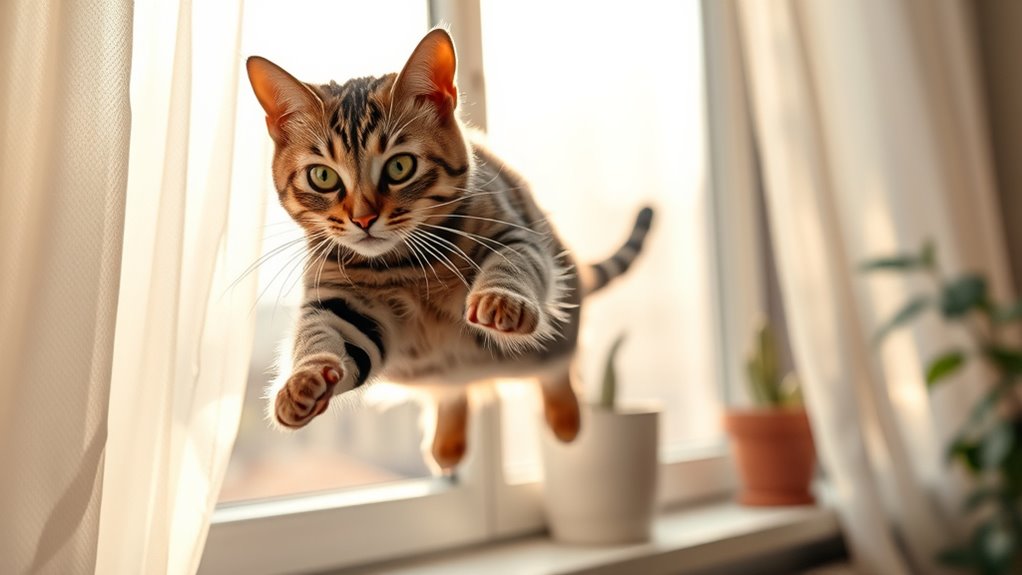
Do Cats Actually Have 9 Lives?
No, cats don’t actually have nine lives. The phrase is a cultural metaphor for their remarkable resilience, quick reflexes, and agility.
Cats survive dangerous moments because of biology—like a flexible spine and tough landing skills—plus sharp senses and timing.
The “nine lives” idea came from myths and stories, not biology.
If you want the full picture of how their resilience works and how to keep them safe, you’ll find more details tied together here.
Key Takeaways
- The “nine lives” idea is cultural metaphor, not biological fact; cats don’t have multiple lives biologically.
- Surviving dangerous falls comes from biology—flexible spine, light body, keen senses, and quick reflexes.
- The number nine symbolizes resilience and magic in many cultures, not a literal count of lives.
- Real safety is achieved through indoor enrichment, regular vet care, and hazard prevention.
- Each survival is a probability event influenced by health, environment, and timing, not supernatural endurance.
Do Cats Really Have Nine Lives? Quick Answer and Reality Check
Despite the myth, cats don’t have nine lives—they have one. You’ll hear that phrase because of cats’ remarkable survival skills, but the reality is simple: cats don’t possess multiple lives. The myth functions as a cultural metaphor highlighting agility and resilience, not biology.
In truth, a cat’s righting reflex, flexible bones, and keen senses enhance accident survival compared with many other animals, yet they remain vulnerable to injury. So, while a cat can land on its feet and escape danger more often than you might expect, that doesn’t grant extra lives or immunity.
Your role in animal health is essential: provide safe environments, spot hazards, and seek veterinary care when needed. Remember that the nine lives idea underscores suggestion, not fact. By focusing on prevention and proper care, you support a cat’s health and well-being, acknowledging their impressive, real-world resilience without inflating the myth.
How the Nine-Lives Myth Began
The nine-lives myth didn’t spring from biology but from culture and storytelling, weaving together ancient reverence for cats with symbolic numbers. You’ll see how ancient Egyptian beliefs set the stage, as cats were sacred and tied to divine protection.
- The link to Atum shows how a single god could symbolize nine divine attributes, reinforcing a multiplicity of safety and mystery.
- The idea spreads through cultural storytelling, embedding cats in mythological narratives and legends.
- European literature later adopts the motif, giving the phrase weight in plays and poetry, cementing cultural significance.
- Across regions like Spain, Turkey, and Arabic areas, numbers vary, but nine endures as the Western standard, echoing cats’ survival skills.
Today, the myth persists because stories celebrate cats’ remarkable resilience, turning everyday prowess into a symbol of luck and longevity, a legacy carried through generations. nine lives, myth, ancient Egyptian, divine protection, Atum, survival skills, cultural significance, European literature, mythology, legends.
Why Nine? Myth, Meaning, and Cultural Power
You may wonder why nine sticks around as the number tied to cats. The nine lives idea stems from ancient cultures that saw perfection, magic, and divine qualities in numbers, especially the number nine. You’ll sense the cultural significance in many traditions—Egyptian, Arabic, and European folklore—where nine signals resilience and mystique.
The myth thrives on symbolism: nine as a marker of endurance, as if a cat can endure danger and revive, again and again. Historical references bolster the appeal; Shakespeare’s lines in Romeo and Juliet helped cement the notion in Western imagination. While different cultures assign other counts, nine remains the most common Western belief, underscoring supernatural resilience rather than mere superstition.
This cultural power, rooted in ancient cultures and myth, makes nine lives a compact symbol of extraordinary survivability. It’s less about literal biology and more about folklore’s enduring narrative and symbolical meaning.
What Survives Really Means: Cat Resilience in Real Life
Cat resilience isn’t magic; it’s biology and timing that tilt outcomes in real life. You’ll see that what survives really means isn’t supernatural—it’s physical ability, adaptability, and the righting reflex at work during dangerous moments.
Here’s how resilience shows up in everyday risk:
1) Fall from heights: a cat’s spine flexibility and light frame help absorb impact while aiming for a feet-first landing, boosting injury tolerance and cat survival.
2) Senses and awareness: acute hearing and night vision detect danger early, giving you time to react and reduce harm.
3) Agility and reflexes: quick decisions and escape maneuvers minimize exposure to predators or hazards.
4) Overall endurance: many incidents reveal remarkable endurance, not infinite lives, underscoring that survive is a probability shaped by biology and environment.
Keeping Cats Safe and Healthy in Real Life
Keeping cats safe and healthy in real life means setting up a habitat that supports their biology and daily needs. You’ll prioritize cat health through preventive care, including regular veterinary check-ups, vaccinations, and a balanced diet to prevent illnesses.
Create a safe indoor environment with enrichment that keeps them mentally and physically active, and secure any windows or balconies to reduce cat injuries from falls. Use microchips and ID collars to improve chances of a safe return if your cat goes outdoors.
When supervising outdoor access, avoid toxic plants and chemicals to improve poisoning prevention and minimize cat accidents. Monitor for cat stress signs like excessive grooming or irritability, and address boredom early to prevent Boring Life Syndrome.
Frequently Asked Questions
Is It True That Cats Have 9 Lives?
No, not literally. Cats don’t have nine lives; they have one like everyone else. But you, as a cat owner or admirer, can notice their remarkable resilience.
Their flexible spine, righting reflex, and quick reactions help them survive falls and tricky stunts. Treat them with care, provide safety, and seek vet attention when needed.
The myth celebrates their agility, not biology, so stay informed and responsible for their well-being.
Do Cats Actually Get Nine Lives?
No, cats don’t actually have nine lives. You’ll hear the saying because their agility and quick recoveries feel almost miraculous. You might think they’re invincible, but they’re not—we all know they’re vulnerable too.
Their spine, reflexes, and senses help them survive falls, but they still need care, vaccinations, and safe homes. Remember the myth is cultural, not scientific; treat your cat with respect, attention, and routine health checks to keep them thriving.
Do Cats Have 9 Lives or Lifes?
No, cats don’t have nine lives. You’ve got one life, like everyone else, even though their agility and quick reflexes make it seem magical. You’ll hear myths about cats surviving falls or escapes, but it’s really skill, luck, and biology at work.
Respect their limits, provide good care, and don’t rely on superstition. Your cat’s resilience is real in behavior, not in supernatural immortality.
Do Cats Have No Souls?
No, you’re not convinced cats have no souls. You’ll find that beliefs vary: some say animals lack immortal souls, others insist souls can exist in creatures like cats, tied to spirituality or divine creation.
You’ll weigh science’s biology against tradition and personal experience. You’ll notice there’s no universal proof either way, so your view may blend reverence with curiosity, honoring cats’ presence in your life without definitive answers.
Conclusion
You’ve heard the myth, you’ve seen the daredevil leaps, you’ve felt the awe. You should know that resilience isn’t magic; it’s care.
You protect, you observe, you adjust; you champion safety, you celebrate health. You teach boundaries, you seek shelter, you share wisdom.
You honor every life by living wisely, by acting kindly, by choosing precautions. You recognize limits, you nurture curiosity, you cherish the moment.
You give your cat a richer, safer life—today, tomorrow, always.


