
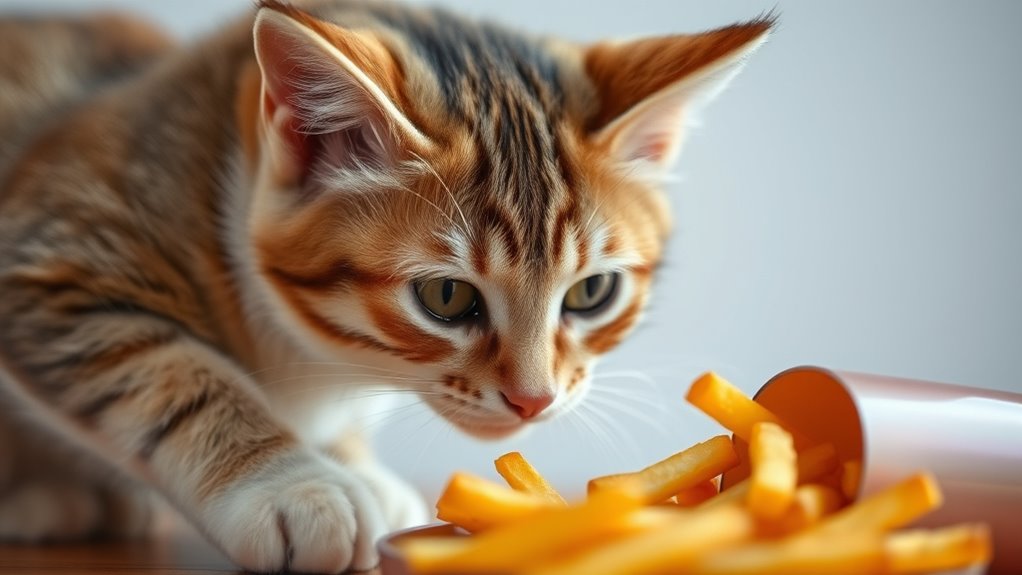
How Cats Can Safely Eat Fries Step by Step
Fries aren’t safe for cats, but you can handle tiny, plain potato pieces very carefully. Start with a tiny cooked piece, plain and unseasoned, and watch for vomiting or diarrhea within hours.
If there’s no reaction, you can gradually offer very small portions, but keep it rare and salt-free. Peel and boil or steam the potato, then cool it completely.
For safer options, consider lean meats or cat-safe treats. Curious to learn more steps you can take? Keep going.
Key Takeaways
- Fries are not safe for cats due to fats, salt, and toxic seasonings like onion or garlic powder.
- Tiny, plain fry slices may be an occasional nibble but should be rare and portion-controlled.
- If attempting potatoes, use small, unseasoned pieces that are boiled or steamed until soft.
- Introduce slowly, starting with a very small piece and monitor for vomiting, diarrhea, or gas.
- Prefer safer treats like plain cooked meat, cat-safe treats, or cat grass, and avoid regular fries.
Why Fries Aren’t Safe for Cats
Fries aren’t safe for cats for several straightforward reasons. You’re likely wondering why they’re off-limits, so you’ll want clear, practical details. French fries deliver fats and salt in excess, which can upset digestion and cause dehydration.
Fries aren’t safe for cats: excess fats, salt, and toxic seasonings upset digestion and risk dehydration.
The high oil content also contributes to obesity and pancreatitis over time, creating lasting health risks. Seasonings like onion powder and garlic powder are toxic to cats; they can damage red blood cells and lead to anemia. Even tiny amounts add up, making toxicity a real concern if fries are eaten repeatedly.
Fried foods are generally hard to digest, often triggering vomiting or diarrhea. Since fries offer no nutritional benefit for your cat, they don’t justify the risk. If you’re managing a feline’s diet, focus on fresh water, balanced meals, and enrichment over risky snacks.
Avoid feeding fries to keep digestion, health, and hydration in a safer, steady range.
When a Tiny, Plain Fries Slice Might Be Okay
A tiny, plain fry slice can be okay only as an occasional, accidental nibble, not a regular treat. You’re evaluating plain fries with caution: small amounts have minimal salt content and limited spices, reducing health risks. Yet you still consider digestive upset, since any fry piece can irritate your cat’s stomach if eaten in excess.
Because French fries are high in fat, even a tiny fragment should be given sparingly to avoid long-term issues like obesity. Monitor for vomiting or diarrhea after the bite, and separate this from nutritionally appropriate treats. Remember that plain fries aren’t a balanced option, so think of them as a rare indulgence rather than a staple.
If you’re unsure, seek vet consultation to confirm suitability for your cat’s health status. Prioritize safe treats and nutritional considerations, and weigh the potential risks before offering any fry fragment. If worry arises, remove fries and return to cat-appropriate alternatives.
Step-by-Step: Prepare Tiny, Cat-Safe Potatoes
Now that you know tiny plain fry nibbles should be a rare, cautious choice, you can make cat-safe potatoes in a simple, step-by-step way. Start with small potatoes, washing them thoroughly to remove dirt and pesticides. Peel the potatoes to eliminate residues from skin or solanine in green or sprouted tubers.
Cut the potatoes into bite-sized pieces that fit your cat’s size and chewing ability. Boil or steam these pieces until they’re soft and fully cooked, ensuring the result is easy to digest. Check for tenderness with a fork, then drain any excess water.
Cool the cooked potatoes completely before offering a tiny portion, starting with a few pieces as a safe treat. Remember, proper preparation matters: peeling, boiling or steaming, cooling, and serving in small portions keeps the potato digestible and cat-safe. Use only occasional, small potatoes to minimize risk and maximize safety.
Introduce It Slowly and Watch for Reactions
Start with a tiny, plain piece of cooked potato and watch your cat closely. To introduce fries safely, keep portions small and gradually add more only if no negative reactions appear. Begin with a plain, small bite and observe your cat for signs of upset, such as vomiting, diarrhea, or gas, within a few hours.
Monitor for changes in appetite, activity, or behavior, and stop if any adverse reactions show up. Carefully remove any remaining fries after the initial tasting and avoid giving additional pieces unless your cat shows no symptoms over the next 24 hours. This initial step helps you gauge tolerance and minimizes digestive stress.
If your cat handles the first bite well, you may increase portions slowly, but always watch for subtle signs of discomfort. Remember, the goal is to introduce cautiously and observe closely, not to rely on fries as a regular treat. Keep safety as your top priority.
Safer Cat Snack Alternatives and Prevention Tips
After introducing fries carefully, it’s smart to pivot to safer snack options that still satisfy a cat’s curiosity. You can offer safer treats like small, cooked pieces of unseasoned lean meats (chicken or turkey) as high-protein options that feel special without harm. Use cat treats formulated with balanced nutrients and free from salt, artificial flavors, or extra seasonings to support preventive care and healthy choices.
Occasional, small servings of cooked fish, such as salmon or whitefish, can satisfy cravings while boosting nutritional value. Incorporate catnip or cat grass into occasional snacks to engage your cat naturally, avoiding added fats or salts. Always introduce new options gradually and with moderation to prevent digestive upset and ensure compatibility with a balanced diet.
Track portions to maintain cat health, and prioritize safe snacks over risky indulgences. By choosing safer treats and healthy alternatives, you reinforce preventive care and keep your cat’s well-being front and center.
Frequently Asked Questions
Are French Fries Safe for Cats to Eat?
No, french fries aren’t safe for cats. They’re high in fat, salt, and sometimes onion or garlic powder, which can be toxic. Even plain varieties add unnecessary carbs and fat that can lead to obesity, pancreatitis, and digestive issues.
If you’re craving a treat for your cat, opt for small, plain, cat-safe options or veterinary-approved snacks. Always prioritize fresh water and balanced meals, and avoid feeding fries at all costs.
What Is the One Meat to Never Feed a Cat?
The one meat to never feed a cat is raw or undercooked pork. You probably wouldn’t want to risk trichinosis or parasites sneaking in, right?
Cooked pork can be fatty and trigger pancreatitis or obesity, while processed pork products like ham and bacon bring harmful seasonings and high salt. Some cats may react badly or get GI upset if introduced suddenly.
Are Fried Potatoes Ok for Cats?
Yes, fried potatoes aren’t okay for cats. They’re typically high in fat, salt, and may include onion or garlic seasonings that are toxic.
A tiny, plain, cooked potato without seasoning is safer, but it still won’t provide nutritional value for your cat and should be given rarely, if at all.
If you’re ever unsure, skip it and stick to vet-approved treats. Your best option is to focus on a balanced feline diet.
Can Pets Eat French Fries?
No, most pets shouldn’t eat French fries. You might think a tiny bite is harmless, but fries are high in fat, salt, and often onions or garlic powders that can harm your pet.
If you’re ever tempted, skip it and offer a vet-approved treat instead. Keep fries out of reach, monitor for signs of distress, and choose healthier snacks to protect your pet’s heart, liver, and overall health.
Conclusion
You’ve learned the lane to tread: fries aren’t a cat’s forte, but a whisper of compromise can exist. If a tiny, plain slice somehow finds its way to your feline friend, tread lightly and watchful. Treat it like a spark in a dry field—rare and controlled.
Respect their instinct, skip the seasonings, and keep portions tiny. When in doubt, choose safer treats and playful distractions. Your careful plan keeps paws, whiskers, and appetite intact.


