
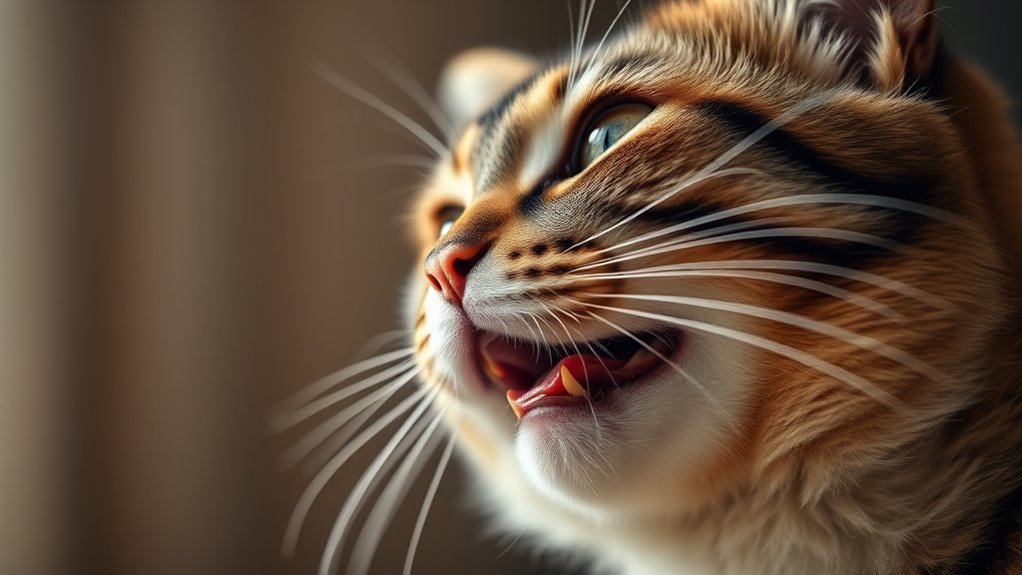
What Does It Mean When Cats Do Pant?
Panting in cats isn’t usually normal like after a sprint. You’ll want to watch for signs of distress or illness, since panting can hint at heart or respiratory problems, pain, or infections.
If it’s brief and after exertion, that can be normal, but persistent or worsening panting, pale gums, rapid breathing, or labored effort means you should seek veterinary care promptly.
Keep calm, cool the room, and check for other symptoms—there’s more you can learn if you keep reading.
Key Takeaways
- Panting in cats usually signals an underlying issue, not normal exercise, and warrants attention if persistent or heavy. It can indicate heart disease, respiratory infections, pain, or blood loss affecting breathing.
- Brief panting after exertion or heat is normal, but should quickly subside with normal behavior.
- Emergency signs include rapid, open-mouth panting, labored breathing, and pale or blue gums; seek urgent care.
- At home, keep the environment cool, monitor symptoms, and contact a vet if panting worsens or persists.
What Panting Means for a Cat
Panting in cats is usually a sign something isn’t right. When you notice cat panting, you’re seeing abnormal breathing that isn’t tied to normal exercise or heat. You should consider it a potential alert for breathing problems or respiratory distress, especially if the panting is heavy or persistent.
In these moments, observing symptoms like rapid respiration, open-mouth breathing, or flared nostrils helps you judge the seriousness. Panting can accompany heart issues, pain, or infections, signaling a medical condition rather than a simple cooldown. Because cats hide illness, persistent panting is more than a quirk—it’s a cue to seek veterinary evaluation promptly.
A vet can determine if this is a serious medical issue or a less alarming short episode after activity. Treat any ongoing panting as a medical emergency if it accompanies faintness, collapse, or substantial distress. Your goal is timely care to prevent complications.
When Panting After Exercise or Heat Is Normal
After you’ve finished any vigorous activity or exposed your cat to heat, a brief, normal pant can help them cool down. This panting is typically short-lived and signals their body is regulating temperature rather than distress.
If your cat pants after exercise or heat, observe normal behavior soon after. When the panting subsides and they resume resting, eating, and drinking normally, it’s usually a normal response.
Keep an eye on body temperature and overall comfort, especially in hot weather or after energetic play. Avoid overexertion and provide shaded, cool spaces, plus fresh water.
If panting persists or is accompanied by pale gums, lethargy, or disorientation, consult a veterinarian promptly. Short-lived panting is common, but persistent or heavy panting warrants evaluation to rule out health issues.
| Condition | Action |
|---|---|
| After exercise | Monitor for normal, brief panting and quick recovery |
| In heat | Ensure cooling, hydration, and rest |
| Concerning signs | Seek veterinary care promptly |
Recognizing Emergency Panting vs. Harmless Panting
Recognizing emergency panting vs. harmless panting hinges on context and symptoms you observe. If panting is rapid, open-mouthed, with pale or blue gums and breathing trouble, that’s an urgent sign and you should seek veterinary care immediately.
If panting is brief after activity or heat and clears quickly, it’s usually harmless, though monitor for any lasting changes or additional symptoms.
Emergency Panting Signals
When your cat starts panting, quick判断 if it’s an emergency or just a normal response to heat, stress, or post-exercise is crucial: emergency panting often comes with open mouth breathing and unusual gum colors like pale, blue, or purple, and it demands immediate veterinary attention.
You should monitor for labored breathing, flaring nostrils, and any hunched posture, all signs of respiratory distress that point to a serious problem. If panting persists or worsens despite rest, seek veterinary care urgently.
Don’t ignore abnormal gum color or ongoing panting, especially when combined with coughing or weakness. Suspecting heart disease in a panting cat is not rare—treat as an emergency veterinary matter until a professional confirms otherwise. Your prompt action can save a life.
Harmless Panting Clues
Harmless panting in cats typically happens after exertion, during stress, or after active play and usually clears up quickly.
You’ll notice harmless panting when your cat resumes normal breathing after a burst of activity, or when stress in cats spikes briefly and then fades. This isn’t a sign of illness if panting is mild, short, and accompanied by normal gum color and behavior.
- harmless panting often follows exertion or heat and returns to normal breathing quickly
- distinguish panting in cats from persistent or heavy panting that needs vet care
- watch for anxiety signals alongside brief panting to determine if it’s stress-related
- seek emergency care if cat is panting with labored breathing, blue gums, or collapse
If symptoms persist beyond resting periods, contact your veterinarian.
First Steps at Home When Your Cat Pant S
When your cat pants, start by staying calm and creating a quiet, cool space to help ease their stress. Offer small amounts of water and keep the environment comfortable while you observe their breathing and behavior.
If panting continues or worsens, or you notice other red flags, seek veterinary help promptly.
Home First Response
If your cat’s panting starts after activity, stress, or a hot environment, you can take quick home steps to help calm them and assess urgency. You’ll want to observe symptoms and keep their health in mind, noting any changes in color, breathing, or energy.
- Stay calm, speak softly, and give a quiet space to reduce stress-induced panting.
- Gently cool feet and ears with a damp cloth if overheating is suspected, and avoid food or water until advised.
- Check gums for pink color; pale, blue, or white gums mean emergency veterinary care may be needed.
- Monitor for coughing, lethargy, or harder breathing and seek veterinary help if panting persists or worsens.
Panting in cats requires careful assessment and prompt veterinary guidance when needed.
Calmness and Cooling
Calmness and cooling are your first steps at home when your cat pants, so start by speaking softly to reduce stress and guiding them to a cooler, shaded area or a room with air conditioning or a fan. You should calmly observe their panting and breathing, noting any changes in respiratory effort.
Move them to a comfortable spot with good ventilation and access to fresh water, but don’t force a drink without veterinary advice. Use a damp, cool cloth on their paws and ears to aid cooling without adding stress.
Monitor body temperature and overall demeanor, and seek care if panting persists or worsens. Your calm presence helps soothe stress and supports gradual cooling.
How Vets Diagnose the Cause of Panting
Vets diagnose the cause of panting by starting with a thorough physical exam that focuses on the heart, lungs, and overall health. You’ll hear about how clinical signs guide what to test next, helping distinguish heart from respiratory issues while considering the cat’s comfort and safety.
Diagnostic tests augment the exam, revealing the underlying cause and informing treatment. Diagnostic tests are selected to match observed clinical signs, from blood work to imaging. Physical exam findings help determine whether heart disease or respiratory issues predominate.
Chest X-rays and pulse oximetry provide quick clues about oxygenation and lung or heart problems. Echocardiograms or additional measurements may be used if heart disease is suspected to confirm the diagnosis.
Serious Health Problems That Can Cause Panting
There are several serious health problems that can cause panting in cats, and recognizing them early is essential. You may notice panting with heart disease, fluid buildup in the lungs, or blood loss impairing oxygen transport. Respiratory infections, pneumonia, and feline asthma often drive rapid, labored breathing, signaling discomfort or distress.
Severe pain from injuries or internal issues can also trigger abnormal breathing patterns, making urgent veterinary attention crucial. When you see persistent panting, consider how these conditions differ: heart-related panting tends to worsen with exertion; respiratory infections often include coughing or wheezing; fluid buildup produces shallow, rapid breaths.
Quick evaluation helps you distinguish normal panting from warning signs that demand care. Your veterinarian will assess heart function, lung sounds, and blood parameters to identify the root cause and guide treatment.
| Factor | Mechanism | Action |
|---|---|---|
| Heart disease | Impaired circulation | Monitor symptoms, seek urgent veterinary care |
| Fluid buildup | Pulmonary congestion | Assess with imaging, support breathing |
| Respiratory infections | Inflammation, infection | Start antibiotics or supportive care |
| Blood loss | Reduced oxygen transport | Stabilize, transfusion if needed |
| Pain | Stress response | Address source, control pain, monitor closely |
Preventing Panting and Protecting Your Cat’s Respiratory Health
Keeping panting from becoming a recurring issue starts with a proactive, home-focused plan that supports your cat’s breathing and overall health. You can prevent overheating by keeping environmental temperature comfortable and well-ventilated, minimizing heat exposure, and offering cool, shaded resting spots.
Regular veterinary care helps detect breathing problems early, and vaccinations support overall respiratory health. Reduce stress by limiting loud noises, unfamiliar visitors, and travel, while providing calming aids like pheromone diffusers and hiding spots to ease anxiety.
Maintain a healthy weight to lessen strain on the heart and lungs, and avoid smoke or strong fumes that irritate airways. By blending environmental management with proactive care, you lower panting risk and support your cat’s long-term respiratory health.
- Environmental temperature control and ventilation
- Early veterinary care and preventive checkups
- Stress reduction strategies and calming aids
- Weight management and smoke-free living
Frequently Asked Questions
Why Is My Cat Panting With His Mouth Open?
It means something serious could be going on, and you should act fast. Open-mouth panting in a cat isn’t normal, so check for overheating, stress, or pain, and look for signs like lethargy, rapid heart rate, or gum color changes.
If the panting persists, worsens, or is accompanied by other symptoms, call your vet or an emergency clinic right away for guidance and possible examination. Don’t wait to seek professional help.
What Are Four Signs Your Cat Is Suffering?
Four signs your cat is suffering are persistent panting or open-mouth breathing, which hints at breathing trouble or pain; abnormal gum color like pale, blue, or yellowish; lethargy or hiding, along with a loss of appetite; and changes in behavior such as aggression or excessive grooming.
If you notice these, seek veterinary care promptly, especially with breathing difficulties or sudden behavior shifts. Don’t delay—urgent symptoms require immediate attention to rule out serious conditions.
Does Panting Always Mean a Vet Visit?
Does panting always mean a vet visit? Not necessarily. You’re usually safe if your cat pants briefly after play or stress, especially if their gums stay pink and breathing normal.
Persistent, severe, or unusual panting, or signs like weakness or trouble breathing, means you should call your vet promptly. Remember context, duration, and accompanying symptoms.
If you’re unsure, err on the side of caution and seek professional advice to keep your feline friend snug and secure.
What Should You Do if Your Cat Is Panting?
If your cat is panting, you should first calmly assess whether it follows activity, heat, or stress, then let them rest in a cool, quiet space.
Monitor for other symptoms like blue gums, lethargy, or coughing—these require veterinary care. Don’t give food or water until advised.
Seek urgent help if panting is sudden, labored, or accompanied by trouble breathing. Keep them comfortable and contact your vet promptly for guidance.
Conclusion
You may feel relieved to know most panting is harmless, especially after exercise or heat. Yet you should act fast if it’s sudden, persistent, or accompanied by wheezing, lethargy, or blue gums.
In cats, panting is less common than in dogs but can signal serious issues like heart or lung disease. About 1 in 10 panting episodes in cats requires veterinary attention, so trust your nose and seek care when in doubt.
Your calm, observant response protects their breathing and health.


