At What Age Do Cats Open Their Eyes?
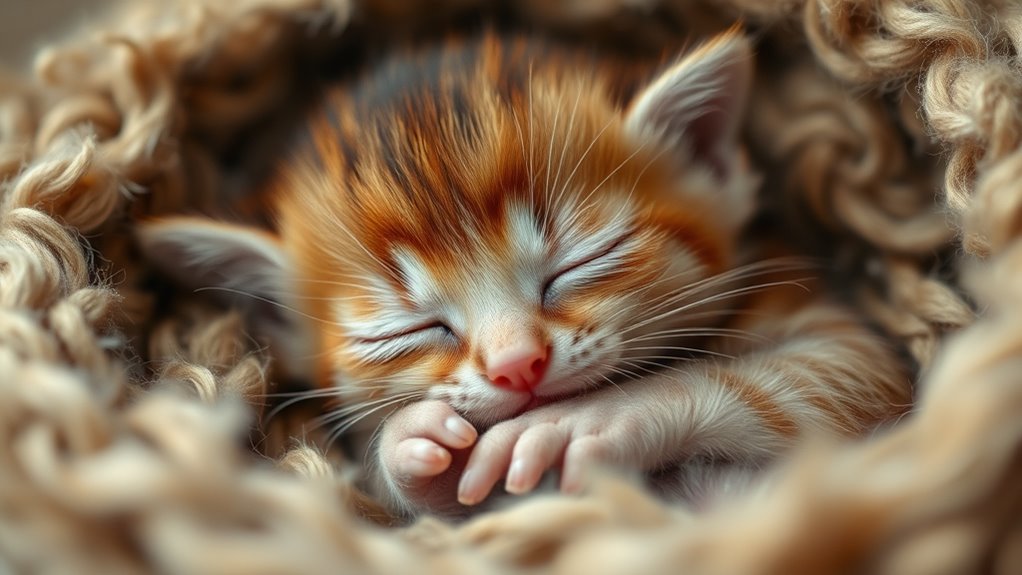
Kittens are born with their eyes closed, and you’ll typically see them start to open between day 2 and day 16, usually around two weeks old. It happens gradually, with both eyes opening more fully over about the first two weeks.
Pupils respond to light early, and their sight improves as they grow.
Eye color then shifts from blue to other hues in weeks 4–8 as pigment develops. If you want more details, there’s more to learn beyond this.
Key Takeaways
- Kittens are born with eyes closed; they typically begin to open between day 2 and day 16, usually around two weeks old.
- Eye opening happens gradually and often does not occur on the same day for both eyes.
- By about 3 weeks, vision starts to sharpen and depth perception begins to develop.
- Eye color often starts blue and shifts as melanin develops, usually completing by ~8 weeks.
- Monitor for healthy eye development and seek vet care if eyes stay closed beyond three weeks or show discharge or redness.
When Do Kittens Start to See?
Kittens start to see soon after birth, though their vision is blurry at first. You’ll notice newborn kittens begin to open their eyes between 2 and 16 days of age, and both eyes usually open around the same time, by about 2 weeks. In those early days, pupils aren’t dilated and may squint to block light as they adjust to sight.
As development continues, light begins to guide sharper focus, and you’ll see vision improve over the weeks. By roughly 3 weeks, focus is more defined, and you gain a clearer sense of depth and surroundings. The color of their eyes shifts from blue at birth toward adult tones, a change that typically starts around 8 weeks.
During this period, you observe eye alignment and gradual coordination as newborn kittens explore their environment. Age marks steady progress: eyes open, light and sight become more reliable, and early vision strengthens each week.
How Eyes Develop in the First Two Weeks
In the first two weeks, you’ll see eye-opening progress unfold as kittens change from closed lids to gradual sight. Their eyes start blue, pupils respond to light, and both eyes typically open together within a few days.
These early milestones set the stage for the eye-opening timeline and developing vision you’ll track as they grow.
Eye Opening Timeline
The eyes of newborn kittens stay closed for a few days to protect them, and most open between day 2 and day 16. In this eye opening timeline, you’ll notice that both eyes typically open around the two-week mark, but not necessarily at the same moment.
During the first week, neonatal kittens show increasing responsiveness as their gaze begins to focus and light sensitivity improves, signaling early sight emerging. You’ll observe gradual widening of pupils and clearer attempts at tracking, even before full sight.
Early Vision Milestones
During the first two weeks, your kitten’s eyes gradually begin to open, though both eyes may not start together at first. You’ll notice newborn kittens start with closed eyes and then slowly reveal vision milestones as eye development progresses.
By about two weeks old, you typically see both eyes open, though pupils dilate gradually and aren’t fully responsive yet. Early vision can include squinting or keeping eyes partially closed to dodge bright light.
As weeks pass, their eye color may begin to emerge and contrast sharpens, signaling improving sight. You’ll observe eyes gradually open in a staged way, with steady gains in focus and awareness.
This stage lays the groundwork for more complex perception, guiding proper kitten care and gentle exposure to new environments.
Two-Week Sight Development
Two weeks after birth, a kitten’s eyes are opening up more fully, though not all at once.
Newborn kittens begin eye development, with gradual openness and uneven starts. Eyes open unevenly at first, pupils remain small and may look squinted during early sight. Full eye opening usually arrives around two weeks, with eye color still blue and pigmentation starting later.
During this two-week window, you’ll notice the kitten’s eyes shift from barely open to more distinct, as their vision development accelerates. Colors stay blue initially, while the iris gradually gains pigment. You’re watching the progression from closed or squinted eyes to wider openings, a key moment in early sight and overall kitten’s eyes maturation.
What Color Are Newborn Kitten Eyes and When Do They Change?
You’ll start with newborn kittens having blue eyes because their irises lack pigment. As melanin develops over the first months, you’ll see a blue-to-color change influenced by genetics, with possible shifts to yellow, green, orange, or brown.
Eye color outcomes vary—some kittens keep blue, others change completely or partially.
Eyes Open Timeline
Eyes open timeline: newborn kittens are born with their eyes shut and usually begin to open them between day 2 and day 16, with both eyes often opening at the same time. You’ll notice the initial blue eyes caused by inactive melanin in the iris, and over weeks, the color shifts as melanin develops.
The process, part of visual development and kitten care, typically completes by around 8 weeks of age. During this time, eyes open is a key milestone in their growth and age-related milestones.
- Newborn kittens open their eyes in a short window and may do so at slightly different times.
- The iris color transitions from blue to the permanent shade as melanin increases.
- Expect gradual color changes and full development by about 8 weeks.
Blue-To-Color Transition
Newborn kittens start life with blue eyes because their irises lack pigment. As melanin production begins, eye color shifts from blue to a spectrum of hues. Most kittens experience an eye color shift by about 8 weeks, moving through yellow, green, orange, or brown tones.
You’ll notice eye opening age markers align with rapid visual development, and early kitten care supports healthy changes. Some cats retain blue eye color into adulthood, while others fully change. This blue-to-color shift is part of kitten development, signaling maturation of the iris layers and improved vision.
Stay observant of subtle shifts as you monitor your kitten’s eyes during growth.
| Stage | Change | Timeframe |
|---|---|---|
| Initial | blue eyes | birth |
| Melanin | production begins | weeks 2–8 |
| Transition | color emerges | weeks 4–8 |
| Final | color stabilizes | ~8+ weeks |
| Variation | blue persists | some cats |
Factors Affecting Eye Color
Newborn kittens start with blue eyes because their irises lack pigment, and the color can change as melanin production begins over the first weeks. You’ll see eye color shift as eye development progresses and maturation unfolds, with pigmentation increasing in the iris to determine the final eye shade. In many kittens, blue eyes fade as melanin adds depth, while some retain blue eyes into adulthood.
The timing varies by age and genetics, but you usually reach a stable color around 8 weeks. Understanding how pigmentation shapes eye color helps you track progress from newborn kittens to their adult look. Eye color depends on multiple factors, including iris structure and pigment deposition.
- eye color progression and maturation
- role of melanin in iris pigmentation
- timing and variability across ages and breeds
Signs Your Kitten’s Eyes Are Healthy
Healthy kitten eyes should look clear, bright, and free of discharge or cloudiness from the moment they open. To gauge eye health, observe how the pupils respond to light; they should constrict and then dilate as you move light across them. By about two weeks, the eyes should open fully without redness or swelling.
No crust around eyes, swelling, or discolored discharge should be present. Regular observation helps you catch issues early and keep eye health on track as your kitten grows. Keep an eye on how the eyes look in normal lighting and after naps—they should remain bright and clean.
If you notice persistent redness, discharge, crusting, or swelling, note the timing and seek veterinary advice promptly.
| Condition | Normal Signs | Action |
|---|---|---|
| Clear baseline | Bright, clean, even color | Monitor daily |
| Light response | Pupils constrict/dilate appropriately | Report changes |
| Absence of symptoms | No crust, redness, swelling | Observe kitten eyes |
Common Eye Problems in Newborn Kittens
Common eye problems can appear in newborn kittens, and recognizing them early helps third-eye care and outcomes. You’ll want to know which issues show up at birth, how they affect development, and when to seek veterinary help. Microphthalmia means abnormally small eyes present at birth and often leads to vision issues, while eyelid development problems can create gaps or deformities that affect protection and tear flow.
Entropion causes inward eyelid turning, which can irritate the cornea and increase the risk of eye infection. Conjunctivitis, or pink eye, arises from viruses or bacteria like herpesvirus, chlamydophila, or calicivirus, leading to eye inflammation and discharge.
Entropion irritates the cornea, while conjunctivitis causes inflammation and discharge.
In newborn kittens, early detection supports proper eye opening and healthier outcomes. If you notice persistent redness, swelling, discharge, or abnormal eyelid positioning, consult a veterinarian promptly to prevent long-term eye problems or vision loss.
- Key signs to watch: microphthalmia, conjunctivitis, eyelid deformities
- Watch for eye inflammation and abnormal eye opening
- Seek prompt care for eye infection or vision issues
How to Care for a Kitten’s Eyes Safely
Kittens usually open their eyes between 2 and 16 days old, and by two weeks both eyes are typically clear. When you care for a kitten’s eyes, keep the environment calm and away from bright lights to protect the developing eyesight.
If you notice crusty or discharge-covered eyes, you can clean them gently with a warm, damp cotton ball, avoiding soap or harsh chemicals. Do not force the eyelids open; let them open naturally as the kitten matures. Use a soft touch and stop if the kitten shows signs of discomfort.
Regular, careful cleaning can help prevent swelling or irritation, but seek veterinary help if the eyes remain closed beyond three weeks, or if swelling or ongoing discharge appears.
Maintain a safe routine: observe, clean when needed, and protect the eyes from excessive light. With patience and proper care, you support healthy eyelids and eyes as the kitten grows.
What to Do If the Eyes Look Red, Crusty, or Cloudy?
If you notice red, crusty, or cloudy eyes, you’ll want to act quickly since these signs can point to infections, allergies, or injuries that need a vet’s hands-on evaluation. Persistent crusting or discharge can signal conjunctivitis or other eye infections that need medical treatment. Cloudy eyes might suggest corneal damage, cataracts, or glaucoma, all of which require veterinary diagnosis and care.
Redness and squinting are signs of inflammation or irritation that should be assessed by a veterinarian to prevent further damage. Do not attempt home remedies; seek professional veterinary advice for proper diagnosis and treatment. Your goal is eye health, not guesswork, to protect vision and comfort.
Redness and squinting signal inflammation—seek veterinary care for proper diagnosis and treatment.
Schedule a veterinary evaluation promptly if symptoms persist or worsen, and follow prescribed care to prevent complications.
- red eyes and crusty eyes require prompt veterinary evaluation
- eye discharge and inflammation signal eye infection or irritation
- eye diagnosis guides treatment; avoid DIY therapies
Eye Care as Part of Preventive Kitten Health
Eye care is a key part of preventive kitten health, starting from birth and continuing through adolescence. You’ll note that newborn kittens are born with closed eyes to protect against infection, and they typically open their eyes between 2 and 16 days, usually by 2 weeks.
To support eye care, keep their environment clean and gently clean around the eyes with a warm, damp cloth rather than forcing the eyelids open. Monitor for signs of infection, such as discharge or swelling, and address them promptly. Early detection matters because it can prevent more serious issues and help maintain eye health as they grow.
Regular veterinary checkups are essential to screen for early eye problems, including conjunctivitis or structural abnormalities, and to guide any necessary treatment. By prioritizing preventive health, you reduce risks and support your kitten’s confident development and comfort.
When to Call a Vet: Red Flags for Eye Issues
You’ve learned that keeping an eye on kitten health starts early; now, know when to seek help. When red flags appear, you should act fast. Redness, swelling, or discharge from the eyes signals possible infection or injury and needs prompt veterinary care.
Keep an eye on kitten eyes and seek prompt veterinary care for redness, swelling, or discharge.
Persistent squinting or pawing at the eyes is a sign of discomfort you shouldn’t ignore. If the eyes look very red or cloudy, or vision seems impaired, consult a veterinarian immediately. Any sudden loss of vision or visible trauma to the eye warrants urgent veterinary assessment.
Early evaluation can prevent complications and protect your cat’s sight.
- Look for redness, discharge, swelling, or visible injury and seek care promptly
- Note persistent pawing, squinting, or trauma, and call your vet
- Report cloudy eyes or sudden vision changes as urgent concerns
Frequently Asked Questions
How Can I Tell How Old a Kitten Is?
You can estimate a kitten’s age by eye development and coat changes. If its eyes are closed or just opening, it’s under two weeks. If the eyes are fully open but color is blue, they’re around two weeks to a month.
Is It Normal for Kittens to Not Open Their Eyes?
Yes, it can be normal for kittens not to have opened their eyes yet. In fact, most kittens start opening them around 2 weeks, and some stay shut for up to 16 days.
About one in five may take a bit longer to fully reveal both eyes as they develop. If their eyes stay closed beyond 16 days, or you notice discharge or swelling, contact your vet promptly for a check.
Stay observant and gentle with them.
At What Age Do Kittens Start Walking?
You’ll find kittens start walking around 3 to 4 weeks old. In that window, they crawl first, building strength, then gradually balance and coordinate their moves.
By about four weeks, many kittens are confidently exploring, stretching their little legs, and testing different routes. You’ll notice faster progress as they gain muscle control and curiosity.
Keep sessions short and safe, offering soft surfaces. If growth seems delayed, consult your vet to rule out health issues.
How Long Until You Can Touch Kittens After Birth?
You should wait until their eyes are fully open, about two weeks old, before touching them. An interesting stat: kittens’ eyes open on a range from roughly day 14 to day 16, and most settle into full sight by two weeks.
Until then, handle with clean hands and minimal disturbance, avoiding contact during the first 10–14 days. Once they’re alert and eyes are open, you can touch them gently to help them grow accustomed to care.
Conclusion
You’ll notice kitten eye opening happens gradually, with their eyelids unfurling as senses awaken. By around 7–14 days, their vision starts to sharpen, and color shifts follow in the weeks ahead.
If you spot persistent redness, crust, or discharge, trust your vet’s guidance—these aren’t normal unless clearly expected. Think of healthy eye care like a tiny treasure hunt: steady progress, gentle handling, and timely checks keep the journey safe and bright for your growing feline friend.