
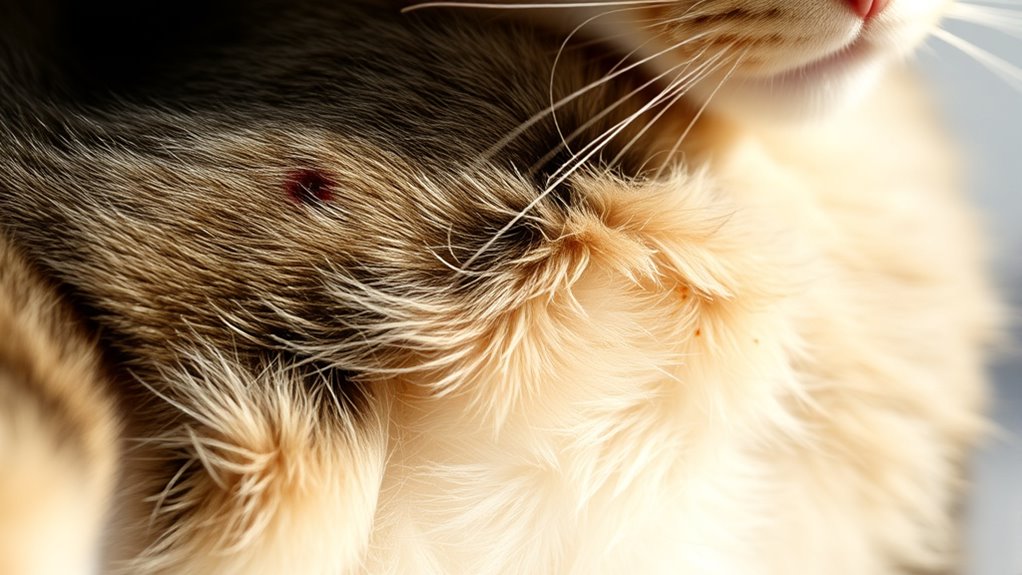
How to Tell if a Cat Has Fleas
Fleas are tiny, fast-moving insects that leave visible signs on your cat’s skin and coat. Look for persistent scratching, biting, and grooming, plus red or irritated patches, especially around the neck, tail base, and belly.
Check with a fine-tooth flea comb for small dark specks (flea dirt) and live fleas. Test flea dirt in water—the specks turn reddish-brown if fleas are present.
If you spot these clues, you’re on the right track to helpsome. You’ll uncover more tips as you continue.
Key Takeaways
- Look for persistent scratching or grooming, especially around the neck, base of tail, and belly.
- Check for flea dirt (black specks) that turn reddish-brown when damp with water.
- Use a fine-tooth flea comb to find tiny moving dark insects on the fur or skin.
- Inspect bedding and fur for small eggs or dirt and note any skin irritation or redness.
- If signs persist or worsen, seek veterinary advice for confirmation and treatment.
Spotting Fleas on Your Cat: What You’Ll See
You can spot fleas on your cat by looking for tiny, dark brown insects that move quickly through the fur, often around the neck, tail base, and lower back. You’ll also notice flea dirt—small black specks on the fur or pet bedding—that turns reddish-brown when you test it with water.
To verify, run a flea comb along the cat’s back, tail base, and underarms; you’ll see either flea dirt specks or visible fleas being pulled from the coat. Repeated scratching more than usual is another clue that fleas are present, since irritation increases as bites occur. Keep an eye on pet bedding, as accumulated flea dirt can appear there too.
Signs Your Cat Has Fleas
You’ll notice flea behavioral signs like your cat scratching, biting, or overgrooming, especially around the neck, base of the tail, or belly. Look for visible flea clues—flea dirt on fur or bedding, and tiny jumping fleas on your cat’s coat.
These indicators often accompany skin irritation, redness, or patches from scratching.
Flea Behavioral Signs
Flea behavior in cats usually shows up as persistent scratching, biting, or grooming, especially around the neck, tail base, and belly, as the irritations from flea bites accumulate. You might notice your cat being unusually restless or irritable due to constant irritation. Look for repetitive nibbling or licking of certain spots, signaling discomfort.
Excessive head shaking or ear scratching can indicate flea bites or fleas in the ears. Fleas are highly active and will jump onto passing animals or you, revealing their presence through sudden movements. In many cases, you’ll see your cat persevering with scratching and licking as the irritation compounds.
These behavioral cues, paired with occasional restlessness, help distinguish flea issues from other skin conditions. Stay alert for patterns across days.
Visible Flea Clues
Visible flea clues are often easiest to spot around your cat’s tail, neck, and belly. You may see tiny black fleas or flea dirt on fur, especially in those areas. Flea dirt appears as small, dark specks that redden to brown when pressed on a damp paper towel, a clear tell-tale sign.
You might notice small, fast-moving insects jumping onto your cat or nearby surfaces, confirming the presence of fleas. Excessive scratching, biting, or grooming often accompanies visible flea clues, signaling a potential cat has fleas. Patchy hair loss or red, inflamed skin can indicate bites and an active infestation.
Look for flea eggs and larvae as part of the scene, and remember flea saliva can trigger irritation even when you don’t see adult fleas.
How to Confirm Fleas With a Comb and Flea Dirt
Using a fine-tooth flea comb, gently brush through your cat’s fur—focusing on the neck, tail base, and belly where fleas tend to gather—and collect the debris on a white paper towel or cloth to inspect more easily.
As you work, look for small, dark, moving insects on the comb, which are adult fleas. Also check the debris for flea dirt, appearing as tiny black specks that can be tested by placing them in water; if they turn reddish-brown, you’ve confirmed flea dirt.
Repeat the combing process several times to thoroughly inspect for fleas and flea dirt, especially in areas where your cat scratches or bites. To interpret what you find, compare debris color and movement with your prior observations, and note any persistent indicators of pet health concerns.
When in doubt, document findings and consider how the results relate to overall flea management and routine care.
When to Talk to Your Vet
If you notice persistent scratching, hair loss, or skin infections, contact your vet promptly. Seek advice right away if you see signs of allergic reactions or anemia from flea bites, especially in kittens or frail cats.
Never administer flea treatments without a vet’s guidance and schedule a visit if live fleas or flea dirt persist despite OTC products.
When to See Vet
You should see your vet if your cat’s scratching is persistent, you notice hair loss or skin irritation, or you suspect fleas are causing a problem. Seek veterinary advice promptly if you detect flea dirt that turns reddish-brown in water, a sign of active flea infestation.
If your cat shows severe skin reactions, anemia, or unexplained weight loss from flea bites, schedule a vet visit without delay. When over-the-counter flea treatments don’t seem effective or you’re unsure about dosing, contact your vet before proceeding.
Always talk to your veterinarian before starting any flea treatment, especially for kittens, seniors, or cats with health conditions. Early professional guidance helps guarantee appropriate flea treatments and thorough care. See your vet to confirm diagnosis and next steps.
Signs Warranting Vet
Persistent scratching, hair loss, or skin infections are red flags you shouldn’t ignore. When you spot flea dirt, live fleas, or persistent itching, call your veterinarian promptly to confirm infestation and outline treatment.
If your cat shows skin infections or ongoing hair loss, don’t wait—these signs warrant professional evaluation to prevent complications. Severe scratching or biting that creates open wounds or inflamed areas should be addressed quickly to avert further damage.
Watch for signs of anemia, such as weakness or pale gums, and seek urgent care if they appear, since fleas can cause significant blood loss. Also seek advice for signs of allergic reactions, like swelling or redness, as flea bites may require specialized care.
Early vet input helps tailor effective flea management.
Treating Your Cat and the Home
To treat fleas effectively, start with your cat through vet-approved medications—oral tablets, spot-on treatments, or medicated shampoos—while simultaneously cleaning the home to break the flea lifecycle. You’ll use a coordinated plan: Treat your cat with appropriate flea treatment for cats, then sweep in environmental control. Use a flea comb to inspect and remove active fleas from fur as you apply treatment.
Wash pet bedding, blankets, and soft furnishings in hot water to kill eggs and larvae and prevent re-infestation. Vacuum carpets, furniture, and cracks daily, then empty the bag outside to avoid rehousing fleas. Apply vet-recommended flea sprays or powders on household surfaces and in crevices per product instructions, focusing on areas fleas hide.
Consider safe, veterinarian-approved insecticides or natural remedies for the home and yard to disrupt the lifecycle. Maintain flea prevention habits and monitor your cat for residual itching or new bites.
Preventing Future Flea Problems
Preventing future flea problems starts with a consistent prevention plan you stick to long term. You’ll want a steady routine: use veterinarian-approved flea preventatives to cut future infestations by up to 95%, and schedule vet checkups for early detection and consistent treatment.
Maintain a clean housing environment with frequent vacuuming and washing bedding to remove flea eggs and larvae, preventing re-infestation. Implement interior flea control by daily vigilance and product use as advised, and address outdoor risk by tidy landscaping—trim grass, remove debris, and apply diatomaceous earth where appropriate.
Natural repellents—cedar chips or lemon sprays—around entry points and rooms can deter fleas from returning, but they’re supplementary to proven methods, not substitutes. Regularly reapply preventive measures and monitor your cat for bites, scratching, or skin changes as your cue to adjust.
Quick-Start Flea Checklist for Busy Owners
If you’re short on time but want fast results, this quick-start flea checklist helps you spot and tackle fleas quickly. Start with flea dirt: check your cat’s fur and bedding for tiny black specks that turn reddish-brown in water, a clear sign fleas are present. Grab a fine-tooth flea comb and run it along the back, neck, and tail base to catch active fleas or flea eggs.
Pay attention to excessive scratching, biting, or hair loss, especially around the neck, tail, and belly—these are common flea signs you shouldn’t ignore. After brushing, look for small, fast-moving dark insects on the skin or in the fur. Red bumps or skin irritation near the shoulders, neck, or tail base also signal trouble.
Keep the checklist handy and repeat daily during peak flea season. Address signs promptly to prevent infestation and reduce discomfort for your cat.
Frequently Asked Questions
How to Check Your Cat for Fleas?
You check your cat for fleas by using a fine-toothed flea comb, especially at the tail base, underarms, and groin. As you comb, watch for fleas or flea dirt on a white towel beneath her. Rinse the comb in warm, soapy water after each pass.
Look for tiny black specks that turn reddish-brown on a damp towel. Notice excessive scratching or grooming, and you’ve got clear signs to investigate further.
How Do You Kill Fleas on Cats?
You can kill fleas on cats quickly by using vet-approved spot-ons or oral meds, applied correctly and repeat as directed. Dip a flea comb in soapy water to remove fleas from the coat, then bathe your cat with warm water and a gentle dish soap if advised.
Vacuum the home and wash bedding to eliminate eggs. For rapid relief, consider Capstar, which can kill adults within minutes to hours. Always consult a vet first.
Can Humans Catch Fleas From Cats?
Yes, humans can catch fleas from cats. Imagine tiny jumpers hitching a ride on paws, then biting your ankles and ankles again, leaving itchy red sparks. They don’t live on you, but they’ll bite you during their visit.
You’ll notice bites, especially around your legs, after shared spaces. Prevent by treating the cat and home, vacuuming, washing fabrics, and using vet‑recommended flea control. Clean environments and steady care reduce the risk.
What Do Pet Fleas Look Like on Cats?
Pet fleas on cats look like tiny dark brown insects that jump when you touch the fur. You’ll spot them along the skin at the base of the tail, under the armpits, and in the groin area.
They’re very small, moving quickly, and often hidden in dense fur. You might also notice flea dirt—black crumbs that turn reddish-brown when wet—signaling bites and dried blood. Check for itching, excessive scratching, or red bumps.
Conclusion
You’ll swear you’ve summoned a tiny army of scratchy invaders—but fear not, you’ve got this. With a flea comb, a quick bath, and a trusty home treatment, you’ll wipe out those mini monsters faster than a cat can blink.
Your couch won’t shudder at every breeze, your furniture won’t sprout suspicious new fibers, and your cat will strut proudly flea-free.
In no time, bathed in victory, you’ll hear purrs louder than a parade. Fleas? Vanished. You? An instant hero.


