
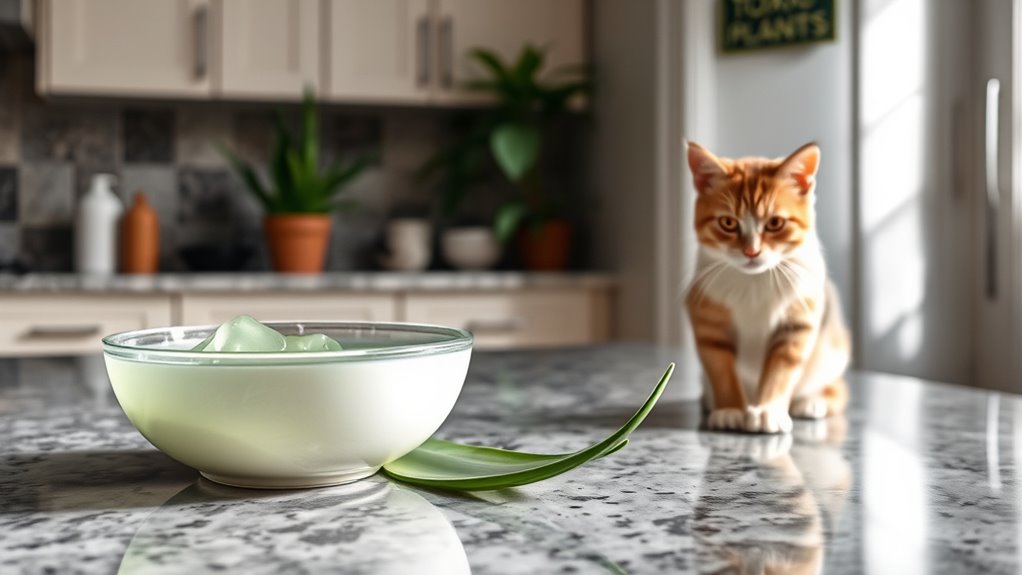
How to Keep Cats Safe When Aloe Vera Is Toxic
You should keep aloe vera out of your cat’s reach because its latex and other compounds can upset their stomachs and cause vomiting, diarrhea, or lethargy.
Move plants to high shelves or closed cabinets, or swap them for non-toxic options like spider plants or Boston ferns.
Monitor for early signs like vomiting or changes in appetite, and contact a vet if ingestion is suspected.
If you keep going, you’ll learn more safety steps you can take.
Key Takeaways
- Move aloe vera plants out of reach or relocate them to high shelves, closed cabinets, or outdoor enclosures to prevent ingestion.
- Monitor cats for vomiting, diarrhea, lethargy, or abdominal cramps within hours of exposure; document signs and plant details.
- Contact a veterinarian or poison control immediately if ingestion is suspected; do not induce vomiting without professional guidance.
- Use deterrents and barriers (vinegar sprays, citrus scents, plant cages) and supervise cats around houseplants.
- Replace aloe with non-toxic plants (spider plants, Boston ferns, cat grasses) and educate household members about plant safety.
Understand Aloe Vera Toxicity in Cats
Aloe vera can be toxic to cats, especially the latex inside the leaves, so you should treat any ingestion as a potential emergency. You’ll want to know that Aloe vera contains compounds like anthraquinones and saponins that can upset a cat’s stomach, causing vomiting and diarrhea. The latex is the most toxic part and can irritate the digestive tract if swallowed.
Even small amounts may trigger adverse effects, so prompt veterinary attention is wise. Infections or irritations aren’t the only concerns; you might notice abdominal cramps, lethargy, or a reduced appetite, and in rare cases, tremors can occur. The overall toxicity is usually mild, but it can become more serious with large ingestions or in cats with sensitivities.
Keep Aloe Vera out of reach and away from areas you might accidentally leave accessible. Understanding this toxicity helps you act quickly and protect your cat from avoidable harm. Aloe vera, toxic, Aloe Vera.
Spot Warning Signs Early
You’ve learned that aloe vera can upset a cat’s stomach, so spotting signs early helps you act fast. In practice, watch for warning signs like vomiting, diarrhea, and abdominal cramps that show up within a few hours of ingestion. Lethargy and loss of appetite are common early indicators of GI irritation or dehydration, so note any dip in energy or interest in food.
Changes in urine color—red or darker shades—can signal systemic effects from aloe vera toxins, making early detection essential. Behavior shifts deserve your attention, too: sudden hiding, irritability, or unusual restlessness may precede more serious problems. By staying vigilant, you improve your health status of your cat through prompt observation and documentation.
If you notice any warning signs, seek veterinary evaluation without delay, since early intervention boosts recovery prospects and reduces the risk of complications from toxicity. Remember: ongoing monitoring supports safe outcomes for your pets.
Immediate First Aid for Aloe Ingestion
If you suspect your cat has ingested aloe vera, contact your veterinarian or a pet poison control line right away. Immediate actions focus on observation and following veterinary guidance, not guesswork. Note any changes in bowel movements, vomiting, lethargy, or abdominal cramps and report them promptly, since they help assess the GI tract impact.
Do not induce vomiting unless a veterinary professional instructs you to do so, as improper attempts can worsen the situation. Keep a sample or photo of the plant to show your vet for accurate diagnosis—this helps determine whether the plant is toxic to your specific cat. Expect veterinary treatment tailored to your pet’s health needs, which may include a bland diet or other supportive care.
Hydration matters, but avoid giving human meds or home remedies. Remember, Aloe plants can trigger adverse reactions, so stay in close contact with your vet to monitor progress and adjust plans as needed.
Deterrents and Safe Plant Management at Home
Deterring curious kitties and keeping aloe vera out of reach starts with simple, practical steps you can implement at home. Start by placing aloe on high shelves, in closed cabinets, or in rooms your cat can’t access. Use physical barriers like plant cages or tall stands to stop chewing attempts and create clear boundaries around any remaining greenery.
If you prefer deterrents, consider pet-safe options such as vinegar sprays or citrus scents around the plant to discourage approach or nibbling. Regular supervision of your cat around houseplants helps you catch problems early and reinforces boundaries. Educate all household members about which plants are toxic so accidental ingestion doesn’t occur.
When possible, replace or remove aloe vera with pet-safe alternatives, and always verify the toxicity of new plants before introducing them. This routine minimizes risk while preserving your home’s greenery.
Pet-Safe Plant Alternatives for Cats
When choosing cat-safe plants, start with options known to be non-toxic to felines, like spider plants, Boston ferns, and cat grasses such as wheatgrass. You’ll want to verify any new plant’s toxicity with reputable sources, like the ASPCA’s Toxic Plant List, before bringing it home.
Consider cat-friendly plants in areas where you previously kept aloe vera to reduce ingestion risk, swapping in safe greens instead. Place non-toxic plants in elevated or otherwise inaccessible spots to discourage nibbling and chewing.
Consider cat-friendly plants in aloe-free zones, placing non-toxic greens out of reach to deter nibbling.
Regularly monitor how your cat interacts with greenery, watching for curiosity that could lead to chewing on stems or leaves. Use these alternatives to create safe focal points and enrichment without introducing poison risks.
Stay proactive by educating yourself on common toxic plants for cats and updating your plant choices as your collection evolves. Your vigilance helps maintain a safer, greener home for your feline companion.
Step-by-Step Household Safety Plan
Start by identifying Aloe risks early and removing any plants from reach, then set up clear steps for your household to follow.
If exposure happens, seek vet guidance quickly and document the response plan for future prevention.
This plan should factor in plant labeling, deterrents, and regular checks to keep curious cats safe.
Identify Aloe Risks Early
A good first step is regularly inspecting your home for aloe vera plants and moving them out of your cat’s reach, so accidental ingestion is less likely. Start by surveying common rooms where plants sit and noting any that could tempt curious noses. If you find an aloe plant, relocate it to high shelves, hanging baskets, or inside sealed cabinets.
Use deterrents like a light vinegar spray or pet-safe repellents to discourage approach and chewing. Educate every household member about aloe’s toxicity to cats so consistent precautions become habit. Keep emergency contact information for your veterinarian or pet poison control handy.
Regular checks and clear roles help you identify risks early and prevent incidents before they happen.
Remove Aloe From Reach
To remove aloe from your cat’s reach, move all aloe vera plants onto high shelves or into cabinets that cats can’t access. Then install child-proof locks or barriers around the potted plants to prevent curious noses from slipping by.
If possible, relocate the plants outdoors or into a secure, enclosed area your cat can’t reach. Consider replacing aloe with non-toxic houseplants to eliminate temptation altogether. Regularly inspect and secure all houseplants so your feline friend can’t chew or ingest potentially toxic foliage.
By prioritizing containment, you reduce risk and create a calmer home.
| Action | Why it helps |
|---|---|
| Move plants high | Blocks access, lowers temptation |
| Add barriers | Physical safeguard against curious paws |
| Outdoor/secure area | Eliminates indoor exposure risk |
| Replace with safe plants | Removes toxicity source |
| Regular inspections | Maintains ongoing safety |
Vet Guidance Quickly
If you’ve just moved aloe out of reach, you’re already building a safer setup, but quick, clear steps help you act fast if exposure occurs. First, remove any remaining aloe plants or products from accessible areas immediately to prevent ingestion.
If you suspect your cat has eaten aloe, contact your veterinarian or a pet poison control hotline (e.g., ASPCA at 888-426-4435) without delay. Observe for vomiting, diarrhea, lethargy, or abdominal cramps, and report these symptoms to your vet right away.
Follow your veterinarian’s guidance precisely—inducing vomiting, activated charcoal, or at‑home fluids may be advised. Maintain readily accessible emergency veterinary contact information, and keep your home as toxic‑free as possible to safeguard your cat’s health.
Talking About It: Coordinating With Family and Social Media
You’ll want to build a coordinated family approach and use social media to share clear, consistent messages about aloe vera toxicity. As you post updates and warnings, invite input from others to strengthen your plan and keep everyone aligned.
Together, you’ll reinforce safe pet care through collaborative actions and supportive online networks.
Coordinated Family Approach
Coordinating with your family and online communities helps keep your cat safe and your aloe vera plant protected. You communicate openly about the dangers, ensuring everyone understands the risks. You share information and educational resources, like articles or posts, to promote awareness among family and friends.
You coordinate household routines, such as plant placement and supervising your pet, to prevent ingestion or plant attacks. You use social media to seek advice from pet safety groups and share updates on measures you’ve taken.
You establish a collective plan with family members and online communities to regularly monitor your cat and safeguard the plant effectively.
| Family/Group | Action |
|---|---|
| Household | Monitor routines, placement |
| Online | Seek advice, share updates |
| Everyone | Stay informed, collaborate |
Social Media Sharing Dynamics
Social media sharing speeds up awareness and support by connecting you with a broader community of fellow pet owners. When you post concerns about aloe vera toxicity, you receive diverse advice and emotional backing from others who’ve faced similar situations.
Public updates about cats reacting to plants spark rapid engagement, offering practical deterrent ideas you can try right away. These discussions spread knowledge about the real dangers, prompting you to rehome plants or relocate them to safer spots.
Sharing photos and stories invites collective problem-solving, helping you compare effective deterrents and safe-environment tweaks. Engaging online communities gives you practical tips and reassurance, supporting your ongoing efforts to keep your cats safe from toxic plants like aloe vera.
Frequently Asked Questions
How to Treat Aloe Vera Toxicity in Cats?
Treat aloe vera toxicity in cats by seeking veterinary care immediately. Do not induce vomiting unless a professional advises it. Your vet may use activated charcoal to absorb toxins and give IV fluids to prevent dehydration and correct electrolyte imbalances.
Monitor for vomiting, diarrhea, lethargy, or abdominal pain, and report symptoms promptly. There’s no antidote, so early supportive care by a professional greatly improves recovery chances and reduces potential long-term organ damage.
Is Aloe Vera Toxic to Cats if They Smell It?
No, smelling aloe vera isn’t typically toxic to your cat. It’s mainly ingestion of the plant’s latex or gel that’s dangerous. You should still limit exposure, since strong odors can irritate sensitive cats and ingestion is the real risk.
If your cat chews or swallows any part of the plant, contact your vet or a poison control line right away. Keep aloe vera out of reach and provide safe toys to redirect chewing.
How to Keep Cats Away From Aloe Vera Plants?
Yes, you should keep cats away from aloe vera plants. Place the plants out of reach on high shelves or behind closed cabinets, and use plant cages or covers to block access.
Apply a deterrent spray around the area, and elevate potted plants in rooms where cats aren’t allowed. Offer safe alternatives and train your cat with positive reinforcement to ignore the plants, reinforcing the behavior with rewards.
What Happens if a Cat Licks Aloe Vera?
If your cat licks Aloe Vera, it may upset their tummy and stir up trouble in unpredictable ways. You could see vomiting, diarrhea, cramping, or lethargy, even from small amounts.
The latex portion hurts more and can spark stronger distress. Act quickly: contact a veterinarian, offer fresh water, and monitor closely for dehydration or worsening signs.
With prompt care, you reduce risk and ease your cat back toward comfort.
Conclusion
You think you’ve got it covered, but something’s lurking in your home you can’t ignore. Aloe may look harmless, yet a single nibble could spark life-threatening trouble.
You’re not just safeguarding whiskers; you’re preserving trust, routines, and peace of mind. So ask yourself: what’s worth more—the momentary calm of a plant’s beauty or the quiet fear of a vet bill you could have avoided?
Act now. Remove the risks, and keep your cat’s world safe—and suddenly, the ordinary becomes something you can truly protect.