
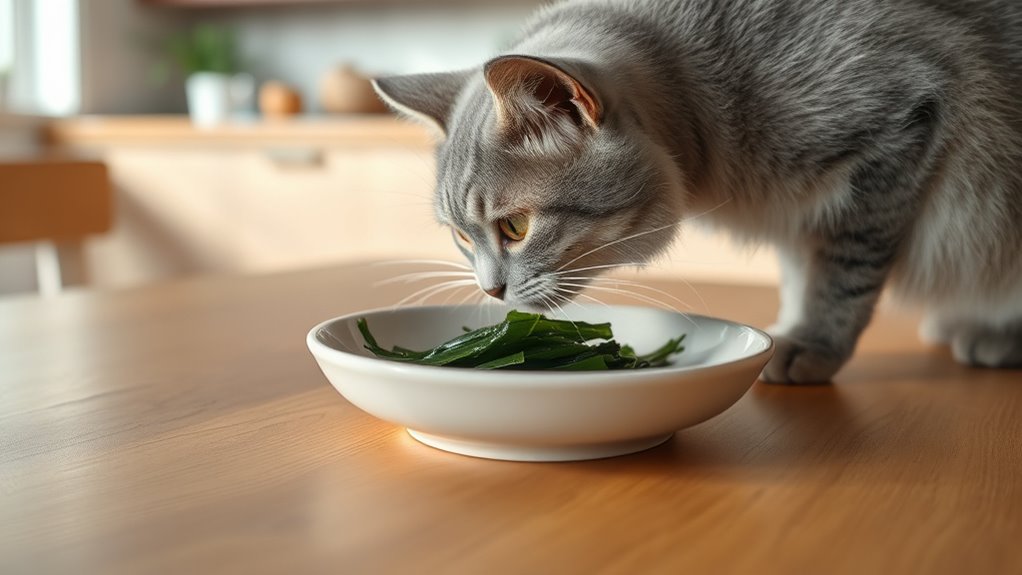
Can Cats Eat Seaweed Safely
Seaweed can be safe for your cat in tiny, plain, unsalted amounts and should be an occasional treat or supplement under vet guidance. Start with a small, plain piece (like nori) and monitor for vomiting, diarrhea, or lethargy.
Choose pet-safe products and avoid seasoned, salty, or additive-filled varieties.
Limit servings to less than about 1 gram per 10 pounds of body weight per week.
If you want practical tips and cautions, you’ll find more soon.
Key Takeaways
- Seaweed can be safe for cats in small, plain forms (nori, kelp, dulse) and should be unseasoned and pet-safe.
- Use seaweed as an occasional supplement, limit to under 1 gram per 10 pounds weekly, and no more than 1 gram per 10 pounds daily.
- Start with tiny amounts and monitor for vomiting, diarrhea, lethargy, or allergic signs before increasing.
- Avoid seaweed with added salt, spices, garlic, onion, or heavy metals; consult a vet for proper dosing.
- Consider vet-approved seaweed supplements or alternatives like fish oil or cat-safe herbs if needed.
What Seaweed Is Safe for Cats?
What seaweed is safe for cats? You’ll find plain, unseasoned options are best for casual treats or supplements. Safe seaweed varieties include nori, wakame, kelp, and dulse, all chosen for their low contaminants and suitability in small, controlled amounts.
Plain, unseasoned seaweed like nori, wakame, kelp, and dulse suits cats in small amounts.
When you shop, pick products explicitly labeled as pet-safe or suitable for animal consumption, without added spices or preservatives. Avoid anything flavored, salted, or seasoned with wasabi, garlic, or onion, since those ingredients can be toxic to cats.
You’re looking for plain sheets or powders that reputable suppliers offer, designed for pet use, to help guarantee safety and quality. Use these seaweed forms as a light supplement rather than a main dish, and monitor your cat for any unusual reactions.
These products can contribute minerals and nutrients, but should complement a balanced diet, not replace veterinary guidance or standard pet food.
How Much Seaweed Can My Cat Eat?
You should keep seaweed servings small, using it as a treat rather than a staple. Aim for moderation—less than 10% of daily intake and no more than about 1 gram per 10 pounds of body weight each day.
Start with a tiny portion, monitor your cat’s response, and consult your vet for personalized guidance.
Safe Serving Guidelines
Even though seaweed can be a low-calorie treat, it should only be given in small amounts to avoid iodine overload and digestive upset. You should aim for less than 1 gram per 10 pounds of body weight per week, serving as an occasional treat or supplement, not a primary food source.
Use plain, unseasoned dried nori, kelp, or wakame in tiny portions to avoid salt, spices, or additives that can harm cats. Introduce seaweed gradually, starting with a tiny piece to monitor any adverse reactions or GI upset.
Always consult a veterinarian for personalized guidance on safe serving sizes based on your cat’s health and dietary needs. This supports safe serving guidelines, seaweed for cats, pet health, iodine intake, and cat diet.
Moderation and Monitoring
Moderation is key when adding seaweed to your cat’s routine. You should offer only small amounts, a tiny sprinkle or a few pieces, to prevent iodine overload. Introduce seaweed gradually over several days so you can monitor tolerance and spot any adverse reactions early.
Regularly monitor your cat for signs of gastrointestinal upset, such as vomiting or diarrhea, especially when you first add seaweed. The recommended feeding frequency is once or twice a week in moderation, avoiding daily consumption to reduce health risks. Always measure portion sizes carefully and consult with a veterinarian to determine the appropriate amount based on your cat’s size, age, and health status.
Keep tracking, adjusting as needed, and discontinue if adverse reactions occur.
Which Seaweed Types Do Felids Tolerate?
Curious which seaweed types felids tolerate? You’ve got options, but you’ll want to choose wisely. Some seaweeds fit well, while others require caution due to iodine levels or contaminants.
- Nori, a red algae, can be safe for cats when offered in small, plain sheets.
- Kelp, a brown seaweed, is generally tolerated in moderation and can supply beneficial nutrients.
- Dulse, another red seaweed, is safe for cats in controlled amounts without additives.
- Wakame and other seaweed varieties high in iodine should be fed cautiously to avoid thyroid issues.
Remember: always avoid raw or processed products with heavy metals or preservatives, since those risks apply across seaweed varieties. You’ll want to monitor your cat’s response any time you introduce a new seaweed type and keep portions small.
When in doubt, consult your veterinarian to confirm suitability and proper serving sizes for your cat. This helps ensure the experience stays safe and contributes to a balanced diet.
Signs Your Cat Might React to Seaweed
If you notice signs of a reaction, such as vomiting, diarrhea, or excessive drooling after seaweed, pay attention to any patterns that emerge. Look for allergy indicators like itching or facial swelling, and watch for digestive changes or unusual thirst and urination that could signal iodine issues.
If anything unusual appears, seek veterinary advice promptly to assess potential seaweed-related effects.
Signs Of Reactions
Seaweed is generally safe in small amounts, but your cat can react after eating it. You should know the signs of a reaction, so you can seek help quickly if needed. Reactions may show up within hours as vomiting, diarrhea, or excessive salivation.
If your cat is allergic, you might notice itchy skin, swelling, or coughing and sneezing. Other signs include lethargy, loss of appetite, or behavioral changes that signal discomfort. Watch for dehydration indicators like dry gums or sunken eyes, especially with vomiting or diarrhea.
If any severe or persistent symptoms appear, seek immediate veterinary attention. Early recognition can improve outcomes and prevent complications.
- vomiting
- diarrhea
- allergic reactions or signs
- symptoms to monitor
Seaweed Allergy Indicators
Seaweed allergies in cats can show up in several ways, from skin reactions to digestive upset. You might notice a seaweed allergy as itching, redness, or swelling around the face and paws, or skin irritations like rashes or hives after contact or ingestion.
An allergic reaction can also present as vomiting, diarrhea, or general gastrointestinal discomfort, signaling sensitivity to seaweed. Persistent sneezing, nasal congestion, or respiratory issues could indicate an allergic response to seaweed exposure.
If your cat shows lethargy or breathing difficulties after eating seaweed, it may be a severe allergic reaction and requires immediate veterinary attention. Monitor closely after any exposure and seek care promptly if symptoms escalate. Stay vigilant for signs and respond quickly if they appear.
Watch For Digestive Changes
Digestive changes are the likely signal your cat’s reacting to seaweed, so watch closely after any new exposure. When you introduce seaweed, be prepared for possible digestive reactions like vomiting, diarrhea, or constipation as your cat adjusts.
Repeated vomiting beyond two episodes may indicate GI irritation or intolerance that needs attention. Notice changes in appetite or refusal to eat, which can signal upset caused by seaweed ingestion. Lethargy or abdominal discomfort may accompany these symptoms if a negative reaction occurs.
With careful monitoring, you can identify issues early and decide whether to continue or pause seaweed. If symptoms persist, consult your veterinarian promptly to ensure your cat’s safety and comfort.
Best Ways to Introduce Seaweed to Your Cat
If you’re introducing seaweed to your cat, start small to gauge interest and tolerance. Begin with a tiny, plain piece of dried seaweed, like nori, to see how your cat reacts. If it shows curiosity, you can gradually introduce seaweed into your cat’s diet by mixing tiny amounts with their regular food over several days.
Use specially formulated seaweed supplements or treats designed for cats to guarantee safety and appropriate dosing, rather than guesswork. Always monitor for adverse reactions, such as vomiting, diarrhea, or excessive thirst, during the introduction process. Keep portions modest and increase only if your cat tolerates the initial amounts well.
Before you proceed, consult your veterinarian to determine the right type and amount for your individual pet. This approach helps you balance seaweed intake with your cat’s overall diet while prioritizing safety and wellbeing.
Seaweed Alternatives for Cats: When to Use Them
You’ll want to contemplate seaweed alternatives when your cat’s diet needs a nutrient boost or variety, under veterinary guidance. Use safe substitutes like specially formulated seaweed supplements or plant-based options only after confirming they’re appropriate for your cat’s health and current diet.
Avoid adding salts, spices, or artificial additives, and consult your vet before introducing any new option.
When To Use Alternatives
Seaweed options should be considered when your cat has allergies, sensitivities, or health requirements that make seaweed risky or unsuitable. If a cat’s health issues, such as thyroid problems, are worsened by iodine, using non-seaweed choices can help manage their condition securely.
When seaweed products are polluted or contain excessive additives, choosing processed options like vet-approved supplements is safer. For cats with restricted diets or specific health needs, veterinarian-recommended alternatives can provide necessary nutrients without the risks associated with seaweed.
When introducing new dietary components, especially for cats with a history of gastrointestinal issues, using vetted, alternative supplements ensures safer nutrition.
Safe Substitutes For Cats
Seaweed isn’t the only option when you’re balancing a cat’s diet; there are safe substitutes that can fill similar roles without the iodine risks. You can use fish oil supplements to deliver omega-3 fatty acids without iodine concerns, supporting skin, coat, and heart health.
Commercial cat treats infused with herbs like parsley or spirulina offer nutritional benefits in small amounts, mimicking some seaweed nutrients. Incorporating cooked, shredded vegetables such as carrots or green beans can aid digestion and add fiber as alternatives.
For balanced nutrition, rely on cat supplements or specially formulated vitamins and minerals instead of uncertain seaweed products. Always consult a veterinarian before introducing any new supplement or treat to ensure it fits your cat’s needs.
Practical Seaweed Feeding Tips and Portion Ideas
To keep your cat safe and comfortable, start with small, plain dried seaweed quantities—nori or kelp—and watch for any signs of intolerance. You’ll want to introduce seaweed gradually, beginning with a tiny piece or light sprinkle to monitor tolerance before increasing the amount.
Use seaweed-infused treats or supplements designed for cats to ensure safe and accurate dosing, and always verify there’s no seasoning, salt, or additives. Limit servings to no more than once or twice a week to prevent GI upset or iodine toxicity.
Track how your cat responds, and adjust portion size based on weight and overall health. Consistency helps your cat adapt, while mindful spacing reduces risk.
If you notice vomiting, diarrhea, or lethargy, cut back and consult your veterinarian. With careful portioning, seaweed can be a safe, occasional addition to a balanced diet, supporting variety without compromising well-being.
Common Myths About Seaweed and Cats Debunked
Despite common fears, not all seaweed is dangerous for cats; the risk depends on the type and amount. In this debunking, you’ll see that myths around seaweed aren’t universal truths. First, the belief that seaweed is always toxic is a misconception: only certain varieties and quantities pose health concerns.
You may have heard that iodine poisoning is inevitable, but the fact is that proper amounts are generally safe, reducing the fear-driven toxicity headlines. Another misconception is that seaweed automatically contains harmful heavy metals; reputable sources test for contaminants, so safer options exist if you choose trusted sources.
You might assume your cat will reject seaweed, yet many do enjoy small, plain pieces as treats, highlighting a reduced safety risk when given sparingly. Remember, seaweed isn’t a complete diet choice; it’s an occasional supplement, not a substitute for balanced nutrition.
Vet Guidance: Should I Consult Before Feeding Seaweed?
Before adding seaweed to your cat’s diet, it’s wise to consult a veterinarian to guarantee safety and proper dosing. You’ll want a professional to assess your cat’s health history and advise on which seaweed types and quantities are appropriate. A vet can flag risks like iodine overload or allergies specific to your pet, helping you avoid unnecessary harm.
Consult a veterinarian to ensure safe seaweed choices, dosing, and allergy considerations for your cat.
With guidance, you’ll understand safe feeding methods—whether as occasional treats or as a supplement—so you keep nutrition balanced and healthful. Relying on a professional reduces guesswork and supports proper dosage tailored to your cat.
- veterinarian guidance helps tailor seaweed choices to your cat’s health
- consult early to prevent iodine overload or allergic reactions
- health history informs safe dosage and feeding methods
- safety focuses on using treats or supplements appropriately
Troubleshooting: What to Do If Your Cat Gets Ill After Seaweed
If your cat seems unwell after eating seaweed, call your veterinarian right away. You’ll want to act quickly if you notice signs like vomiting, diarrhea, or lethargy, because prompt veterinary care improves your cat’s outlook. Monitor for dehydration—dry gums, sunken eyes, or decreased urination are important clues.
Provide small amounts of bland food and fresh water only under veterinary guidance, avoiding home remedies that aren’t approved. Gather a sample of the ingested seaweed or its packaging to bring to the visit; this helps your vet assess potential toxins or contamination.
During veterinary care, follow the prescribed plan closely and report any new or worsening symptoms. You’ll be asked about timing, quantities, and other foods your cat may have eaten. Remember, signs of illness after seaweed require professional evaluation, so stay in contact with your veterinary team and adhere strictly to their instructions.
Frequently Asked Questions
Is Dried Seaweed Ok for Cats?
Dried seaweed is okay for cats in small, unseasoned amounts. You should choose high-quality seaweed made for humans or pets and avoid anything salty, spicy, or preservative-laden.
Start with a tiny nibble to see how your cat reacts, since iodine and minerals can help but excess might upset their stomach. Monitor for adverse effects, and consult your vet if you notice vomiting, diarrhea, or unusual behavior after feeding.
What Types of Seaweed Are Safe for Cats?
Nori, kelp, wakame, and dulse are safe for cats when served plain and in moderation. You should choose unseasoned, dried, or processed seaweed labeled for pet use, and avoid flavored, salted, or additive-heavy kinds. Don’t feed raw seaweed; opt for cooked or dried forms.
Source from reputable suppliers to minimize heavy metals or pollutants. If you’re unsure, consult your vet before introducing seaweed to your cat’s diet.
Which Foods Should Cats Never Eat?
Seafood scares me? Not really, but some foods must never cross your cat’s lips. You should never give onions, garlic, chives, or any raw or undercooked meat, poultry, or fish. Chocolate, caffeine, and alcohol are poisons you must avoid.
Grapes and raisins can crash kidneys, and bones—especially cooked ones—can lodge or injure. Keep these away, and watch portions of safe snacks, so you spark trust, not trouble, in your curious companion.
How Do I Prepare Seaweed for My Cat?
You prepare seaweed for your cat by choosing plain, unseasoned dried sheets or pet-safe treats, then cut them into small pieces. Avoid raw or fresh seaweed.
If you use powder or flakes, start with a tiny pinch and gradually increase to gauge tolerance. Store in a cool, dry place and serve in moderation to prevent iodine overload.
Always monitor for upset stomach or changes in appetite, and consult your vet if you’re unsure.
Conclusion
Seaweed can be a tiny, tide-washed ally for your cat, but it’s not the main course. Think of it as a shore-swept treat, not a compass for health. If you gift it, start tiny, watch for reactions, and choose safe varieties in moderation.
Like sailors respecting the sea’s moods, you’ll learn your cat’s tolerance through quiet, careful observation. When in doubt, seek your vet’s counsel—even the calmest currents can conceal a sudden undertow.
In conclusion, can cats eat seaweed safely? Yes, but only as a small, occasional treat and with caution.


