
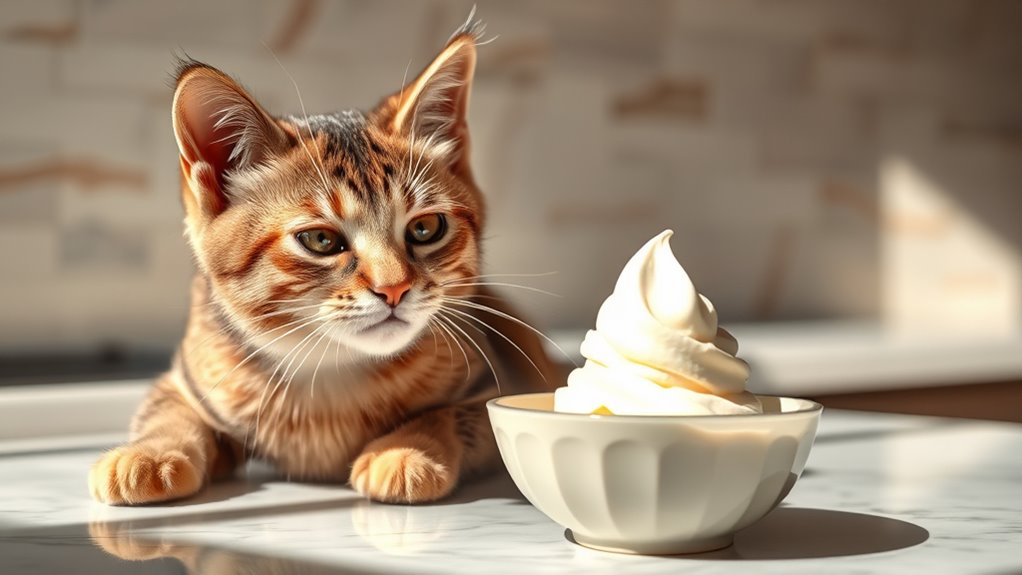
Can Cats Have Ice Cream How to Guide
Ice cream isn’t recommended for cats. Most are lactose intolerant, and dairy, plus the high sugar and fat, can trigger vomiting, diarrhea, or more serious issues.
Avoid flavors with chocolate, caffeine, artificial sweeteners like xylitol, or nuts.
If your cat sneaks a lick, offer fresh water and monitor for GI upset, then contact your vet if symptoms appear.
Safer options include pet-friendly frozen treats or bone-broth cubes.
Want practical tips and safer alternatives you can use today?
Key Takeaways
- Ice cream is generally not safe for cats due to lactose intolerance, high sugar, fat, and potential toxins like chocolate or xylitol.
- Symptoms of dairy or ice cream ingestion include vomiting, diarrhea, bloating, lethargy, and dehydration; seek vet care if they occur.
- If you want cooling treats, use vet-approved options like plain bone broth ice cubes or frozen lickables, in moderation.
- Safe serving guideline: about 1 teaspoon per small cat or 2 teaspoons for large cats, monthly or less.
- Always consult a veterinarian before introducing new treats, and avoid any products with artificial sweeteners, chocolate, caffeine, or toxins.
Can Cats Safely Eat Ice Cream? (No: Ice Cream Is Not Recommended for Cats)
No—cats should not eat ice cream. You might wonder if a little bite is harmless, but the truth is that ice cream isn’t safe for most felines. You deal with lactose intolerance in many cats, so dairy can trigger diarrhea, bloating, and vomiting, even in small amounts.
The fat and sugar load can push your cat toward gastrointestinal issues and discomfort that lasts for hours. You also need to beware of artificial sweeteners, like xylitol, which are toxic to cats and can cause severe health problems well beyond a tummy ache.
Flavors such as chocolate or coffee bring additional toxins like theobromine and caffeine, which can be dangerous or fatal. Even minimal exposure can contribute to obesity and diabetes over time.
In short, keep ice cream out of reach, offer safer treats approved for felines, and monitor any accidental contact closely for adverse signs. If in doubt, contact your vet promptly.
Why Dairy and Sugar Are Risky for Felines
Dairy and sugar pose real risks for felines, even when a cat sneaks a small taste. Most adult cats are lactose intolerant, meaning they lack enough lactase to digest dairy. Those undigested sugars can trigger diarrhea, bloating, and gas, turning a brief indulgence into an uncomfortable episode.
You might notice sudden stomach upset after dairy, signaling you should skip it in the future. High sugar intake isn’t harmless either; it can lead to obesity, diabetes, and dental problems, all of which stress your cat’s overall health. Artificial sweeteners, like xylitol found in some ice creams, are especially dangerous and can cause acute toxicity, including shifts in energy and potentially life-threatening complications.
Even dairy treats with extra fats raise pancreatitis and heart disease risks, so you’ll want to choose safer alternatives. In short, dairy and sugar aren’t just unwise—they pose tangible risks you should avoid.
Cat-Safe Cooling Options You Can Offer Instead
If dairy and sugar aren’t great for felines, you’ll be glad there are safer ways to help them beat the heat. Here are cat-safe cooling options that skip ice cream pitfalls while keeping hydration and enjoyment in mind. You’ll find simple, effective ideas you can trust.
Beat the heat with safe, dairy-free cat cooling treats for hydration and joy.
- Freeze bone broth cubes for hydration and nutrients without added sugars or artificial ingredients.
- Freeze lickable treats like Applaws Bone Broth or similar products to create a healthy, palatable cold snack.
- Freeze plain, unsweetened yogurt into small portions as a gentle dairy-based cooling treat suitable for many cats.
You can also offer frozen water with a bit of catnip or tuna to boost hydration and provide sensory enrichment. Just double-check that no onions, garlic, artificial sweeteners, or other toxins sneak in. When in doubt, choose Ice, Cats, and Cream-free options, and observe your cat’s response to each treat.
Cat-Safe Flavors vs. Dangerous Ingredients
When choosing cat-safe ice cream, stick to plain, minimal-ingredient options and steer clear of risky flavors; plain vanilla or lactose-free varieties with few additives are typically best, while ingredients like chocolate, coffee, nuts, raisins, xylitol, and alcohol should always be avoided.
You’ll find that cat-safe flavors lean toward simplicity, emphasizing lactose restrictions and clean ingredients. Avoid fruity mixes such as grapes or cherries due to toxins and choking hazards, and skip artificial sweeteners that can irritate digestion or cause toxicity.
If you’re unsure, opt for natural, minimally processed options like frozen meat chunks or pet-safe yogurt as safer alternatives to typical flavored or sugary ice creams. Your goal is to minimize risk by choosing flavors with minimal additives and recognizing dangerous ingredients before serving.
How Much Ice Cream Would Be a Problem for a Cat?
You should keep ice cream portions tiny—no more than 1 teaspoon for small cats or 2 teaspoons for larger ones, and only occasionally.
Think about safe serving limits, with small-sip guidance to prevent lactose issues and fat overload. Limit treat frequency, since even small amounts can add up and disrupt a balanced diet over time.
Safe Serving Limits
A small serving of ice cream is generally safe for most cats as an occasional treat, but amounts matter. You should aim for 1-2 teaspoons for typical cats and up to 2 teaspoons for larger breeds, never more than a tablespoon in a single serving.
Keep frequency low—monthly or less—to avoid GI upset and weight gain.
- safe serving limits: stick to tiny portions to minimize risks and monitor reactions.
- cats eat ice cream cautiously: even small amounts can trigger vomiting or diarrhea if lactose intolerant.
- lactose intolerant note: consider alternatives or dairy-free options if you see adverse signs after a treat.
Small-Sip Guidance
Small-sip guidance isn’t about dipping into dangerous territory so much as staying within safe, tiny portions. For you and your cats, a small teaspoon of ice cream is the practical cap, about 1 teaspoon for small cats and up to 2 teaspoons for larger breeds. Above this small amount, GI issues like vomiting, diarrhea, and bloating can occur.
Regularly exceeding the portion raises obesity risk because ice creams often pack high sugar and fat. Even a minimal amount can upset lactose-intolerant cats, which is common in adults. The goal is occasional, very small treats to minimize health risks and prevent overfeeding.
Keep ice cream truly rare, and watch for digestive signals after each small amount, adjusting future portions accordingly.
Frequency Of Treats
How much ice cream is too much for a cat? You’ll want to limit frequency and size to protect health. A small teaspoon once a month won’t usually harm, but regular larger portions raise issues.
Feeding more than 1-2 teaspoons consistently can contribute to obesity and diabetes risk. Frequent treats of ice cream can also foster a preference for high-fat, sugary foods, upsetting a balanced feline diet. Consuming ice cream more than weekly raises the chances of diarrhea, bloating, and gas.
In short, moderation matters, and the safe frequency is limited.
- Frequency of treats should be carefully controlled to avoid digestive upset and weight gain
- Moderation helps prevent obesity and diabetes risks
- Keep ice cream as an occasional, tiny indulgence rather than a regular habit
If Your Cat Licks Ice Cream, What to Do Next
If your cat licks ice cream, start by evaluating immediate effects and watching for any GI upset or unusual behavior. Check for symptoms like vomiting, diarrhea, lethargy, or swelling, and seek veterinary guidance if anything concerns you.
Keep fresh water available and consider safer, cat-friendly alternatives for future treats.
Assess Immediate Effects
If your cat licks ice cream, monitor them closely for the next few hours for signs like vomiting, diarrhea, or bloating, and contact your veterinarian if they seem lethargic, lose interest in food, or act unusually. Immediate effects can include gastrointestinal upset from dairy intolerance or incidental toxins from ingredients, so observe any changes in appetite, energy, or stool.
Even small amounts may pose a risk if xylitol or chocolate are present, requiring prompt attention. While waiting for guidance, avoid giving more food until you know the impact, and keep your cat hydrated. Seek emergency care for severe symptoms or large ingestion.
- Watch for vomiting, diarrhea, bloating, or lethargy as early indicators of gastrointestinal upset.
- Note any unusual behavior or loss of appetite that could signal toxicity.
- Identify and report potential toxins, like xylitol or chocolate, to your vet immediately.
Check for Symptoms
If your cat nicks a bite of ice cream, start by watching for signs of distress within a few hours, such as vomiting, diarrhea, gas, or bloating. You may also notice unusual lethargy, reduced appetite, or dehydration, which hint at a negative reaction.
If symptoms appear, contact your veterinarian promptly for guidance and potential treatment. Remember that even small amounts of dairy or sugar can upset lactose-intolerant cats.
In cases of toxic ingredients like chocolate, xylitol, or artificial sweeteners, seek emergency care immediately. Below is a quick symptom reference to track your observations.
| Symptom | Gastrointestinal Distress | Toxic Ingredients Presence |
|---|---|---|
| Vomiting | Possible | High risk |
| Diarrhea | Possible | High risk |
| Lethargy | Moderate | Possible |
| Loss of appetite | Moderate | Possible |
| Dehydration | Possible | High risk |
Seek Veterinary Guidance
Seek veterinary guidance promptly if your cat licks ice cream and shows any symptoms. You should monitor for GI upset, and contact your veterinarian promptly if signs of toxicity appear, especially if chocolate, xylitol, or artificial sweeteners are involved. Be aware that even a tiny lick with harmful ingredients can trigger allergic reactions or poisoning in sensitive cats.
Keep the packaging and ingredient list accessible to inform your vet about what was ingested. If ingestion was recent and dangerous ingredients are present, your vet may recommend inducing vomiting or administering activated charcoal to prevent toxin absorption. Seek veterinary guidance to assess risk and determine next steps.
- Monitor symptoms and provide details on ingredients
- Note timing and amount of ice cream ingested
- Follow your vet’s instructions for treatment and observation
Summer Care: Hydration and a Cat-Friendly Environment
Summer heat can sneak up on cats, so keep them hydrated and comfy by offering fresh water daily and spreading extra bowls around the house to encourage drinking. To stay properly hydrated, provide fresh, clean water and aim for about 3.5 to 4.5 ounces per 5 pounds of body weight.
During hot weather, multiple water bowls around the home help prevent dehydration by nudging them to drink more. Create a cool environment with access to air conditioning or fans to regulate body temperature and reduce heat stress. You can also offer frozen treats like chilled broth ice cubes or specially made pet pops to help keep them cool without dairy or sugar risks.
Monitor for signs of heat exhaustion—excessive panting, lethargy, drooling, or uncoordinated movements—so you can act quickly. Hydration and a calm, cool setting support your cat’s comfort and safety all summer long.
Practical Tips: Introducing Safe Treats and When to Check With a Vet
As you start offering treats, keep safety in mind by choosing vet-approved options and monitoring your cat’s response. Before introducing anything new, consult your vet, especially if your cat has diabetes or digestive sensitivities. Opt for cat-safe frozen treats like bone broth ice cubes or specially formulated lickable treats to keep things cool and safe.
As you start treats, consult your vet and opt for cat-safe frozen options like bone broth ice cubes or lickables.
Avoid regular dairy-based options, as ice cream can cause GI upset and contribute to obesity. Watch for signs of trouble, such as vomiting, diarrhea, or lethargy, and seek veterinary advice if symptoms appear. Limit portions and use treats sparingly—think once a week or only in hot weather—to prevent overfeeding and complications.
When in doubt, prioritize vet guidance and gradual trials rather than sudden changes.
- Choose vet-approved, cat-safe treats and monitor reactions
- Favor bone broth ice cubes or lickables over dairy
- Report adverse effects to vet and reassess frequency
Frequently Asked Questions
Can I Let My Cat Eat Ice Cream?
No, you shouldn’t let your cat eat ice cream. Most adult cats are lactose intolerant, and the dairy, sugar, and fat can trigger diarrhea, bloating, or an upset stomach.
Many flavors include unsafe ingredients like xylitol, chocolate, or nuts. If you want to cool them, offer small amounts of plain, frozen meat or pet-safe yogurt instead.
For any accidental exposure, monitor them and contact your vet if you notice persistent symptoms.
How Much Ice Cream Is Safe for a Cat?
You can only give a tiny lick or two, about 1 teaspoon for small cats and up to 2 teaspoons for larger breeds. Juxtapose caution with curiosity: sweetness tempts, but lactose and fats upset tummies.
You should offer rarely—once a month or less—and monitor closely for diarrhea, vomiting, or bloating. Supervise after, never exceed the tiny portions, and opt for non-dairy or cat-safe treats if you’re unsure about reactions.
What Are Signs of Ice Cream Poisoning in Cats?
Signs of ice cream poisoning in cats include vomiting, diarrhea, and lethargy within a few hours of ingestion. You might notice dehydration cues like dry gums, sunken eyes, and reduced skin elasticity.
If chocolate or xylitol were involved, expect rapid breathing, tremors, or seizures. A high heart rate and pale mucous membranes can signal severe distress.
If you observe these symptoms, seek immediate veterinary care for your cat.
Is Plain Vanilla Ice Cream Safe for Cats?
Plain vanilla ice cream is not safe for cats. You might think a tiny bite won’t hurt, but most cats are lactose intolerant, and the sugar plus fats can upset their stomach.
If you must offer something cooling, go for plain frozen yogurt or a cat-safe treat. Keep portions tiny and not a regular habit.
If you notice vomiting, diarrhea, or lethargy, call your vet right away.
Conclusion
You might crave a chilly scoop, but your cat isn’t built for dairy dragons or sugary storms. Think of it as a sunny porch hiss—tempting, but not advisable.
Instead, offer cool, cat-safe options that soothe without chaos: plain yogurt in tiny, approved amounts or whipped tuna ice chips. Keep hydration as your sunblock, and watch for tummy grumbles.
If ice cream ethereally beckons, steer back to safer treats and consult your vet when in doubt.


