
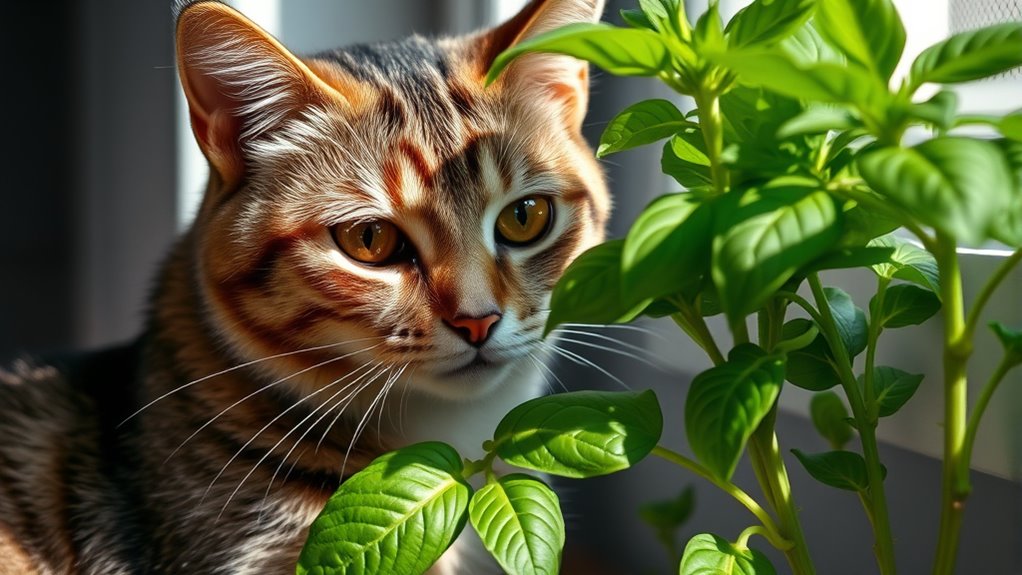
Can Cats Eat Basil Safely?
Yes, cats can eat basil safely in small, fresh amounts, but it isn’t a nutrient they need. Offer just a leaf or two as an occasional nibble, not a meal, and avoid dried or cooked basil with garlic, onions, or oils.
Wash leaves first and monitor for any GI upset or allergic signs. Basil should be a tiny treat, not a regular part of their diet.
If you keep small portions, you’ll learn more about your cat’s response.
Key Takeaways
- Basil is non-toxic to cats and safe in tiny, fresh amounts, but not necessary for their diet.
- Offer plain, fresh basil leaves in small amounts; avoid dried or cooked basil with garlic, onions, or oils.
- Limit intake to occasional, tiny bites to prevent GI upset like vomiting or diarrhea.
- Wash leaves thoroughly and monitor for any signs of allergy or digestive issues after chewing.
- Consult a vet if your cat shows persistent vomiting, diarrhea, or unusual symptoms after nibbling basil.
Can Basil Be Safely Eaten by Cats?
Basil is non-toxic to cats, so it’s generally safe for occasional nibbling. You can enjoy a pinch of fresh basil by watching how your cat reacts, but keep portions small. Basil safe for cats means you won’t face severe harm from a tiny nibble, yet there are caveats.
Cats may eat basil out of curiosity because of its aroma, but it doesn’t provide nutritional benefits. If you notice any gastrointestinal upset after chewing on fresh basil, limit access and offer plain water. Avoid letting dried basil flood their plate; its concentrated form can irritate the digestive system, so give it sparingly.
Basil for Cats: Non-Toxic but Not a Nutritional Need
Basil is non-toxic to cats, so a small nibble won’t cause poisoning. It has no essential nutrients your cat needs, so it isn’t a nutritional requirement.
Moderation matters because regular use isn’t necessary and could upset their dietary balance.
Basil Is Non-Toxic
While basil is non-toxic to cats, it isn’t a nutrient they need. You can offer small leaves without risk, but don’t expect health benefits. Here’s what to know:
- Basil is non-toxic for cats; it’s safe in tiny amounts.
- It isn’t a nutrient cats require, so it won’t boost health or vitality.
- Curiosity-driven nibbling is common, especially from scent, not nutrition.
- Regular feeding isn’t necessary and may disrupt a meat-based diet.
In short, basil is safe and non-toxic, but it should be a rare, incidental treat rather than a dietary staple. If your cat shows signs of distress after nibbling, contact a vet.
For most cats, basil remains an occasional, harmless curiosity rather than a health item.
No Nutritional Value
Even though basil is safe, it offers no nutritional value for cats, who are obligate carnivores relying on meat-based diets. You’ll learn that basil is non-toxic, but it doesn’t supply amino acids, taurine, or other nutrients essential to feline health.
In your cat diet, basil offers no nutritional benefits and should not replace or supplement balanced cat food. Your cat does not require herbs like basil, since vertebrate vitamins and minerals come from meat and fortified products, not leafy additions. Regular consumption is unnecessary and doesn’t support any specific health need.
Moderation Is Key
Moderation is key when it comes to feeding basil to cats: it’s non-toxic, but it isn’t a nutrient and shouldn’t become a regular part of their diet. You’ll want to keep portions small and monitor how your cat reacts, since basil is not suited to a cat’s digestion.
Use brief introductions or tiny amounts never as a snack replacement.
- moderation in every serving
- small amounts to avoid stomach upset
- safe to nibble, not a dietary staple
- excessive consumption raises GI risk
How Much Basil Is Safe for a Cat to Chew?
You can start with small amounts, like a leaf or two, and see how your cat handles it. Keep basil intake limited to occasional, tiny bites and avoid dried forms in large quantities.
Watch for any stomach upset and adjust amounts accordingly, since regular or large amounts can cause vomiting or diarrhea.
Safe Chewing Amounts
Small amounts are best: a leaf or two of fresh basil is usually safe for a cat to chew occasionally, as long as you monitor for any digestive upset. You’ll keep things simple by sticking to tiny nibbles and watching reactions.
1) basil is generally safe in small quantities, ideal for a casual chew
2) limit to a leaf or two to avoid gastrointestinal upset
3) dried basil requires even smaller amounts, since it’s more concentrated
4) avoid cooked Basil with garlic, onions, or oils to prevent harm
Remember: the goal is safe amounts, not regular indulgence. If you notice any GI upset or other concerns, consult your veterinarian promptly and adjust future cat chew sessions accordingly.
Basil Intake Limits
Basil can be safe in tiny bites, but there’s no established daily limit, so you should offer it sparingly. When you consider basil intake, keep it to small amounts—think a leaf or two at most—so you don’t overwhelm your cat’s system. The goal is safe consumption, not regular grazing.
Remember that cat gastrointestinal responses vary; some cats tolerate a pinch without issue, others may develop mild vomiting or diarrhea if you overdo it. Dried basil is more concentrated and raises those risks, so avoid giving it in larger quantities.
There’s no need for daily basil treats, since cats rely on meat-based nutrition. Use basil leaves only as an occasional, tiny garnish, never as a staple.
Monitor For Reactions
Gently monitor your cat after they taste basil, starting with a tiny nibble and watching for any adverse reactions. Basil is non-toxic in moderation, but you should still track how they respond and adjust intake accordingly. By keeping an eye on behavior, you’ll spot signs of trouble early and keep the experience positive.
- Watch for allergic reactions, such as swelling or breathing changes, and seek vet care if needed.
- Note any gastrointestinal upset, including vomiting or diarrhea, and reduce or stop further Basil exposure.
- Ensure you offer safe amounts, and avoid large portions in one sitting.
- Observe overall behavior after feeding basil and discontinue if mood or activity shifts unexpectedly.
What Cats Do When They Encounter Basil
When cats encounter basil, they typically approach with curiosity, sniffing the leaves to assess the aroma. You’ll notice curiosity driving their first actions: sniffing, pawing, and sometimes licking. The strong scent can spark interest similar to reactions to catnip or mint, so you may see a short inspection that signals engagement.
Some cats gently nibble basil leaves, testing texture and taste, while others just bat at the plant or play with the leaves without chewing. You might observe light, exploratory moves rather than a determined bite. In many cases, the behavior is brief—the scent and surface cues prompt a quick interaction before moving on.
Most cats don’t actively seek basil, but if it’s within reach, they’ll investigate out of interest. This encounter tends to be a fleeting, mild observation rather than a sustained feeding behavior, with responses varying by individual cat’s tolerance and temperament.
Basil Varieties and Their Effects on Cats
While all basil varieties are technically non-toxic to cats, their flavors and aromas vary enough to influence how a cat might react. You’ll notice differences among basil varieties, but they all share the same plant family and safety profile. Fresh basil tends to be milder, making occasional nibbling more comfortable for sensitive cats, whereas Thai and lemon basil can be more pungent and may irritate some pets.
Dried basil concentrates nutrients and phenols, which raises the risk of gastrointestinal upset if you overdo it. Cooked basil, especially with garlic or onions, remains a no-go around cats.
- basil varieties differ in aroma and intensity, yet stay non-toxic to cats
- fresh basil is safer for occasional nibbling than dried or cooked forms
- concentrated phenols in dried basil can irritate sensitive stomachs
- plant family consistency means you won’t face toxic surprises across varieties
Cooking Basil for Cats: What to Skip
Cooking basil for cats isn’t just a matter of which basil you use—it’s about what you mix in and how you prepare it. You should skip ingredients that aren’t safe, because toxic ingredients can harm your cat. Avoid garlic, onion, or oil in any basil preparation, and skip prepared dishes that add spices or extras your cat can’t handle.
Boiling or frying basil may strip nutrients and alter flavor, making it less appealing or safe for feline nibbling. Dried basil is more concentrated and can irritate the digestive system if ingested in large amounts. Never serve cooked basil from human recipes, as those preparations often include unsafe elements for cats.
Instead, opt for plain, small, fresh leaves or simply offer safe alternatives to satisfy curiosity without risk.
Monitor Reactions to Basil and When to See a Vet
Most cats tolerate small amounts of basil, but you should watch for signs of GI upset like vomiting or diarrhea and take note of how they react. If you notice persistent vomiting, lethargy, or diarrhea after nibbling, consult a veterinarian promptly.
Also watch for allergic symptoms such as swelling, hives, or trouble breathing, and seek care immediately if they occur. Keeping track of how much basil your cat ingests and how often helps you assess whether it’s within safe limits. When in doubt, contact a vet to confirm safety and next steps.
- Track symptoms like vomiting and diarrhea as they occur.
- Note any allergic signs and seek urgent help if they appear.
- Record amount eaten and frequency to gauge risk.
- Call your veterinarian if severe signs or uncertainty arise.
Basil in Cat Food: Do Brands Use It?
Some cat foods do include small amounts of basil, though it’s far from standard across the market. In basil in cat food discussions, you’ll find it primarily in brands positioned as natural, organic, or holistic cat food. These products lean on herbs like basil to offer minor antioxidant benefits and subtle flavor enhancements.
You may encounter basil in cat foods marketed as gourmet or specialized formulations, where the ingredient list emphasizes unique or premium ingredients. However, most mainstream commercial cat food remains focused on animal-based nutrition and does not include basil as a standard component. The amount used is typically minimal, intended to be a safe inclusion that doesn’t alter a cat’s diet.
If you’re selecting foods, consider whether you want safe inclusion verified by the brand and whether basil appears among the ingredients of the product line you’re evaluating, particularly within holistic cat food offerings.
Safe Basil Access at Home: Practical Tips
Fresh basil can be a safe, occasional treat for your cat, but keep portions small and infrequent. To keep basil accessible and safe at home, follow practical tips that respect small amounts and gastrointestinal comfort.
1) Wash basil thoroughly before offering, removing pesticides or chemicals to protect your cat’s health.
2) Use fresh leaves and avoid dried basil in large quantities, since concentrated nutrients may upset the stomach.
3) Offer basil only as a nibble, not a meal, and monitor for any gastrointestinal upset after consumption.
4) Keep basil out of reach when you’re not supervising to prevent overconsumption or accidental ingestion.
Frequently Asked Questions
Is Fresh Basil Toxic to Cats?
No, fresh basil isn’t toxic to cats. You can let your cat nibble a leaf or two without worry. You might notice curiosity sparked by its scent, but it’s unlikely to cause harm in small amounts.
Just watch for any upset stomach if they overindulge. If they seem to dislike it, don’t force it. When in doubt, consult your veterinarian, especially if your cat has other health issues or medications.
What Herbs Are Toxic to Cats?
Yes—several herbs are toxic to cats. You should avoid onions, garlic, chives, and leeks, including all Allium family plants, as they can cause hemolytic anemia.
Plus, certain concentrated oils or unsafe varieties of herbs like rosemary or mint might irritate or upset digestion. Always verify each herb before offering it, and consult a vet if ingestion occurs or if you notice weakness, pale gums, or lethargy.
What Is the Most Toxic Plant to a Cat?
The most toxic plant to a cat is the lily, especially Easter lilies. Even small ingestions can cause kidney failure within 24–72 hours.
Sago palms and azaleas are also extremely dangerous, with risks like vomiting, liver failure, seizures, or death. You should keep these plants out of reach, monitor your cat closely, and seek veterinary help immediately if exposure occurs.
Are Basil and Rosemary Ok for Cats?
Basil and rosemary are ok for cats in small, occasional amounts. Think of a gentle garden breeze: safe in tiny sips, risky when concentrated or eaten in bulk. You’ll notice they’re non-toxic per ASPCA, but large quantities or essential oils can upset digestion or liver function.
They’re not needed in your cat’s diet, so offer only mild nibbles and monitor for any signs of distress. If unsure, call your vet right away.
Conclusion
You’ll be glad to know basil is non-toxic for cats, but it isn’t a needed treat, so keep portions tiny.
If you notice drooling, vomiting, or lethargy after a nibble, step back and consult your vet.
An interesting stat: about 40% of cat owners report giving herbs like basil as a snack at least once a week, yet only 15% recall actual veterinary guidance on herbal safety—so you’re not alone, but you could do better.


