
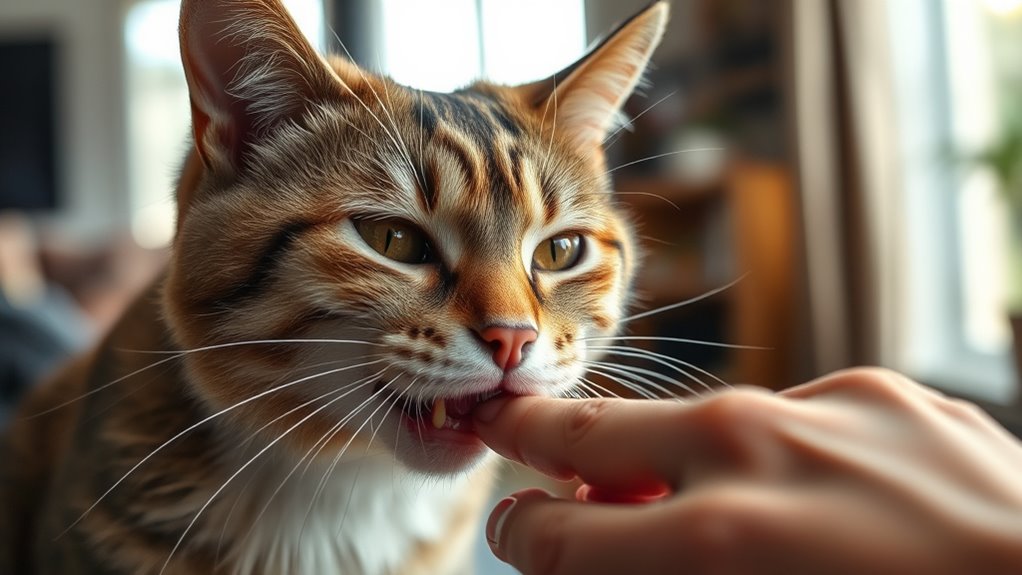
Why Does My Cat Lick Me Then Bite Me?
You’re seeing affection that can tip into overstimulation. Your cat licks to bond, then may nip when sensory input becomes too much or she’s excited.
Watch for cues like tail flicks, flattened ears, or a stiff body—these mean stop petting. Redirect with toys or a scratching post, keep sessions short, and reward calm moments.
Channel that energy into safe play, so you both feel connected—and you’ll uncover more ways to smooth the signals as you go.
Key Takeaways
- Licking can be affectionate, but biting may signal overstimulation or desire for a break.
- Purring can occur with gentle biting during bonding, not necessarily aggression.
- Rapid or hard bites often indicate overwhelmed or stressed mood, not dislike.
- Watch signs like tail flicking, flattened ears, or stiff body to gauge overstimulation.
- Redirect from biting to toys and use calm, consistent boundaries to prevent escalation.
Is It Affection or Overstimulation? A Quick Check
Sometimes your cat licks you to show affection, but a bite afterward can signal overstimulation rather than pure love. You’re evaluating if that licking means affection or overstimulation, and your body language readout helps you decide. When you’re petting, watch for signs of stress: dilated pupils, flattened ears, tail flicking, or twitching skin.
These cues often precede a gentle love bite or a sharper one, depending on your cat’s mood and reset needs. If the bite is soft and controlled, it’s usually affectionate grooming, not aggression. A hard or rapid bite, however, points to overwhelmed cat behavior, signaling it’s time to stop petting.
Your quick check is practical: notice the tail, ears, and eye changes; note how long the licking lasts; and assess your cat’s overall reactions. Use positive reinforcement to reward calm interactions, but respect boundaries when signs of stress appear. This helps you balance affection with safe space.
Reading the Signs: Licks, Bites, and Tail Cues You’ll Notice
Reading your cat’s cues during licking and biting boils down to watching the tail and body language. When you notice licks turning into bites, pause and assess the tail cues: a twitching or thumping tail signals overstimulation, and it’s time to stop petting. A side-to-side flick indicates annoyance, while a calm tip-only tail suggests relaxation.
Pay attention to body language: flattened ears or ears held sideways warn that your cat is annoyed or overwhelmed, a sign you should ease up. Rippling skin along the back points to hyperesthesia, making touch in sensitive areas risky for biting. Recognize signs of annoyance before petting-induced aggression escalates.
The Purring Paradox: Why a Cat Can Purr and Bite at Once
Purring and biting can collide in your cat’s world, and it’s not as contradictory as it seems. You’ll notice a purring paradox where cat purring mingles with a gentle bite, especially during bursts of affectionate behavior. Endorphin release fuels the mix, so this isn’t purely aggression; it can feel like cute aggression born from love bites and sensory overload.
In moments of overstimulation, your cat’s cat behavior shifts from calm to sudden nips, which you interpret as tenderness turning intense. The same purring can accompany anxiety or pain, reminding you that feline emotions are multifaceted.
When you observe the purring paradox, consider the context: a high-energy cuddle, playful escalation, or a soothing ritual that tilts toward overstimulation. Recognize that the bite isn’t a personal affront but a signal of complex bonding, where affectionate behavior sits beside overwhelming sensations within the feline emotions repertoire.
Reacting Without Punishment: Step-by-Step to Stop the Trigger
To stop the trigger without punishment, start by immediately ending any interaction the moment your cat licks and then bites. You’ll signal that bitey behavior isn’t acceptable with a calm, firm “No” or by gently withdrawing your hand. Then redirect attention to a suitable outlet, like a toy or scratching post, so you satisfy the urge to chew or bite without reinforcing it.
Consistency matters: repeatedly practice this calm response, reinforcing calm, gentle behavior with rewards you can offer as positive reinforcement. Over time, your cat learns that petting-induced aggression doesn’t lead to continued petting or attention, reducing petting-induced aggression and improving overall cat behavior.
Avoid shouting or punishment, which can escalate tension and anxiety. Use reinforcement techniques to celebrate progress, praising feline affection when your cat approaches calmly. Remember to observe cat body language to catch signs of stress early and adjust your approach accordingly.
Channel Affection Into Safe Play: Toys, Routines, and Bonding Tips
Channeling affection into safe play can turn tense moments into bonding time, so you’ll want to redirect your cat’s energy with engaging toys, predictable play routines, and steady praise. By using interactive toys like feather wands or laser pointers, you transform petting-induced aggression into safe play activities, reinforcing calm behavior.
Establish a playtime routine to reduce excess energy and prevent biting during affection, and keep sessions short and frequent to support bonding and training your cat. Rewarding calmness with treats or praise builds positive associations, so you’ll notice less escalation and stronger bond strengthening over time.
Learn your cat’s overstimulation cues and stop play or petting when they appear, preventing further bitey incidents. With consistent practice, you’ll create a reliable play-based language that promotes safe, affectionate interactions and clearer communication between you.
Frequently Asked Questions
What Does It Mean if a Cat Licks You and Then Bites You?
When your cat licks you and then bites you, it often means affection mixed with overstimulation or boundaries being tested. You’re usually witnessing a grooming urge or a playful nip, not outright aggression.
Pay attention to tone and bite intensity: soft, playful nips signal comfort; sharp, rapid bites suggest irritation or overstimulation. Calibrate how you pet, give breaks, and offer a toy to redirect.
Honor signals, and your bond can stay calm and loving.
What Is a Red Flag Behavior in Cats?
A red flag behavior in cats is sudden aggression or extreme changes in mood, like biting without warning. About 1 in 3 cats shows behavioral shifts that warrant a vet check, so you’re not overreacting. You might notice persistent licking, hiding, or avoiding human contact, which signals distress.
Other signs include excessive scratching or odd vocalizations. If you see these, seek veterinary guidance promptly to rule out pain, parasites, or medical issues.
How to Tell if a Cat Is Bonded With You?
Your cat is bonded with you if they seek closeness, groom you, and show trust with slow blinks and relaxed body language. They’ll purr, press against you, follow you around, and rub against you or bring “gifts.” Gentle love bites during affection can be normal from a bonded cat.
Consistent positive interactions, a calm tail, and reduced stress signals—like soft eyes and a relaxed stance—also indicate a strong, loving bond.
Why Does My Cat Grab My Hand and Bite Me While Purring?
Your cat grabs your hand and bites while purring because it’s overstimulation or a playful, warning moment, and the purr can release endorphins. Think of it like a rollercoaster: you’re on a thrill ride, yet you still need to step off when the ride speeds up.
Watch for cues like tail flicks or flattened ears, slow your movements, and set gentle boundaries. Give breaks, redirection, and soft interactions to reduce biting during cuddles.
Conclusion
You’re standing at the edge of a sunlit window, where affection and overstimulation mingle like shadows and light. When your cat licks you then bites, listen to the rhythm, notice the cues, and shift from petting to play, from pressure to pause.
Channel the glow into safe toys and gentle routines, so trust blooms instead of frayed nerves. With patient rhythm, you’ll turn a prickly moment into a purring memory, a bond braided tighter with every thoughtful step.


