
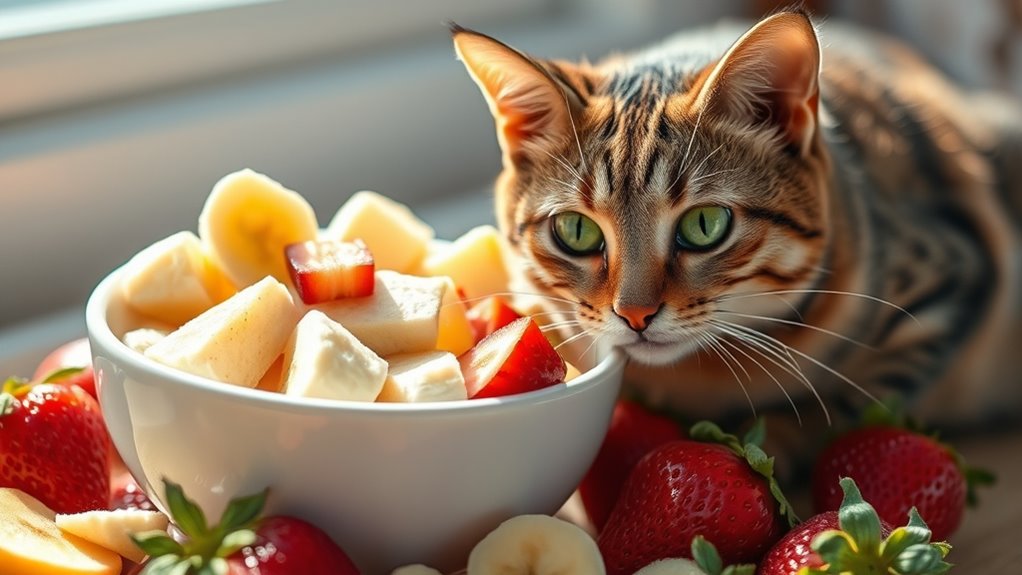
Which Fruits Should Cats Eat Safely?
Safe fruits for cats include blueberries, strawberries, and small, plain pieces of watermelon or cantaloupe, served without seeds, skins, or added sugars.
Wash fruit well, remove pits, stems, and any cores, and cut into bite-sized pieces to prevent choking.
Offer fruit in moderation—no more than about a teaspoon per serving and no more than 10% of daily calories.
Watch for signs of intolerance, like vomiting or diarrhea, and know there’s more you can learn if you keep reading.
Key Takeaways
- Safe fruits include blueberries, strawberries, and watermelon when served plain with seeds removed in small pieces.
- Hydration-friendly options: watermelon, cantaloupe, and honeydew; peel and cut into bite-sized portions.
- Use minimal amounts; limit fruit to no more than 10% of daily diet and a teaspoon or less per serving.
- Always wash, remove seeds/peels/stems, and avoid added sugars, preservatives, or chemicals.
- Monitor for intolerance signs (vomiting, diarrhea, drooling) and log reactions to guide future choices.
Which Fruits Are Safe for Cats? (Quick Verdict)
Most fruits are safe for cats in small, plain pieces, but some are off-limits. You’ll want to know which ones fit your feline friend without inviting trouble. Blueberries, strawberries, and watermelon are safe fruits for cats when served in small, plain pieces, with seeds removed and portions modest.
These options can contribute variety, but they’re not a vitamin C miracle cure; they’re occasional treats, prepared properly, not daily staples. When you consider toxicity, avoid citrus fruits, grapes, raisins, and unripe or green parts of fruits. Cats don’t need fruit as a nutrient, yet you can offer safe fruits as a tiny reward.
Always remove seeds, stems, peels, and pits before giving any fruit to ensure safety for your cat and minimize choking risk. Remember that prepared properly means gentle, plain pieces, no added sugar or seasoning. If you’re unsure, consult your vet before introducing new snacks to your cat’s diet.
Safe Fruits for Cats in Moderation
Moderation matters when you offer safe fruits to your cat. In small pieces, you can provide a few tasty options that support digestion and immune health without overdoing calories or sugar. Blueberries offer antioxidants and vitamins C and K, plus fiber to aid digestion.
Moderation matters: offer small fruit pieces to support digestion and immune health without overdoing calories or sugar.
Watermelon—rind and seeds removed—gives hydration as a revitalizing treat. Peeled apple flesh is safe in tiny amounts, but avoid seeds and skins due to cyanide. Cantaloupe and honeydew supply hydration and vitamins with low calories, while strawberries deliver vitamins in manageable portions.
- safe fruits for cats: choose small pieces and limit quantity to prevent excess sugar
- moderation supports immune response and digestion over time
- hydration comes from water-rich fruits, not substitutes for water
- use as occasional treats, not daily meals, to keep overall balance intact
Fruits to Skip for Your Cat
Some fruits should be skipped for your cat because they can cause serious problems. In short, avoid citrus fruits, as their essential oils and psoralen can trigger digestive upset or neurological symptoms.
Grapes and raisins are toxic even in small amounts and can cause sudden kidney failure. Fruits with stems, leaves, peels, or seeds carry extra risks because they may contain seed toxins, solanine, or cyanide, especially in unripe forms.
Unripe or green parts of plants, including unripe tomatoes, should be avoided due to solanine toxicity. Always remove seeds, stems, leaves, and peels before offering any fruit to ensure safety, and don’t rely on fruit as a treatment for illness.
If you’re unsure about a fruit, skip it and consult your veterinarian before exposing your cat to any new item. Remember, safer treats exist that won’t threaten health or kidney function.
Prepare Fruits Safely for Cats
You should wash fruits thoroughly to remove pesticides and dirt before feeding your cat. Remove seeds and pits to prevent choking and toxic compounds.
Cut the fruit into small, bite-sized pieces to make chewing easy and safe.
Wash Fruits Thoroughly
Wash fruits thoroughly before offering them to your cat. You should rinse under running water to remove dirt, bacteria, and pesticide residues, ensuring the surface is clean before serving. For fruits with thicker skins, use a gentle brush or cloth to scrub away residues and loosen grime.
After washing, remove stems, leaves, seeds, and pits, since these parts can pose toxins or choking hazards. Pat the fruit dry with a clean towel to reduce moisture that could promote bacterial growth. Confirm there are no added sugars, preservatives, or chemicals.
This practice helps keep your cat safe and happy, while preserving the fruit’s natural nutrients.
Remove Seeds And Pits
When prepping fruits for your cat, always remove seeds and pits first, since they can be toxins or choking hazards. You’ll reduce ingestion risks by excising seeds and pits from cherries, peaches, and plums, and by avoiding green parts of fruits and plants.
For safe preparation, wash the fruit thoroughly, remove stems, and cut into small pieces you can easily manage. Even tiny seeds and certain pits may carry cyanide or other toxins, so removal is essential before any serving.
This step lowers choking hazards and blocks potential blockages in the digestive tract. Keep portions small and monitor how your cat handles each bite, ensuring you’re offering only safe, lower-toxicity options in appropriate portions.
Cut Into Small Pieces
To prevent choking and make chewing easier, cut fruits into small, manageable pieces before feeding your cat. You’ll find that small pieces enhance chewability and reduce gagging, especially for beginners. Always remove seeds, pits, and green parts before cutting to limit risk of toxins and blockages.
Use a sharp knife to create clean cuts with smooth edges that won’t hurt your cat’s mouth. Serve the small pieces on a clean plate, and monitor portion size to avoid overeating. For easier consumption, consider mash or puree options after cutting into small pieces, particularly for very young or finicky cats.
- small pieces
- remove seeds
- cut into small
- manageable portion
How Much Fruit Can a Cat Have?
Fruits should be given only in small amounts to avoid upsetting your cat’s stomach. You should aim for small amounts that fit your cat’s needs, not a regular diet. Think in terms of serving size: bite-sized pieces, usually a teaspoon or less, depending on the fruit and your cat’s size.
Remember that a cat’s daily fruit intake should be minimal, typically no more than 10% of the daily diet. Overfeeding fruit can lead to digestive upset and gastrointestinal issues, so limit how often you offer these snacks. Use fruit as an occasional treat rather than a staple part of meals, and introduce new varieties gradually to monitor tolerance.
Consider portion sizes carefully and adjust based on age and health. Always consult veterinarian to determine appropriate amounts and fruits appropriate for your cat, ensuring you avoid health risks and align with your pet’s dietary needs.
Easy Fruit-Based Cat Treats
If you’re looking for quick, simple fruit-based treats, several options fit the bill: blueberries, small cantaloupe chunks, and thin banana slices, all given in moderation. You’ll keep it safe by washing produce, removing seeds, stems, and rinds, and offering small pieces to ensure manageability.
Choose fresh fruits or frozen options without added sugars or preservatives, then serve in tiny cubes or slices to prevent choking. Remember, moderation matters: limit fruit treats to about 10% of your cat’s daily intake to avoid digestive upset.
These safe treats provide a tasty, low-calorie option that complements a balanced diet and keeps feeding practical and enjoyable.
- blueberries
- small pieces
- manageability
- seeds and rinds
Note: small pieces of fruit should be portioned as safe treats, not a daily habit.
Watch for Signs After Feeding Fruit
After you trial a new fruit, watch for signs your cat might not tolerate it, especially within the first 24 hours. You should monitor for vomiting, diarrhea, or drooling, as these can indicate intolerance or poisoning. Observe symptoms closely because early signs of intolerance may be subtle before a negative reaction becomes obvious.
Look for upset stomach indicators like stomach pain or a drop in appetite, which can signal distress after trying unfamiliar fruit. Track changes in your cat’s behavior or activity—lethargy, irritability, or withdrawal from routine play can accompany illness. If you notice any signs of distress or illness, contact your vet promptly to assess safety and avoid delaying care.
Keeping a simple log of eating habits and reactions helps you catch patterns and prevent repeated exposure to problematic fruits. Remember, even temporary reactions matter; observe symptoms and seek veterinary guidance if concerns arise.
Frequently Asked Questions
What Is the Safest Fruit for Cats?
The safest fruit for cats is blueberries, thanks to low toxicity and high antioxidants. You can also offer small amounts of cooked pumpkin, watermelon, or cantaloupe, and, when seeds, stems, and skins are removed, apples and pears in moderation.
Serve in tiny, manageable pieces and monitor for any digestive upset. Always introduce new fruits gradually and consult your veterinarian if you have concerns about your cat’s diet or potential allergies.
What Fruits Should Cats Avoid?
You should avoid citrus fruits, grapes, and raisins, as well as any fruit with stems, leaves, seeds, or peels like unripe tomatoes and green apples. These can trigger digestive upset, neurological issues, or even toxins.
Also skip unconfirmed fruits; when in doubt, don’t offer them. Stick to vet-approved, small amounts of safe options if a veterinarian confirms they’re okay. Always prioritize your cat’s safety over variety.
What Is the Silent Killer of Cats?
The silent killer of cats is often undetected kidney failure from toxins like lilies or certain antifreeze compounds. You might miss early signs, but damage can progress quickly to life-threatening levels.
You should seek immediate veterinary care if exposure is suspected, watch for subtle changes in drinking, urination, or appetite, and prevent access to lilies, chemicals, and hazardous foods.
Regular checkups help catch kidney or heart issues before they silently worsen.
Why Can’t Cats Have Blueberries?
Blueberries aren’t off-limits, but you shouldn’t overdo them. You can offer a few as a tiny, tasty treat, because they’re non-toxic and packed with antioxidants.
Yet too many can upset your cat’s stomach or trigger diarrhea, so keep portions small and rare. If your feline snubs them, don’t push it.
Watch for allergies or digestive issues, and always consult your vet if you’re unsure about introducing new foods.
Conclusion
You’ll want to treat fruit like a polite guest—small portions, occasional visits, and no surprises. Think of safe options as friendly nudges rather than main courses, keeping portions modest and bites gentle.
If a fruit puffs up your cat’s mood in a good way, great; if not, it’s a courteous hint to back off. When in doubt, err on the cautious side and consult your vet.
With mindful sharing, fruit can be a pleasant, fine-tuned garnish to their day.


