What Happens When Cats Taste Spice?
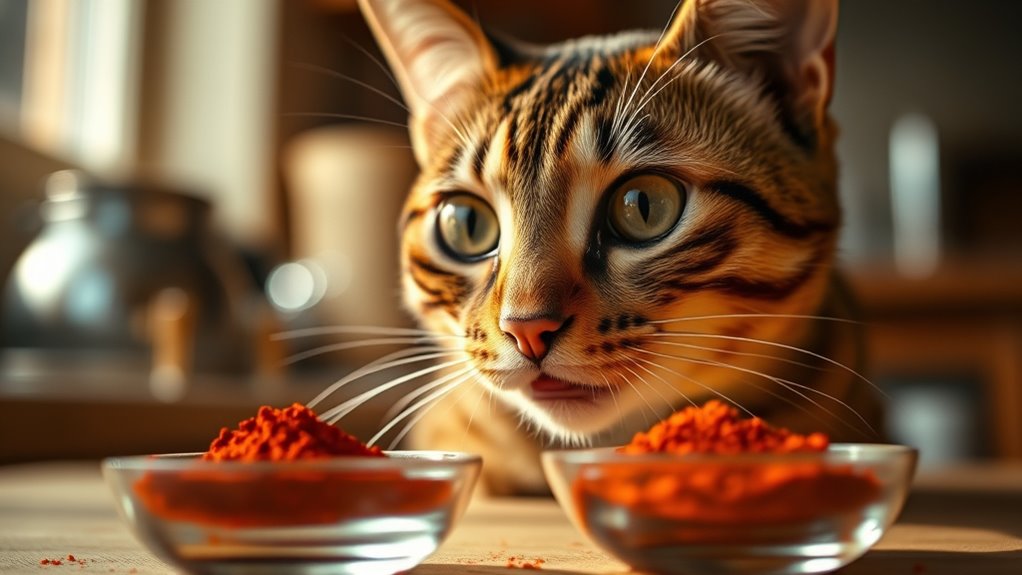
When you offer a cat something spicy, they don’t taste capsaicin the way we do. Cats lack sweet and spicy flavor receptors, so what they feel is pain and irritation instead of heat.
Capsaicin activates their pain nerves, causing burning, drooling, pawing, and head shaking.
They may sneeze or retreat, and spicy foods can irritate the gut. If they do ingest it, watch for vomiting or diarrhea.
Keep in mind there’s more you can learn beyond this.
Key Takeaways
- Cats lack sweet and spicy taste receptors, so spicy doesn’t taste pleasant but causes irritation.
- Capsaicin activates pain receptors (TRPV1), leading to burning sensations rather than a heat flavor.
- Expect reactions like drooling, pawing at the mouth, head shaking, and avoidance of spicy foods.
- Spicy foods can cause GI upset, vomiting, diarrhea, and dehydration in cats.
- If ingestion occurs, offer calm care, monitor symptoms, and contact a vet if they persist or worsen.
Do Cats Actually Taste Spice?
Do cats actually taste spice? You’ll find that your cat’s experience isn’t about flavor so much as pain signals. You have taste receptors that help you detect sweet, salty, sour, bitter, and umami, but cats aren’t chasing sweetness and they don’t savor spicy foods.
Instead, when you expose a cat to spicy compounds like capsaicin, their TRPV1 receptors react, and the reaction is interpreted as pain or irritation rather than heat. You’ll notice discomfort rather than any enjoyment, because spicy irritates their mouth and nose, not their tongue’s taste buds.
In this sense, cats distinguish pain sensation from flavor; taste may be limited, but their sensory system clearly alerts them to danger. If you’re worried about food allergies or sensitivities, remember that spicy foods aren’t a treat for cats. They’re more about irritation and protective withdrawal than culinary pleasure.
What Capasaicin Does to a Cat’s Body
Capsaicin doesn’t give cats a pleasant burn like it does for some humans; instead, it activates their pain receptors. You’ll notice capsaicin binds to pain receptors in their sensory nerves, sparking a burning, painful sensation rather than warmth. This triggers clear feline reactions: drooling, pawing at the mouth, and head shaking as you try to comfort them.
Because cats have lower sensitivity, they may detect capsaicin but don’t enjoy it and typically avoid spicy foods. The pain response can extend to the gastrointestinal upset, causing gastrointestinal upset if ingested or absorbed, with vomiting or diarrhea possible. In many cases, you’ll see a general discomfort rather than a lasting heat sensation.
How to Tell if Spice Bothers Your Cat
If spice bothers your cat, you’ll notice a few telltale signs. You might see spice causing discomfort that shows up in behavior, like tail flicking, ear flattening, or your cat trying to escape. Signs also include lip licking, nose licking, or pawing at the face as irritation from the spice or its smell settles in.
You may observe increased sneezing or watery eyes when the nasal passages sting. Self-grooming or rubbing the face can indicate irritation your cat is trying to relieve. Changes in behavior—such as hiding or avoiding food—often surface as a response to spice-related discomfort.
Pay attention to quick shifts in mood or energy after exposure, since these are also signs of irritation. If you notice these cues consistently, it’s wise to remove the source and offer a calm, safe space. Your goal is to minimize discomfort and prevent further irritation.
What Dangers Do Spicy Foods Pose for Cats
Spicy foods pose several risks for cats, including gastrointestinal irritation, vomiting, and possible dehydration. Capsaicin can irritate mucous membranes, while onions and garlic in spicy dishes may damage red blood cells and threaten health.
If you’re considering treats, stick to safe alternatives and monitor any signs of discomfort or appetite loss.
Spicy Food Risks For Cats
All right—spicy foods can upset a cat’s stomach and mouth, causing vomiting, diarrhea, and general discomfort. You should know spicy foods can trigger gastrointestinal irritation in cats, leading to vomiting and diarrhea as your cat reacts to irritants. Capsaicin in spicy dishes irritates mucous membranes, potentially causing distress and discomfort.
Ingesting spicy foods may also reduce your cat’s appetite, risking nutritional deficiencies over time. Onions and garlic, common in spicy preparations, are toxic to cats and can create serious health issues beyond temporary irritation. You might see drooling, pawing at the mouth, or respiratory irritation as reactions unfold.
If your cat samples spicy foods, monitor closely and seek veterinary guidance to prevent lasting health issues.
Capsaicin And Digestive Impact
Capsaicin can irritate a cat’s GI tract, leading to discomfort, vomiting, and diarrhea as the lining reacts to the spicy compounds. You’ll notice gastrointestinal irritation soon after ingestion, with signs like drooling, pawing at the mouth, and oral discomfort.
Capsaicin elevates irritation in the gastrointestinal tract, potentially triggering vomiting and diarrhea as the body tries to flush the irritant. In addition, spicy ingredients such as garlic or onion heighten risk, risking red blood cell damage and systemic toxicity if ingested.
Repeated exposure compounds concerns, increasing gastrointestinal inflammation and long-term digestive issues. You may see appetite suppression, which compounds nutritional deficiencies if spicy foods are a habit.
For cats, capsaicin serves no protective purpose and poses clear digestive dangers.
Safe Alternatives For Treats
While spicy foods pose real risks for cats, there are safe, tasty alternatives that satisfy cravings without endangering their health. You can offer cat treats that align with a healthy feline diet, avoiding onions, garlic, and high-fat sauces. Opt for safe food options like steamed vegetables or cooked eggs to provide variety without GI upset.
These healthy snacks support cat nutrition and reduce the chance of obesity or pancreatitis linked to spicy influences. Steady, predictable treats help maintain appetite and prevent negative associations with meals, so keep portions modest and regular. Choose specially formulated cat treats that are designed for digestive comfort and balanced nutrition, ensuring your pet enjoys flavor without risking health.
Always prioritize safety and moderation in every snack choice.
Safe Treats for a Curious Cat
When you’re choosing treats for a curious cat, opt for safe options like steamed carrots or squash, cooked eggs, and small amounts of canned fish such as sardines. These choices provide variety and nutrition without the risks of spicy foods. Many commercial cat treats add omega-rich oils for a healthy coat, supporting your cat’s skin as well.
Remember moderation to prevent digestive upset or nutritional imbalances, since even healthy snacks can become problematic in excess. Avoid spicy human foods or seasoning-laden snacks, which can disturb the digestive system and taste buds, and irritate stomachs. By offering these safe treats, you reinforce good eating habits and curiosity without compromising health.
| Safe options | Benefits |
|---|---|
| Carrots, squash | Vitamins, fiber |
| Eggs, sardines | Protein, omega fats |
| Commercial treats | Convenience, coat health |
What to Do If a Cat Eats Spice (and When to Call a Vet)
If your cat accidentally eats spicy food, they may develop GI upset from capsaicin, which can cause vomiting or diarrhea. You’ll want to watch for cat symptoms like excessive drooling, paw licking, or pawing at the face, signaling discomfort that needs prompt attention. Gently rinse the fur with milk or water to help neutralize capsaicin and reduce irritation, then wipe dry.
Monitor for persistent vomiting, lethargy, or difficulty breathing, as these warrant veterinary care right away. Avoid giving human remedies without guidance, and don’t delay if you notice signs of distress. For minor exposure, offer fresh water and a bland meal once agitation subsides, but don’t rely on denial of symptoms as a cure.
In any uncertain case, seek veterinary care to determine appropriate steps for cat ingestion and overall treatment plan. If toxic ingredients like garlic or onions were ingested, call a vet immediately. Your best bet is proactive, timely veterinary care.
Frequently Asked Questions
What Happens if a Cat Tastes Something Spicy?
If a cat tastes something spicy, you’ll likely see immediate discomfort: pawing at the mouth, drooling, and licking the lips. They may shake their head, nose, or try to back away from the source.
Spicy foods can irritate oral and digestive tissues, sometimes causing vomiting or diarrhea. Most cats don’t enjoy it and will avoid spicy items after the initial curiosity, preferring milder treats and fresh water instead.
Always monitor and consult a vet if symptoms worsen.
What Is the Silent Killer of Cats?
The silent killer of cats is toxins they can’t flag in time, especially antifreeze. About 90% of poisonings in dogs, and many in cats, come from non-obvious exposure, so you could miss warning signs until it’s too late.
You must keep cleaners, medications, and plants out of reach, and consult a vet immediately if ingestion is suspected. Regular checks for lilies, rodenticides, and toxins protect your cat from hidden threats.
What Is the #1 Cause of Death in Cats?
The #1 cause of death in cats is chronic kidney disease. You’ll often see gradual loss of appetite, weight, and energy, with increased thirst and urination as signals that kidneys are failing.
Regular vet checkups help catch CKD early, especially in older cats. If you notice persistent symptoms, seek care promptly.
While other issues like heart disease, infections, trauma, or poisonings can be deadly, CKD remains the leading killer you should monitor for.
How Long Does It Take for a Cat to Show Signs of Garlic Poisoning?
Garlic poisoning shows up in about 24 to 48 hours after your cat ingests it. You might notice weakness, drooling, vomiting, or diarrhea first, then pale gums and rapid breathing if it’s severe.
The timing and severity hinge on the amount eaten and your cat’s size and health. If you suspect garlic, seek veterinary care urgently—ideally within 24 hours—to improve the outlook and prevent serious complications.
Conclusion
You crave clarity, curious caretaker, so consider this: spicy sensations spark sniffs, sneezes, and quick, puzzling paws. Capsaicin can cause coughing, vomiting, and distress, so you should steer clear of spicy snacks and spicy scraps.
Safe sustenance supports satisfied, stress-free snuggles. If your kitty encounters heat, help heals—humid hums, a calm cuddle, and veterinary vigilance.
When danger dawns, don’t delay—diagnosis, deferment, and dependable care safeguard soulful, serene, sweet companionship.