
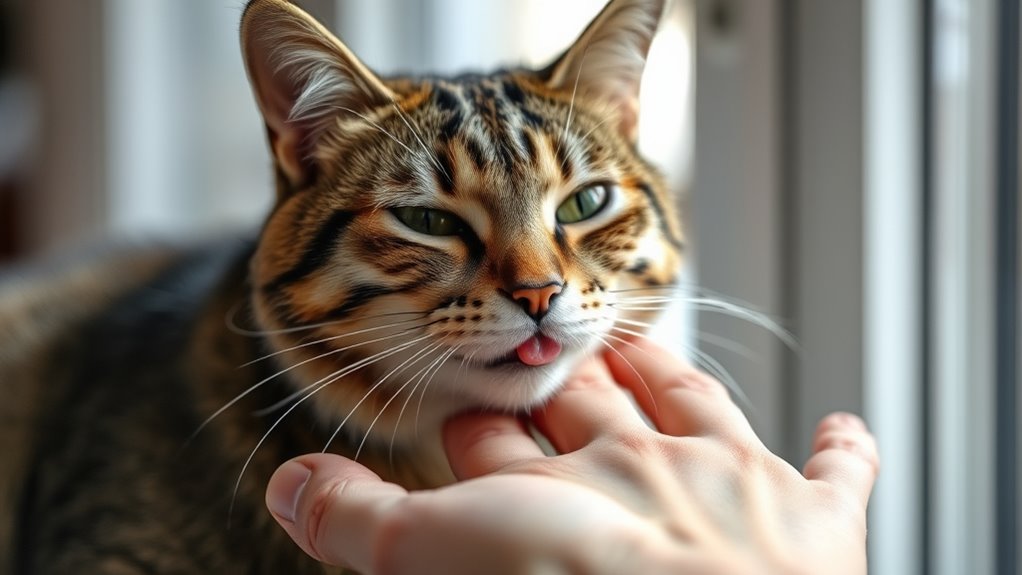
What Does It Mean When Your Cat Licks You?
When your cat licks you, it’s usually a sign of affection and bonding. It also marks you with scent, which can feel like social grooming and reassurance. Licking can calm them or show curiosity about your taste or skin.
But it can also signal overstimulation, stress, or even a health issue if it’s persistent or focused on a spot. If you keep noticing red flags, you’ll pick up more nuances and what to do next.
Key Takeaways
- Affection and bonding: gentle licking signals trust, comfort, and social connection with you.
- Grooming habit: cats lick to nurture and include you in their grooming routine.
- Scent marking: licking leaves their scent on you, signaling ownership and closeness.
- Mood and context cues: calm environments support affectionate licking; stress may lead to persistent or territorial licking.
- Watch for red flags: sudden or excessive licking, skin problems, or other symptoms may indicate illness or anxiety.
What Your Cat Is Saying When It Licks You
When your cat licks you, it’s usually a sign of affection and trust, similar to how they groom fellow cats. You’ll notice this act often accompanies a relaxed posture, a clue that they feel safe with you. Licking can mark you with their scent, signaling ownership and social bonding, so you’re part of their family universe.
If they seek your attention by licking, it’s a cue that they’ve learned your responses—positive reactions reinforce the behavior as a way to start interaction. You might see them persistently groom you during calmer moments, which shows comfort and emotional connection, not just need. This behavior isn’t random; it’s meaningful communication about closeness and safety.
When you respond with gentle petting or a calm voice, you reinforce that licking as affectionate contact. In this light, licking becomes a warm language that deepens your companionship.
How to Tell If Licking Is Affection or Territorial Marking
You can start by noticing the difference between affection licks, which feel gentle and frequent, and territorial licking, which can be more persistent or forceful. Look for accompanying body language—relaxed posture and slow blinks tend to signal fondness, while stiffness or a fixed gaze may hint at marking.
Consider the context and frequency to gauge whether you’re being groomed into the cat’s social space or its personal turf.
Distinguishing Affection Licks
Affection licks feel soft, slow, and relaxed, often happening during cuddling or gentle petting, whereas territorial marking licks are more focused and may come with rubbing or scent contact. You can usually recognize affection by gentler pacing and a calm mood, with licking targeted at familiar spots like your face or hands.
Territorial marking, in contrast, tends to be more deliberate, may involve licking larger areas or multiple objects, and is often paired with rubbing or scent gland contact. Context matters: a peaceful environment and a content cat point toward affection, while arousal, insecurity, or a change in surroundings can hint at territory concerns.
Repeated, specific licking patterns may signal marking rather than true affection, so observe where and how the behavior unfolds.
Recognizing Territorial Marking
Recognizing territorial marking means watching for patterns that go beyond a single, affectionate lick. You’ll notice repeated licking, especially in multi-cat households, and it may align with rubbing or scent-marking actions. When a lick serves as a marker, it’s part of a broader, consistent behavior rather than a quick moment of fondness.
You might see the behavior spike during stress, new objects, or introductions, signaling ownership of space or people. Excessive licking can accompany perceived threats to the territory and might precede aggression if boundaries are challenged. To tell the difference, track frequency, context, and accompanying signals.
If licks cluster with rubbing and scent marking, they’re likely territorial marking rather than pure affection.
Reading Your Cat’s Body Language During Licking
When your cat licks you, reading the body language that accompanies the gesture helps you understand what they’re feeling. You’ll notice a relaxed, soft body posture with slow blinking and a gentle tail, signaling comfort and affection during licking. Ears pointed forward and pupils at normal size suggest your cat feels safe and is expressing positive social bonding while licking.
A calm, content expression with closed or half-closed eyes indicates trust and acceptance. If you see a twitching tail, flattened ears, or dilated pupils, those cues point to overstimulation or discomfort, even amid licking. Sudden tense muscles or a stiff body mean your cat may need space or is experiencing stress.
Use these signals to judge timing and intensity of interaction, adjusting your approach to maintain harmony. This observation supports cat behavior as a sign of affection without assuming always.
Why Cats Lick You for Attention or Bonding
Your cat licking you is a clear way to grab your attention and include you in its social circle. You’ll notice licking often shows you’re not just nearby, but part of its social group. This licking behaves like grooming between cats, signaling trust, affection, and a desire to bond.
When you feel a gentle lick, you’re witnessing acceptance and inclusion in its world, not random play. Consistent licking during cuddling points to a strong emotional connection you share, built through repeated, close contact. Your cat uses this action to reinforce a positive relationship, inviting interaction and ongoing attention from you.
Think of licking as a mutual grooming cue adapted for human interaction, a simple, clear request for bonding moments. So, if you’re aiming to strengthen the relationship, respond with calm, gentle contact and reciprocal affection, knowing licking is your cat’s way to say you belong in its social circle, and that you’re valued. You’re part of the family.
When Licking Signals Anxiety or Stress in Cats
Licking can become a telltale sign of anxiety or stress in cats, especially when it starts to ramp up after loud noises, visitors, or shifts in routine. When you notice your cat licking more than usual, recognize it as a self-soothing response tied to anxiety. This behavior may surge after upsetting events or changes in the environment, signaling that stress is present.
Be mindful that persistent licking in stressful situations can irritate the skin or cause injury if left unaddressed. Look for accompanying body language cues, such as tail twitching, ear flattening, or avoidance of interaction, to confirm anxiety-driven licking. To reduce this, identify and manage triggers, and aim to create a calmer, more predictable environment.
Provide safe spaces, routine, and gentle reassurance. If licking continues or skin issues appear, consult a veterinarian or behaviorist for tailored guidance on easing your cat’s anxiety and minimizing stress-related licking.
Kitten Habits That Persist Into Adulthood
Kittens learn licking as a form of nursing and comfort from their mothers, a habit that can carry into adulthood. You might notice these kitten-derived inclinations shaping your cat’s behavior long after weaning. Early experiences can lock in self-soothing patterns, so some cats retain licking as a way to cope or bond.
In adulthood, you may see them lick humans as part of affectionate grooming instincts carried over from kittenhood. This persistent licking can feel reassuring to your cat during stressful times, turning grooming into a self-soothing behavior you experience firsthand. You’ll also observe cats continuing to lick themselves or others as they recreate those comforting sensations from early life.
When you interpret licking in this light, you recognize it as a blend of affection, bonding, and stress management. Understanding this kitten-to-adult thread helps you respond with gentle reassurance rather than frustration, supporting a calm, trust-based relationship. licking, behavior
Why Your Cat Likes the Taste of Sweat or Skin
You might notice your cat lavishing attention on your skin or sweat, and that’s often about taste as much as scent. You’re sensing a curious mix of salts, sugars, and familiar skin cues that draw the lick. Here’s why it happens:
You might notice your cat lavishing attention on your skin or sweat, drawn by taste and scent.
1) You: salt and minerals in sweat appeal to a cat’s taste and scent-driven play.
2) Skin and hair: residues from lotions or shampoos can attract a cat’s nose and tongue.
3) Normal behavior: licking is how your cat explores its environment through taste and scent.
4) Stress or preference: occasional excessive licking might reflect a salty preference or a response to stress, yet remains generally harmless.
In short, your cat licks you to investigate tastes and scents you carry. If the licking stays moderate, it’s a natural expression of curiosity and bond.
If it spurs anxiety or irritation, consider reducing topical residues or consulting a vet for guidance.
Health Cues: When Licking Might Signal Medical Issues
If your cat starts licking more than usual, it could be a sign of a medical issue like nausea, pain, or skin irritation that needs attention. Conditions such as allergies, infections, or dermatological problems often show up as targeted or persistent licking and may come with changes in appetite, activity, or grooming.
If licking leads to hair loss or skin wounds, or if you notice any other concerning signs, it’s time to seek veterinary care promptly.
Medical Signals Behind Licking
Sometimes frequent licking can signal an underlying medical issue, so it’s worth paying attention when the behavior changes. In this section, you’ll learn how medical signals show up through licking, and why changes matter.
1) Excessive licking may indicate nausea, pain, or skin irritations you should note and discuss with a vet.
2) Sudden or increased licking deserves veterinary evaluation to rule out health problems.
3) Licking swollen, red, or sensitive spots can signal infections or allergic reactions.
4) Persistent licking of specific areas may reflect pain or discomfort needing medical attention.
If you notice changes alongside vomiting or lethargy, treat them as potential red flags. Tracking patterns helps you observe medical signals tied to licking, guiding timely care without unnecessary alarm.
Stay observant, and consult a professional to confirm the cause. medical signals, licking
When to Seek Veterinary Care
When should you seek a vet? If your cat’s licking is excessive or sudden, it may signal nausea, pain, or skin infections, warranting veterinary evaluation. Persistent licking around certain areas or wounds can indicate irritation, injury, or dermatological issues that need professional diagnosis.
Licking that causes hair loss, redness, swelling, or bleeding should prompt an immediate veterinary consultation to identify potential medical causes. If licking changes, especially with vomiting or lethargy, these could be early health concerns requiring veterinary attention.
Regularly monitoring your cat’s licking habits helps you detect subtle signs of illness early, ensuring prompt veterinary care and treatment. By staying vigilant, you address medical causes before they worsen.
How to Redirect Excessive Licking: Training and Management
To redirect excessive licking, set up a structured plan that channels your cat’s energy into engaging activities and rewards the behaviors you want to see. You’ll use training and management to reduce licking by satisfying needs and guiding choices.
- Use interactive toys and varied objects to divert attention and satisfy grooming and hunting instincts.
- Reward appropriate behaviors with treats or praise when your cat chooses non-licking actions.
- Schedule regular playtimes to reduce anxiety and provide mental and physical fulfillment.
- Monitor early signs of overstimulation, pausing interactions if tail twitching or ear flattening appears, then resume once calm.
This approach emphasizes redirecting behaviors rather than punishing licking. Consistent routines build familiarity, making preferred activities more appealing than licking.
Over time, your cat learns which actions earn rewards, reinforcing training and management success.
When to See a Vet: Red Flags in Licking Behavior
If you notice sudden licking starts or extends into persistent, compulsive behaviors, it could signal a medical or psychological issue worth checking. Watch for licking that accompanies pain, nausea, or changes in appetite and activity, as these red flags deserve a vet visit.
In any case, ongoing or unexplained licking deserves professional assessment to rule out underlying problems.
Sudden Licking Onset
Sudden or excessive licking can signal that something’s wrong, so watch for a quick spike in grooming alongside other worrisome signs.
Sudden licking may indicate medical issues like nausea, pain, or allergies that warrant veterinary evaluation. Look for accompanying changes such as hair loss, skin redness, swelling, or lesions. A rapid increase in licking can signal infections, dermatological problems, or internal health concerns.
If licking persists after minor injuries or discomfort, seek prompt veterinary consultation to prevent complications.
Behavioral changes paired with sudden licking should prompt a vet visit to rule out medical causes and ensure your cat’s health.
Persistent Or Compulsive Licking
Persistent or compulsive licking can signal ongoing medical or comfort issues, so timely vet input is important when the behavior sticks around or worsens. You may notice persistent licking as a cue for underlying medical issues like allergies, skin infections, or pain.
Red flags include sudden onset of excessive licking, licking that worsens over time, or visible skin lesions and hair loss. If you observe redness, swelling, or bleeding, seek veterinary consultation promptly.
Behavioral signs such as withdrawal, decreased activity, or changes in appetite alongside licking can indicate health concerns. Early veterinary evaluation helps diagnose and treat underlying conditions before they worsen or cause ongoing discomfort.
Addressing persistent licking early supports your cat’s comfort and reduces the risk of long-term medical issues.
Accompanying Pain Or Nausea
When your cat licks more than usual or starts focusing on a specific area, it may signal pain, nausea, or general discomfort. You should watch for red flags that point to veterinary care.
- Look for persistent licking of a spot, especially if it comes with swelling, redness, or behavior changes.
- Note licking that causes hair loss, skin irritation, or bleeding—these can indicate an underlying issue needing a pro’s assessment.
- If licking increases after eating or your cat refuses food, consider nausea or oral pain.
- When persistent licking couples with vomiting, lethargy, or hiding, seek urgent veterinary evaluation.
Trust these signs as early warnings for pain or nausea requiring professional help.
Frequently Asked Questions
Why Do Cats Lick Their Human Owners?
Cats lick you to show affection and trust, like grooming a friend or family member. When your cat licks you, you’re part of their social group, and they’re reinforcing bonds. They might also be marking you with scent, claiming you as theirs, or seeking comfort and security.
Sometimes it’s due to curiosity or a soothing ritual. If it gets too much, gently redirect, offer a cuddle, and give them a calm, reassuring environment.
Do Cats Licking You Mean Kisses?
Do cats licking you mean kisses? Yes, it’s their way of giving a “kiss.” About 60% of cat ownership reports daily affectionate licking, signaling trust and bonding.
When you’re licked, you’re being accepted into their social group, like family grooming. You might notice slower blinking and purring afterward—that’s contentment.
Should I Let My Cat Lick Me?
Yes, you can let your cat lick you, but set boundaries. If you have wounds or sensitive skin, skip it, and avoid letting them lick your face or mouth. Watch for excessive licking, which can signal stress or health issues.
Keep sessions brief, practice good hygiene, and rinse your skin afterward if needed. Let their affection strengthen your bond, but prioritize safety and your comfort. If you’re unsure, consult a vet.
What Does It Mean if a Cat Licks You Then Bites You?
It means your cat’s overstimulated or testing boundaries, mixing affection with a gentle bite.
You might be rewarding the behavior, so they learn to keep licking, then bite. Watch for warning signs like tail flicks, ears back, or a stiff body, and give a calm pause before continuing.
Keep sessions short, use gentle rewards, and redirect with a toy. If it intensifies, end the interaction and slowly desensitize with calm brushing.
Conclusion
You bend to your cat’s quiet rhythm, and the moment softens like sunlight on fur. Licks trace trust, then territory, a chalk sketch of intention on your skin.
When curiosity becomes care, you hear purrs in the margins of worry and relief. If the texture of stress lingers or a pattern repeats, read the patterns, comfort wisely, seek guidance.
In their quiet ritual, you learn to listen—not just to what they say, but to what they silently need.


