
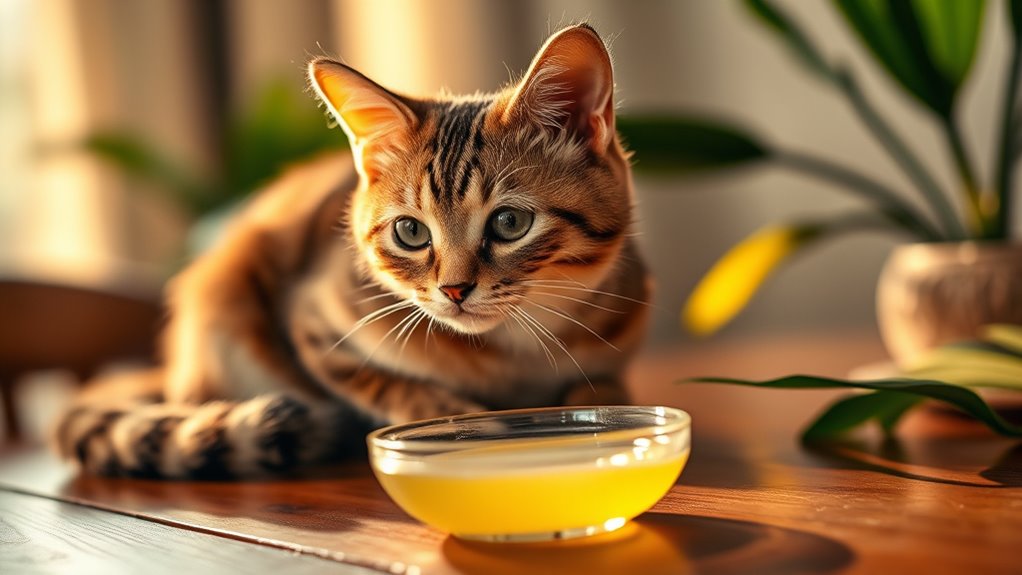
Can Cats Have Coconut Oil?
Yes, cats can have coconut oil in small amounts if you choose a high-quality organic oil and watch for any reactions. Start with about 1/8 teaspoon daily, mixing into food or applying a thin topical layer, and increase gradually only if your cat tolerates it.
It may help coat health, skin, and digestion, but excessive use can cause GI upset or weight gain.
For safety and tailored guidance, there’s more you’ll want to know.
Key Takeaways
- Yes, cats can have coconut oil in small amounts when chosen quality (organic, virgin) and used under veterinary guidance.
- For topical use, a light layer or gentle massage is typically safe and cats usually groom off excess.
- For oral use, start with about 1/8 teaspoon daily and monitor for GI upset or intolerance.
- Risks include vomiting, diarrhea, allergic reactions, weight gain, and possible pancreatitis with excessive use.
- Always consult a veterinarian before starting, tailor dosing to the individual cat, and monitor weight, appetite, and stool.
What Coconut Oil Is and Is It Safe for Cats
Coconut oil is a natural fat from mature coconuts, mainly made of medium-chain triglycerides (MCTs). You’ll find it can be used safely for cats in small amounts, when chosen wisely. Look for organic coconut oil that’s unrefined and additive-free to support feline wellness.
For topical use, a light massage or a thin layer is usually enough, and most cats groom off excess oil on their own. If you’re giving it orally, start with tiny amounts and monitor for signs of gastrointestinal upset.
Remember, large quantities can lead to weight gain and other digestive issues, so moderation is key. This oil’s primary appeal lies in its medium-chain triglycerides, which some caretakers believe may assist pet health, but you should assess your cat’s tolerance individually.
Benefits of Coconut Oil for Cats: Coat, Skin, Digestion, and Joints
If you’re considering coconut oil for your cat, you’ll likely notice benefits across coat, skin, digestion, and joints with regular, moderate use. You’ll see a shinier, softer coat from topical use, plus soothed dry, flaky skin and less itching from irritation or allergies. The fatty acids in coconut oil support digestion, helping nutrient absorption and overall health.
On paws and noses, applying it can heal cracked or dry skin areas, aiding comfort and resilience. Regular, moderate use may help reduce hairballs by lubricating the digestive tract, contributing to easier passage and fewer buildup issues. For best results, start slowly and monitor your cat’s response, adjusting amounts to avoid excess.
Risks and Warning Signs to Watch For
You’ll want to watch for digestive upset, like vomiting or diarrhea, when coconut oil is first introduced. If you notice any signs of an allergic reaction—lethargy, itching, or swelling—pause use and contact your vet.
Keep an eye on appetite and stool consistency, and seek guidance if symptoms persist or worsen.
Watch For Digestive Upset
Digestive upset can sneak up after coconut oil, so watch for signs like vomiting, diarrhea, or abdominal discomfort in your cat. You’ll want to start with small amounts and monitor how your cat handles it, observing any changes in appetite or energy. Keep an eye on gastrointestinal cues such as loose stools or decreased appetite, which may signal digestive upset.
If you notice vomiting, diarrhea, or persistent abdominal discomfort, slow or stop the oil and reassess tolerance. Remember that excessive consumption raises the risk of gastrointestinal upset and pancreatitis, especially if your cat has existing health conditions.
Use a cautious, gradual approach to gauge tolerance, and consult a veterinarian if signs persist or worsen to prevent complications. Signs and patterns guide safe use rather than guesswork.
Monitor For Allergic Reactions
Coconut oil can affect cats beyond digestion, so it’s worth keeping an eye out for allergic reactions as you introduce it. You should monitor for signs of allergy, including skin irritation, respiratory issues, or gastrointestinal upset. If you notice signs of allergy such as itching, swelling, or hives, discontinue use immediately and reassess.
Some cats may groom excessively or lick their fur more often when reacting, which can signal irritation rather than a calm response. Track any changes in appetite, vomiting, or diarrhea, and note when they occur relative to exposure. If symptoms persist or worsen, consult a veterinarian promptly.
Early attention helps prevent escalation and guides safer use of coconut oil for your cat.
How to Introduce Coconut Oil Safely to Your Cat
Start with tiny doses and watch for any reaction, starting at about 1/8 teaspoon of pure, organic coconut oil. Consider whether you’ll use it orally or topically, and always monitor for changes in skin or coat, plus overall well-being.
If anything seems off, consult your veterinarian before proceeding.
Start With Tiny Doses
Begin with a tiny amount to see how your cat responds: start with about 1/8 teaspoon of coconut oil per day and mix it into their meals. You’ll be practicing tiny doses, feeding coconut oil gradually to gauge cat tolerance.
Start with a small amount and watch for any signs of GI upset or changes in appetite during the first week. Track any adverse reactions like vomiting, diarrhea, or lethargy, and note when they occur.
If your cat tolerates the initial dose, consider a gradual increase, but never exceed 1/4 teaspoon daily. Always opt for vet consultation to confirm an initial dose and plan a safe, individualized approach, ensuring the supplement remains safe for cats and aligned with health needs.
Monitor reactions and adjust carefully.
Topical Vs Oral Use
Topical versus oral use offers two safe ways to give coconut oil to your cat, depending on your goals and your vet’s guidance. For topical use, you apply small amounts to the skin or coat to moisturize and soothe irritation, using pure, unfragranced coconut oil. Massage it into the skin rather than leaving it as a greasy layer.
For oral use, start with a tiny amount—about 1/8 teaspoon daily—and increase gradually if tolerated, while watching for gastrointestinal upset. Always choose high-quality coconut oil to avoid additives. Both methods should align with veterinarian advice, especially if your cat has health sensitivities.
Use careful application methods to minimize mess, and prioritize pet safety by monitoring your cat’s response and adjusting as needed.
Monitor For Reactions
To introduce coconut oil safely, start small and monitor your cat’s reaction before increasing the amount. You’ll track cat reactions closely, especially any gastrointestinal upset or digestive distress after initial testing. If you notice adverse signs, pause and seek veterinary advice.
Begin with a small amount, such as 1/8 teaspoon, and observe for a full day.
- Observe for gastrointestinal upset, vomiting, diarrhea, or decreased appetite after initial testing.
- Check for skin irritation or allergic response with topical use.
- Use dosage monitoring before switching to oral administration.
- Discontinue and seek veterinary advice if adverse signs appear, including excessive itching or swelling.
Dosing and Administration Tips for Cats
Start with a small amount—about 1/8 teaspoon per day—and only increase to 1/4 teaspoon if your cat tolerates it well. When you choose coconut oil, opt for high-quality, organic, virgin oil to guarantee safety and effectiveness. For dosing, consider your goal: oral use or topical use.
For oral use, mix the oil into your cat’s food or offer it directly on their paw for easy ingestion, and observe for any digestive upset. Topical use involves massaging a tiny amount onto the skin or coat to avoid greasy residue and to support skin health without overapplication.
Always track your cat’s response and discontinue if vomiting, diarrhea, or hesitation occurs. Keep dosing consistent and conservative, adjusting only with veterinary guidance. For pet health, safe dosage depends on quality oil and your cat’s tolerance.
If concerns arise, seek veterinarian advice promptly to guarantee safe administration.
Alternatives and When to Talk to a Vet
Alternatives to coconut oil exist, and your vet can help tailor choices to your cat’s needs. You’ll want to weigh safety, potential side effects, and your cat’s health issues before any switch.
Alternatives to coconut oil exist; your vet can tailor choices to your cat’s needs.
A consult with a veterinarian is essential to determine if an alternative supplement is appropriate for your cat’s diagnosis and individual needs.
- omega-3 fish oil as an alternative when recommended by your veterinarian
- specialized skin and coat products chosen for safety and efficacy
- careful monitoring for side effects and changes in weight or digestion
- clear follow-up plans to assess response and adjust recommendations
If your cat has conditions like pancreatitis or hyperlipidemia, certain oils may be contraindicated without approval. Regular check-ins help ensure the supplement supports health without causing issues.
Trust the recommendation you receive after a thorough diagnosis, and avoid DIY dosing. When in doubt, consult promptly to prevent adverse outcomes and safeguard your cat’s long-term wellbeing.
Frequently Asked Questions
What if a Cat Licks Coconut Oil?
If a cat licks coconut oil, you’ll likely notice small, safe amounts that aren’t harmful in moderation. You’ll also see potential mouth lubrication and mild oral comfort.
Watch for GI upset if it eats a lot, like diarrhea or vomiting. A greasy coat or skin irritation can develop with frequent topical licking.
Monitor your cat and contact a vet if you notice unusual symptoms or persistent issues.
Conclusion
If you’re considering coconut oil for your cat, you’ve already taken a caring first step. You’ll want to start small, monitor for tummy trouble, and keep sessions brief so you don’t overwhelm their whiskers.
When in doubt, consult your vet before adding any supplement to their routine. Think of it like tending a tiny dragon: gentle heat, careful feeding, and steady, watchful care.
And yes, an occasional anachronism—like a knight offering toast to a modern kitty—can keep the mood light.


