
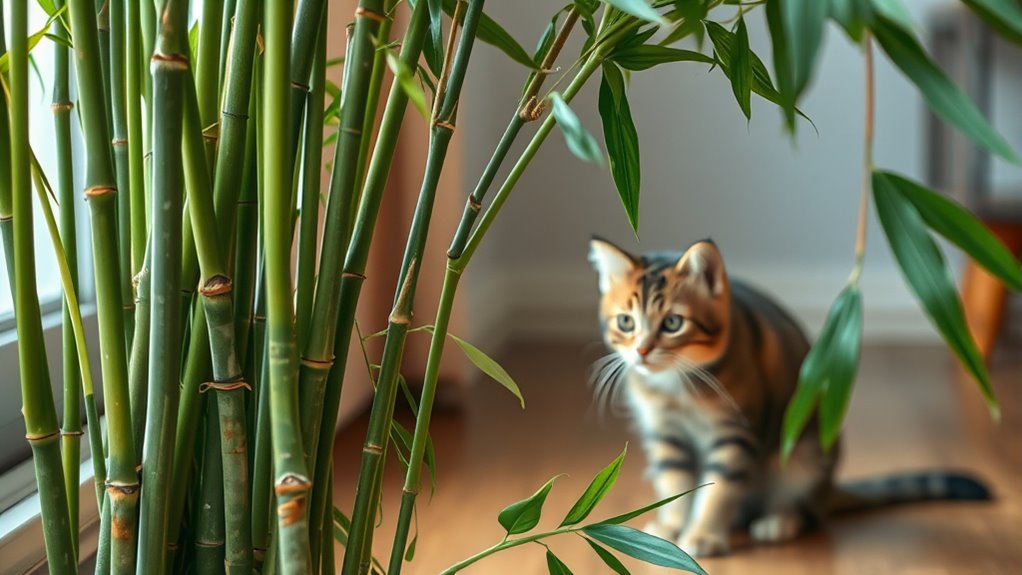
Is Bamboo Toxic to Cats and How to Keep Them Safe
Bamboo is mostly safe for cats, but only true bamboo varieties are non-toxic. Avoid lucky bamboo, which can upset the stomach.
Prevent access to plant water and keep bamboo on high or behind barriers to stop chewing. If your cat chews or drinks water, monitor for vomiting, diarrhea, drooling, or lethargy.
Contact a vet if symptoms persist. Use deterrents and safe chews to redirect.
If you want more tips, you’ll find practical steps ahead.
Key Takeaways
- Most true bamboo (Phyllostachys, Bambusa) is non-toxic to cats, but lucky bamboo (Dracaena sanderiana) can cause GI upset if ingested.
- Large amounts or plant water can cause toxicity; monitor intake and remove access to water promptly.
- Prevent access with barriers, high shelves, hanging planters, heavy pots, and regular plant checks for chew signs.
- If chewing occurs, watch for vomiting, diarrhea, lethargy, drooling, or oral irritation and seek vet help if symptoms persist.
- Redirect interest with deterrents, cat-safe chews, and safe greens; document symptoms and bring plant samples if vet visit is needed.
Is Bamboo Safe for Cats? Quick Yes/No
Yes. When you ask, “Is bamboo safe for cats?”, the answer is mostly yes for common indoor varieties, including many bamboo palms. You’ll find that most bamboo species are non-toxic to cats, so casual nibbling isn’t likely to trigger severe harm.
Mostly safe for cats; most bamboo varieties aren’t toxic, but nibbling can upset the stomach.
Still, you should keep an eye on your feline friend, because ingestion can cause mild gastrointestinal upset due to the plant’s fibrous nature. It’s not classified as poisonous, but it isn’t ideal if your cat keeps chewing.
The distinction matters because some plants look like bamboo but aren’t; lucky bamboo (Dracaena sanderiana) is a different plant and is toxic to cats, so identification is essential.
If your cat shows repeated chewing or stomach discomfort, consult a veterinarian. In short, bamboo is generally safe for cats, but avoid allowing access to any look-alikes that could pose health risks.
Safe vs. Toxic Bamboo Varieties for Cats
You’ll want to tell apart true bamboo from lucky bamboo to keep your cat safe. True bamboo (Phyllostachys, Bambusa) is typically non-toxic, while lucky bamboo (Dracaena sanderiana) can cause GI upset if ingested.
When choosing, verify the species to avoid toxic varieties and keep your pet-friendly plants clearly identified.
Lucky Bamboo Cautions
Lucky bamboo (Dracaena sanderiana) is often sold as a harmless houseplant, but you should be careful because some bamboo look-alikes are toxic to cats. While ASPCA lists lucky bamboo as generally non-toxic, ingestion can still trigger mild GI upset like vomiting or diarrhea, so keep an eye on your cat’s behavior if they sample it.
True bamboo species in the Bambusoideae family are safe and not toxic, but many Dracaena varieties resemble bamboo and can cause drooling, lethargy, or vomiting if ingested. Proper identification matters—to avoid risk, learn to distinguish true bamboo from look-alikes.
When you’re shopping or placing plants, keep in mind that toxic plants hide in plain sight, and monitor nibbling behavior closely. Ensure safe alternatives or barriers for curious cats.
True Bamboo Distinctions
True bamboo and so-called bamboo look-alikes aren’t the same, and that difference matters for your cat’s safety: true bamboo, like Phyllostachys and Bambusa, is generally non-toxic and safe to have indoors, while plants labeled as bamboo—such as lucky bamboo (Dracaena sanderiana)—are actually toxic and can cause vomiting, drooling, or lethargy if ingested.
The distinction between safe and toxic bamboo varieties depends on botanical classification; true bamboo belongs to the Poaceae family. When you identify plants, rely on plant identification to separate true bamboo from impostors.
Toxic bamboo species contain saponins and other compounds that upset the GI tract and energy levels. Keep true bamboo away from curious cats and verify species before purchase to minimize risk.
true bamboo, toxic to cats, plant identification.
Signs Your Cat Has Chewed Bamboo
If your cat has chewed bamboo, several telltale signs can tip you off. You might see oral irritation, drooling, or pawing at the mouth, signaling immediate discomfort from chewing. Some cats display decreased appetite or lethargy as they feel the aftereffects of irritation or mild pain.
You could notice oral swelling, bleeding, or other dental‑mouth injuries, which point to a possible problem from chewing. The fibrous nature of bamboo can trigger vomiting or diarrhea, so watch for gastrointestinal upset after the act. Persistent chewing may lead to more serious issues, especially if larger pieces are swallowed, which raises the risk of blockages.
In such cases, you may observe changes in cat behavior, applying less interest in food or hiding away. If you see these chewing and behavior patterns, note them as potential signs of toxicity and monitor closely for worsening symptoms.
What to Do Right Away If Your Cat Eats Bamboo
If your cat eats bamboo, you should act quickly to minimize irritation and potential complications. You’ll want to assess for signs of GI upset and take immediate steps to prevent further ingestion. Remove any remaining bamboo or plant material from reach, and offer fresh water to help with hydration.
While bamboo plants aren’t guaranteed poisonous to cats, monitoring for symptoms is essential, especially if they’re prone to sensitivity. Document any changes and contact your veterinarian promptly if signs like persistent vomiting, loss of appetite, or abnormal behavior appear. Keep a close eye on your cat for several hours to gauge the severity and inform your vet with precise details.
While bamboo isn’t guaranteed poisonous, monitor for signs and contact your vet promptly if vomiting, appetite loss, or abnormal behavior occur.
- Remove remaining bamboo and keep other plants out of reach
- Monitor for symptoms such as vomiting, diarrhea, lethargy, or symptoms such as drooling
- Call your veterinarian if symptoms persist or worsen, or if appetite drops
Act quickly, stay observant, and prioritize hydration and timely veterinary guidance.
If Your Cat Drinks Plant Water: Immediate Steps
If your cat drinks plant water, check their hydration and watch for signs of upset like vomiting or diarrhea. Offer fresh water to help dilute any toxins and support hydration, and remove access to the plant water immediately.
If you notice lethargy, loss of appetite, or persistent vomiting, contact your veterinarian right away.
Monitor Hydration Status
If your cat drinks water from a bamboo plant, start by watching for signs of upset like vomiting or diarrhea and make sure fresh water is always available to help dilute any toxins.
You’ll regularly assess hydration status, noting changes in appetite, energy, and urination. Keep a consistent water intake scene so you can detect deviations quickly and respond.
- hydration cues to monitor: gums, skin elasticity, and eye brightness
- dehydration warning signs: lethargy, dry mouth, sunken eyes
- actions if concerns arise: offer small sips of water or electrolyte solution per your vet’s guidance
Staying aware of water intake helps you catch issues early and protect your cat’s well-being.
Seek Veterinary Guidance If Needed
When your cat drinks water from a bamboo plant, stay watchful and know when to call the vet. If you notice signs of gastrointestinal upset, such as vomiting or diarrhea, act quickly. Contact your veterinarian promptly if your cat shows lethargy, loss of appetite, or persistent vomiting after drinking plant water.
Keep fresh water available to help flush toxins if ingestion occurs. Do not attempt to treat poisoning at home with medications unless advised by a veterinarian. Seek immediate veterinary care if your cat shows severe symptoms or if you are unsure about the plant’s safety.
In cases of potential exposure to toxic plants, prioritize professional guidance and monitor your cat closely for any worsening symptoms. Seek veterinary guidance to determine next steps.
Safe Plant Placement to Keep Bamboo Cat-Proof
To keep bamboo cat-proof, place plants on high shelves or in hanging planters out of your cat’s reach, so chewing and ingestion are less likely. You’ll reduce access by adding barriers in common areas, like decorative fencing or plant covers, which helps your cat respect boundaries. Choose sturdy, heavy pots to prevent tipping or knocking over, which could let your cat reach the plant more easily.
Regularly monitor your cat’s behavior around the bamboo, and relocate the plant if you notice excessive interest or nibbling. Consider deterrents, such as bitter sprays, as a supplementary measure to discourage biting.
- Place bamboo on high shelves or in hanging planters to minimize contact
- Use decorative barriers or plant covers to restrict access
- Opt for heavy pots and routinely assess your cat’s interest and behavior around the plant
Safe plant placement supports a cat-proof home for your house plant.
Deterrents and Safe Chew Alternatives
Deterrents and safe chew alternatives can help protect bamboo plants while keeping your cat comfortable. You can use bitter-tasting sprays or commercial pet deterrents on your bamboo plant to discourage chewing, so your cat learns to steer clear. Pair this with safe chew alternatives like catnip or cat grass to redirect nibbling away from the bamboo.
By offering appealing textures and greens, you reduce the likelihood of persistent chewing on the plant itself. To minimize access, place the bamboo out of reach on high shelves or in hanging planters, and consider installing physical barriers such as wire cages or decorative fencing around the bamboo.
Regularly trimming or removing the parts that attract interest helps prevent habit formation and makes the plant less enticing. Keep these strategies consistent, monitor your cat’s reactions, and adjust placements or barriers as needed to maintain a safe and harmonious indoor space.
Ongoing Pet-Proofing: Maintenance and Monitoring
Ongoing pet-proofing means regular maintenance and attentive monitoring to keep your bamboo and your cat safe. You’ll want to routinely inspect your plants for signs of chewing or damage to prevent ingestion, and adjust positioning so cats can’t easily reach them. High shelves or hanging planters keep plants out of paw’s reach, reducing temptation and risk.
Use deterrents like bitter sprays or double-sided tape around the plant to discourage curiosity without stressing your cat. Monitoring your cat’s behavior around plants helps you redirect with safe toys or catnip before chewing starts. Keep a steady routine of check-ins so you notice changes early and act quickly.
Use deterrents and monitor behavior to redirect chewing before it starts, with regular check-ins to catch changes early.
- Regularly inspect plants for signs of cat chews and damage
- Position plants out of reach, on high shelves or in hanging planters
- Redirect behavior and reinforce safe play with toys or catnip
Monitoring your cat’s reactions and adjusting as needed guarantees ongoing safety and a calm home for both of you.
When to See the Vet for Bamboo-Related Poisoning
If your cat shows persistent vomiting, diarrhea, lethargy, or a loss of appetite after nibbling bamboo, seek veterinary care immediately. In these moments, act quickly: observe for additional symptoms and contact your vet about possible ingestion.
Reach out promptly if your cat has difficulty breathing, excessive drooling, or uncoordinated movements following bamboo ingestion. These signs demand urgent veterinary care to prevent complication.
If your cat consumes large amounts of bamboo or plant water, schedule a visit, since that can heighten toxicity risk or cause a gastrointestinal blockage. Bring a sample of the bamboo plant or photos to help with accurate identification and appropriate treatment.
Watch for dehydration indicators, such as dry gums or decreased urination; seek urgent attention if they appear after suspected bamboo poisoning. Remember to document onset and any changes in behavior, so your veterinary team can tailor the care and monitor for evolving symptoms.
Your quick veterinary care supports safer recovery.
Frequently Asked Questions
Is Indoor Bamboo Toxic to Cats?
Indoor bamboo is generally non-toxic to cats, but there’s a caveat: lucky bamboo (Dracaena sanderiana) is mildly toxic and can upset their stomach if eaten.
You should avoid letting your cat chew on stalks or leaves, and keep plants out of reach or in hanging planters when uncertain about the variety.
Monitor for vomiting or diarrhea, and consult your vet if you notice any signs after ingestion.
What Kind of Bamboo Is Safe for Cats?
Bamboo that’s safe for cats includes true Bambusa and Phyllostachys varieties, while lucky bamboo isn’t, despite its look. You’ll want to distinguish by careful labeling or plant tags, because looks can mislead. You think “harmless greenery,” but the danger lurks with lookalikes.
Juxtapose caution with curiosity: identify the species, monitor ingestion, and offer non-toxic greens or cat-safe alternatives. Keep fresh water plentiful, and sever any tempting chewing with gentle redirection.
How Do I Stop My Cat From Eating My Bamboo Plant?
Yes, to stop your cat from eating bamboo, start by moving the plant to a high or hard-to-reach spot. Use bitter sprays or citrus peels around it, and offer safe alternatives like catnip or other plants.
Train with gentle commands and praise, and supervise regularly. If nibbling continues, remove or secure the plant and redirect to your cat’s enrichment activities.
Consistency and positive reinforcement will improve results over time.
Are Bamboo Pet Friendly?
Yes, bamboo is generally pet-friendly for cats. You can let your feline nibble a bit without major risk, but watch for mild GI upset from the fibrous plant.
To keep things safe, choose non-toxic varieties, keep plants out of reach or in hanging planters, and verify the species isn’t a toxic type like some Dracaena.
If ingestion causes vomiting or diarrhea, consult your vet promptly.
Conclusion
You’ll feel relief when you spot bamboo safely out of reach, knowing you did what it takes to protect your curious feline. Picture a sunny window ledge—your cat peering from a safe distance, nibble-free.
You’ve set boundaries, swapped risky stems for chew-safe alternatives, and kept watch. Like a sturdy lighthouse, your precautions guide you through potential hazards, helping you keep the peace between paws and plants.
Your calm, proactive care makes a safer home.


