
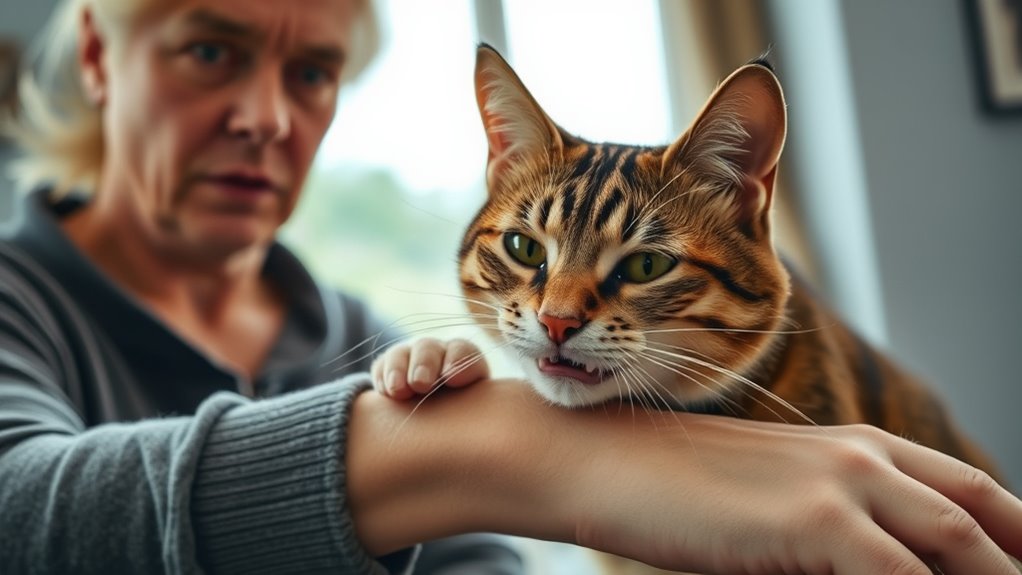
Why Do Cats Bite Their Owners?
You bite your owner for a mix of reasons. It can be affectionate, a sign you’re bonding and playing, or a test of boundaries during cuddling. It might also come from overstimulation, fear, pain, or frustration.
Watch your cat’s signals—tail flicks, flattened ears, dilated pupils—and redirect with toys before bites happen. Set clear boundaries and end play when needed.
If biting is frequent, seek a vet or behaviorist. There’s more you can learn to keep things safe.
Key Takeaways
- Cats bite to show affection in a soft, non-aggressive way, mirroring grooming instincts and social bonding.
- Biting can signal overstimulation during cuddling or play, especially with tail flicks or tense posture.
- Fear, pain, or defense triggers defensive bites when a cat feels threatened or cornered.
- Medical or behavioral issues may increase biting; consult a professional if bites are frequent or aggressive.
- Proper redirection, boundaries, and scheduled play reduce biting by satisfying hunting instincts without using hands.
Identify Why Your Cat Bites During Affection
You might notice your cat giving gentle “love bites” during affection, and that usually isn’t a sign of aggression. In this moment, you’re seeing a sign of affection expressed through body language you both share. These cat bites are typically soft, not breaking the skin, and come from trust and closeness.
They signal that your cat feels bonded and comfortable with you, mirroring social grooming behaviors they use with other cats. It isn’t about anger; it’s a way to communicate warmth and connection. You might also observe this as playful biting, a harmless extension of their hunting instincts that fits into your daily interactions.
However, pay attention to context: if petting sparks overstimulation, the bite is your cat’s boundary cue. Respect that limit to avoid escalating to a harsher response. Recognize these moments as a genuine sign of affection, enabled by mutual comfort and positive experiences between you.
Read Your Cat’s Signals Before a Bite
Just as affection can express itself in soft love bites, your cat often gives warning signs before any bite lands. You can read these cues in body language: flattened ears, a twitching tail, or dilated pupils signal overstimulation or discomfort, so pause before continuing. Watch for sudden movements—teeth may come if you miss that moment.
A cat may grind its teeth, arch its back, or flick its tail rapidly as a bite warning. Purring loudly or licking excessively can also precede a bite, especially when overstimulated or annoyed. A stiff, tense posture is another alert that danger may be near, and your best move is to stop petting and give space.
By recognizing these early signals, you prevent a bite and preserve trust. Take note of what your cat’s body language is saying, and respond with calm, brief interaction.
| Reading Signals | What to Do | When to Step Back |
|---|---|---|
| Flattened ears | Pause, observe | Give space |
| Tail flick | Cease contact | Back off slowly |
| Dilated pupils | Stop petting | Wait before trying again |
Understand How Overstimulation Shows Up During Cuddling
During cuddling, you might notice subtle overstimulation signals like tense posture, a twitching tail, or ears flattening.
A quick flick of the tail or dilated pupils can warn you to pause before a bite. Set clear cuddle-time boundaries and stop before agitation escalates to biting.
Subtle Overstimulation Signals
Cuddling can be sweet, but cats often send subtle signals when they’re overstimulated, and recognizing these cues helps prevent bites. You’ll notice overstimulation signals like tail twitching, ear flicking, or dilated pupils signaling fatigue or overwhelm. Gentle pinning of the ears back and a slight stiffening of the body are clear cats body language cues that tell you to back off.
Repeated licking or grooming may precede a bite, showing the cat needs a break from interaction. Restlessness—shifting, trying to move away—often comes before aggression when overstimulated. A sudden pause in purring or altered breathing can also indicate discomfort.
Cuddle-Time Boundaries Boundaries? (Oops, Need 4 Words or Less.)
Cuddle-time boundaries show up when overstimulation sneaks in: tail flicks, flattened ears, or a tense body signal that it’s time to pause. You’ll notice that sensitive areas like the belly, tail base, or paws can trigger an overstimulation response, especially after long petting sessions. If you see signs of infection or irritation building, stop and give space.
Biting may follow when your cat reaches its limit, so recognize early cues to prevent it.
| Cues of overstimulation | Safe response |
|---|---|
| Tail flicks | Pause and resume gently after a break |
| Flattened ears | Stop petting, offer quiet contact |
| Tense posture | Minimize touch, switch to brushing |
| Widened eyes | Slow your approach, avoid belly rubs |
| Quick nips | End session, revisit boundaries |
Overstimulation can escalate; heed signals to keep cuddling positive.
Recognize Fear, Pain, and Defensive Bites
Defensive bites happen when a cat feels threatened, scared, or cornered, a natural fight-or-flight reaction you can’t ignore. You’ll notice fear influencing a bite: quick, forceful snaps that pair with a tense body posture, dilated pupils, and flattened ears.
Pain or discomfort from illness, injury, or dental issues can trigger a self-protective bite, even if you were aiming for calm handling. Sudden or unexpected movements during interaction can spark fear-based bites, especially if your cat perceives them as threatening.
If your cat has a history of trauma or limited socialization, stress may push them toward biting more readily. To recognize these signals, observe posture, ear position, eye changes, and how swiftly the bite occurs.
Understanding that a defensive bite isn’t about malice helps you respond with gentler handling, slower movements, and avoidance of stressful scenarios, reducing risk while respecting your cat’s boundaries.
Redirect Biting With the Right Toys and Training Steps
You can redirect biting by offering engaging toys like puzzle feeders and wand toys, and by training your cat to focus on those objects instead of your hands. Use positive reinforcement to reward calm, gentle play and immediately swap in a toy whenever biting starts.
Consistently replace your hands with designated toys during play to establish clear boundaries and safer interactions.
Redirect Biting With Toys
To redirect biting, offer a variety of appropriate toys—like kicker toys and puzzle feeders—and use interactive play to satisfy your cat’s predatory instincts without your hands or feet as the target. Providing these toys helps redirect a cat’s hunting instincts away from you.
Consistently rewarding gentle play with treats or praise reinforces positive behavior and discourages biting during interactions. Using interactive toys during play sessions can satisfy a cat’s predatory drive, reducing the likelihood of biting when overstimulated.
Teaching cats to target toys instead of human skin involves replacing biting with the act of biting or pawing at designated objects. Regularly rotating toys and engaging in structured playtime can decrease boredom and the tendency to bite out of frustration or overstimulation, supporting appropriate cat play with cat toys.
Training To Stop Biting
Redirecting biting starts with practical tools and clear steps. You’ll redirect your cat’s biting instinct onto appropriate toys like wand toys or treat-dispensing puzzles, preventing bite bursts during play.
Use positive reinforcement when your cat interacts gently or plays without biting—praise or a treat reinforces the calm moment. End play sessions immediately and calmly when a bite occurs to teach that biting ends the interaction. Avoid using hands or feet as toys; provide engaging options that satisfy hunting and biting urges.
Consistently respond to biting with gentle commands or distractions, and reward good behavior to reinforce proper play habits. With steady training, teach your cat to choose toys over fingers, reinforcing positive, bite-free play.
Safe Interaction Techniques
Safe interaction starts with choosing the right toys and clear boundaries. You redirect your cat’s biting instinct to kicker toys or wand toys to prevent hand or arm bites during play. When your cat interacts gently or plays appropriately with toys, you use positive reinforcement—treats or praise—to reinforce that smart, safe play.
End play sessions immediately if your cat bites during interaction to teach that biting ends the fun. Avoid using your hands or feet as toys, since that teaches biting toward your skin. Train your cat to associate acceptable play with specific toys, reinforcing gentle behavior through consistent, reward-based methods.
This approach strengthens safe interaction and reduces mischievous, persistent playful biting.
Build Consistency to Stop Mixed Messages
Consistency is key to stopping mixed messages. When you keep all responses consistent, your cat learns which behaviors are acceptable and which aren’t. Use uniform signals and reactions so there’s no confusion, reducing the chance of biting due to mixed messages.
Your training and boundaries should be predictable, reinforcing positive behaviors and discouraging uncertainty-driven biting. Avoid rewarding biting or overstimulation; instead, praise gentle interactions to establish clear consequences.
Here are four practical steps to build consistency:
- Establish a routine for play and petting, so your cat knows what to expect.
- Use the same cues and responses across all household members.
- Set clear boundaries and reinforce them with calm, neutral feedback.
- Track progress and adjust training to reinforce gentle interactions consistently.
With consistent communication and steady boundaries, your cat learns acceptable behaviors faster, easing tension and reducing aggressive responses over time. Keep training focused, purposeful, and calm.
Set Safe Boundaries During Petting and Play
You’ll start by reading your cat’s body language to spot signals before you reach the point of overstimulation. Set gentle petting boundaries and rotate through safe zones, keeping sessions concise and calm.
If your cat shows signs of discomfort, redirect to a toy and pause to rotate or end the interaction.
Read Cat Body Language
Reading a cat’s body language helps you gauge when petting is welcome and when to pause. You’ll notice how subtle cues signal comfort or warning, so you can set clear petting boundaries.
For quick reference, keep these points in mind:
- Watch for signs of discomfort, like tense muscles, flattened ears, or rapid tail movement.
- Look for overstimulation cues, such as twitching tail or dilated pupils, and pause.
- A relaxed cat with soft eyes and gentle purring means you can continue, but still proceed slowly.
- Let the cat initiate or control duration of contact to build trust and prevent bites.
Gentle Petting Boundaries
Gentle petting boundaries help prevent bites by fronts with your cat’s signals, so you start with short, supervised sessions and ramp up only as trust grows. You’ll use gentle petting, avoiding sensitive areas like the belly, tail base, or paws to reduce overstimulation. Watch for signs of discomfort, such as tail flicking or ears flattening, and stop before a bite happens.
Let your cat initiate contact—slow blinking or leaning in signals openness—and respect their pace. Gradually increase duration only when comfort is clear. If you notice overstimulation, pause and redirect your cat’s attention to a toy or play activity.
Consistently respond to bites by calmly withdrawing and redirecting energy, reinforcing that safe outlets matter more than pushing for prolonged contact.
Redirect to Toy Rotation
To keep bites at bay, rotate toys during both petting and play to satisfy your cat’s hunting instincts without using your hands. Toy rotation keeps boredom down and makes playtime fresh, so your cat seeks the toy instead of your skin. By using a variety of toys—feather wands, puzzle feeders, and soft plush—redirect your cat’s energy away from you and toward appropriate objects.
Establish clear boundaries during petting: end interaction before overstimulation. Schedule dedicated playtimes with the right tools to reinforce that biting ends fun. Use these steps:
- Rotate toys daily to maintain interest.
- Switch between chasing and puzzle toys to address hunting instincts.
- Pause play if teeth contact skin, then resume with a toy.
- Redirect immediately when signs of arousal appear.
Know When to Seek Veterinary or Behavioral Help
If your cat’s biting becomes frequent, aggressive, or unprovoked, it’s time to seek a veterinarian or animal behaviorist for an evaluation. You may notice persistent biting with signs of stress, fear, or pain, which can signal underlying health or behavioral issues needing professional intervention.
A sudden shift from gentle to aggressive behavior often points to medical problems or environmental stressors that require expert assessment. If your cat shows intolerance to handling—growling, hissing, or scratching—don’t delay getting professional advice to address the behavior safely.
Even if you’ve tried modifying the behavior yourself, seeking veterinary help or behavioral guidance becomes essential when progress stalls or the risk of injury remains. Early intervention helps distinguish medical problems from behavioral issues and directs you toward effective strategies.
Care for Wounds and Monitor Health After a Bite
After you’ve addressed the decision to seek help for a biting behavior, the next step is taking care of the bite itself and watching your cat’s health. You’ll want to act quickly to reduce infection risk and monitor for infection signs.
- Rinse the wound with soap and warm water for at least 2 minutes to remove bacteria.
- Cover the injury with a sterile, non-stick dressing and seek medical attention if the wound is deep or bleeding heavily.
- Watch for redness, swelling, warmth, pus, or increased pain, and consult a healthcare provider if they occur.
- Follow your care plan and any provider advice on wound care, including antibiotics or a tetanus booster if recommended, and monitor for systemic symptoms like fever, chills, or fatigue.
Create Bite-Free Routines: Preventive Habits That Work
Creating bite-free routines starts with consistent, calm daily patterns that channel your cat’s energy into safe outlets. You’ll establish regular play sessions with interactive toys to redirect hunting instincts away from your hands and prevent biting, while keeping sessions short and end on a calm note.
Learn to recognize early signs of overstimulation, like tail flicking or skin twitching, and gently stop petting before biting occurs. Use positive reinforcement, such as treats or praise, to reward gentle interactions and discourage rough or biting behavior, reinforcing the love you share.
Incorporate routine feedings, predictable play, and rest periods to reduce anxiety and minimize stress-related biting triggers. Offer a variety of appropriate toys and scratching posts to satisfy natural behaviors and decrease boredom-driven biting.
Frequently Asked Questions
What Does It Mean When a Cat Bites Its Owner?
A cat bite from your pet can mean several things. It might be affection, especially if it’s gentle and paired with purring or licking. It can also signal overstimulation or that they want you to stop petting.
A sudden or hard bite usually shows fear, pain, or threat. Pay attention to body language—tail flicks, ears, posture—to distinguish love from annoyance or distress, and give space when needed.
How Do You Discipline a Cat for Biting?
Investigate the truth: punishing a biting cat doesn’t work long-term. You discipline by calm, consistent redirection, not punishment. When it bites, say “no” or “gentle,” then offer a toy and end the play session if needed.
Reward soft mouthing with treats or praise. Watch for overstimulation cues, like tail flicking or ears back, and pause before biting happens. Over time, your routine helps your cat learn gentler interactions.
Do Cats Feel Guilty After Biting?
No, cats don’t feel guilt the way humans do. When they bite and seem guilty, you’re seeing fear or submission after your reaction, not remorse. You might notice avoidance or crouching, but that’s self-preservation, not moral calculus.
To handle it, pause, give space, and redirect with toys. Teach appropriate play, keep sessions short, and reward calm behavior. Understanding this helps you respond calmly and avoid misreading their actions as moral judgments.
Why Does My Cat Grab My Hand and Bite Me?
Your cat grabs your hand and bites you because they’re treating your hand like prey during play and hunting-style interactions. It may also signal overstimulation or that they’ve had enough after petting.
To stop it, don’t use your hands as toys, give short play sessions with appropriate toys, and watch for bitey signals. Redirect with wand toys, end play if they start grabbing, and gently withdraw to teach boundaries.
Reward calm, gentle behaviors.
Conclusion
So, you might notice your cat nips just after you sit down, right when you’re thinking of nothing but a cozy cuddle. It’s funny how a sudden yawn, a fiber-frenzied distraction, or a crunchy snack can line up perfectly with your moment of affection.
Coincidence, sure, but it’s your cue to slow down, read the signs, and redirect. With patient boundaries and mindful play, you’ll both sync up—loving, safe, and bite-free for real.


